Palace on ‘balde’ remark: Sit down and listen to what the President is saying
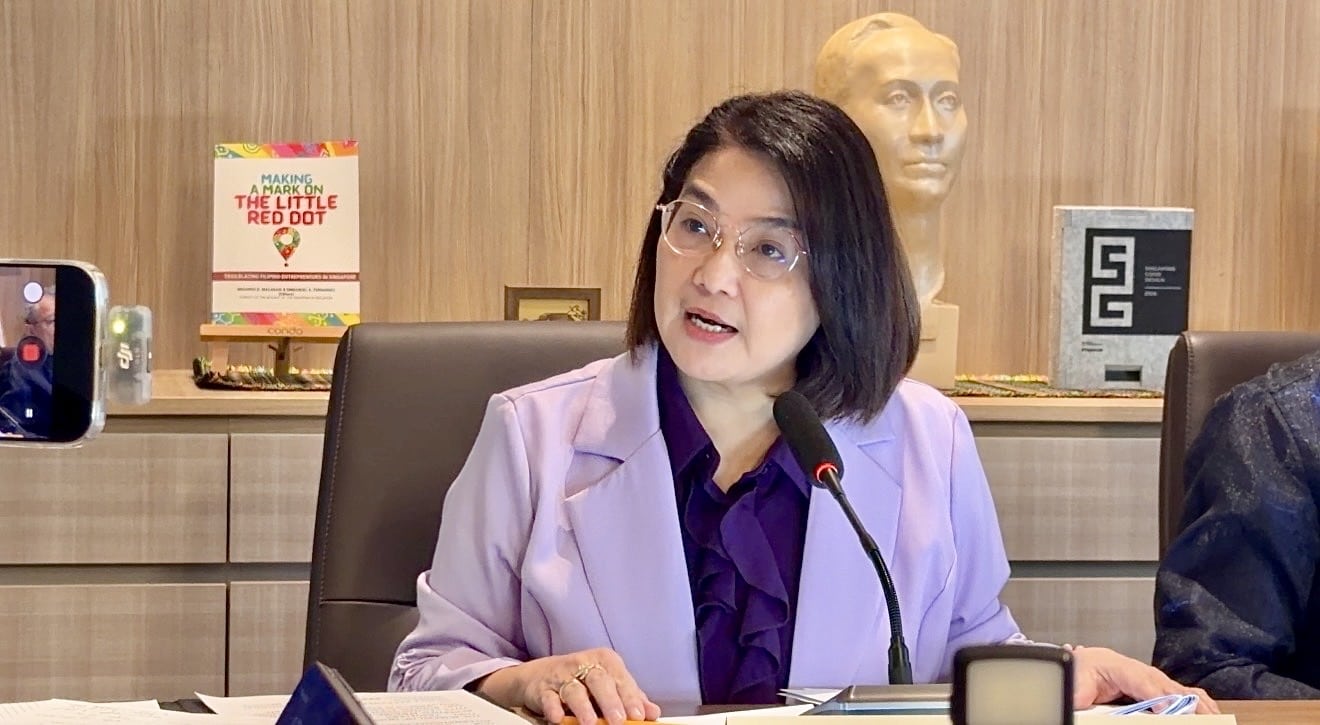

MANILA, Philippines — At a briefing on Tuesday, Palace Press Officer Claire Castro said those criticizing President Marcos’ advice for the public to buy buckets and collect water ahead of Super El Niño should instead buy themselves “buckets and buckets of brains” to appreciate the President’s plan.
Anticipating the negative impacts of Super El Niño, Marcos, in a media interview in Singapore on Oct. 11, advised his countrymen to collect rainwater: “Bumili na kayo ng balde para ’pag umulan, makolekta na ninyo lahat,” a suggestion that drew mixed reactions.
Among those who reacted was Vice President Sara Duterte, who said the public can no longer expect anything from Marcos.
Article continues after this advertisement
READ: Marcos urges Filipinos to collect rainwater ahead of Super El Niño
FEATURED STORIES
NEWSINFO
NEWSINFO
NEWSINFO
“Hindi po ito pagkaniya-kaniya. Kung ito lang po ang nadinig na patungkol sa balde, ang mas maganda po, umupo sila at makinig. Sit down and listen kung ano ang sinasabi ng Pangulo,” Castro said at a briefing.
(This is not about everyone fending for themselves. If all they heard was the part about buckets, then it would be better for them to sit down and listen. Sit down and listen to what the President is saying.)
READ: Palace hits critics of Marcos balde advice: They need buckets of brains
“Bakit iyong balde lang ang kanilang nakita at nadinig? Baka ang kailangan natin ngayon—hindi sa lahat ha, hindi ko po nilalahat. Ito ay patungkol sa mga obstructionists na walang makitang positibo sa mga ginagawa ng Pangulo. Sa mga obstructionists po itong sasabihin ko. Kailangan po talaga natin ng balde-baldeng utak para maintindihan ninyo po kung ano ang plano ng Pangulo,” she continued.
Article continues after this advertisement
(Why did they only notice and hear the part about the buckets? Perhaps what we need now—and I’m not referring to everyone, but only to a few, those who see nothing positive in what the President is doing. I am referring to these obstructionists. We really need buckets and buckets of brains for you to understand the President’s plan.)
“(For those who want to listen) Tuturuan namin kayo—we’ll give you how to filter— ’yung gamot para maging malinis. We’ll give you the filter,” he also said.
Article continues after this advertisement
READ: Atom slams Marcos’ ‘balde’ advice, urges solid action vs Super El Niño
How safe is filtered, treated rainwater?
But beyond the buckets and the buzz, is rainwater really safe to drink? And what does it take to turn collected rainwater into potable water?
According to the US Centers for Disease Control and Prevention (CDC), the quality of collected rainwater depends on how it is collected and whether the collection system is properly maintained.
Rainwater can pick up germs and chemicals from the air and from surfaces it encounters as it flows through a collection system. Dust, smoke, and other airborne particles can contaminate rainwater even before it lands on a roof, the CDC warns.
It also said that rainwater intended for drinking must undergo appropriate treatment, and the resulting water must meet applicable drinking-water safety standards. Filtration alone may not eliminate all disease-causing microorganisms or chemical contaminants.
How do filtration and treatment work?
Water filtration can be carried out through physical or chemical methods. Physical filtration uses materials with tiny pores or mesh to allow water to pass through while trapping larger particles, such as dirt and sand. Depending on the filter, it may also remove certain parasites.
Chemical filtration, meanwhile, uses materials such as activated carbon to adsorb certain contaminants. This process can also improve water’s taste and odor and reduce some potentially harmful chemicals, depending on the filter and the contaminants present.
October and December 2026
The state weather bureau recently warned that a “super El Niño” is likely to develop between October and December 2026 and may persist until March 2027.
All provinces in the country are also expected to experience drought next year due to the weather phenomenon.
Water supply allocation in Metro Manila has already been reduced from the regular 50 to 53 cubic meters per second to 44 cubic meters per second as the government prepares for the potential impact of Super El Niño.
READ: El Niño to bring drought to all provinces by March 2027 – DOST
Water treatment, on the other hand, involves one or more processes designed to remove contaminants or reduce health risks, including those posed by disease-causing microorganisms.
What water filtration systems are available?
The Department of Science and Technology (DOST) has developed various water filtration and treatment technologies to help address the country’s need for safe drinking water, particularly amid the effects of climate change.
One of these is the agency’s foldable rainwater harvesting system, which collects and stores rainwater in a 1,000-liter tank connected to a three-stage mineral filtration system.
READ: El Niño threat triggers race to save power, water in provinces
The DOST has also developed the SafeWaTrS Mobile Water Disinfection System, a solar-powered system designed to operate even in remote areas.
The system uses chemicals to make suspended contaminants clump together, allowing them to be separated from the water. The water then passes through a post-filtration system equipped with three different filters to remove remaining particles.
Water filtration during disasters
Natural calamities and human-induced disasters can disrupt access to safe drinking water, leaving affected communities with insufficient supplies of potable water.
READ: In Marinduque villages, DOST projects bring ‘water security’
In response, the Department of Social Welfare and Development (DSWD) began actively distributing portable water filtration kits during disaster response operations around October 2024, following donations from the organization Waves for Water.
Marcos himself drank filtered rainwater using the DSWD’s Family Water Filtration Kit in July 2025.
Your subscription could not be saved. Please try again.
Your subscription has been successful.
INQUIRER.net sought further details from the DSWD regarding the safety and effectiveness of its water filtration kits but had yet to receive a response as of posting time. /cb
KioskNews shows a cleaned-up reading view extracted from the publisher’s page — the original always lives on their site, not ours.