You Can See Everything’s chaotic battle for the narrative about Elizabeth Holmes

Thank you for signing up to the Close Up newsletter. This is our first-ever edition! And, just like on the show, I’ll be zooming in on the big culture questions and recommending things I’m obsessed with. I’ll also give you a sneak peek of what’s coming up on the show and what the team have been talking about behind the scenes.
OK, I’ll admit it: I wanted to hate You Can See Everything, the A24 documentary about Theranos fraudster Elizabeth Holmes, which finally arrived in UK cinemas last week. The marketing was slick, the hype was unparalleled. I didn’t believe a three-hour documentary about a disgraced tech CEO could be that good. But, like our colleague Adrian and basically every film critic who’s seen it, I left the cinema thinking: that was amazing and what on earth did I just watch?
In my 20s, I worked in corporate PR. Big companies employed our agency to promote their chief executives, tell the company’s story to the media and politicians, and protect everyone’s reputations. Our job, my job, was to create and control the narrative – to tell stories that made our clients the good guys. If you find the right angle, anyone can become the hero of a story. A betting company becomes one of the biggest employers on the UK high street, with bricks-and-mortar shops that provide much-needed jobs. An arms company is “one of the world’s leading manufacturers” – a national asset to be proud of. My colleagues were bright, young and talented. Most of them now work for big tech companies.
You Can See Everything is a chaotic and confusing battle for the narrative about Elizabeth Holmes. Her husband Billy Evans’s version of the story is that a smart but overly trusting young woman who was manipulated by others (and is madly in love with her brilliant spouse). Directors Nathan Fielder and Lance Oppenheim encourage you to question Billy and Elizabeth’s relationship, presenting him as potentially controlling, narcissistic and money-hungry. Holmes, meanwhile, paints herself as misunderstood, innocent and unassuming, afraid of the limelight and at times Madonna-like. The appearance of Amanda Seyfried (who played Holmes in The Dropout, a 2022 TV drama about the CEO) is a much-needed pressure valve, in that she voices what most of the audience has been thinking for the first half of the film: what the hell is going on?. But even she attempts to shape the narrative around her portrayal of Holmes and the duty actors have to tell the truth about real-life subjects. At times, different versions of all these stories win out.
If I were advising Elizabeth Holmes on her image, I would have recommended she make a documentary. From Beyoncé to the Beckhams, biographical documentaries that let high-profile people construct a plausible-but-rose-tinted version of their lives have become part of the PR playbook. And a famous director is increasingly part of that package. Oscar-winning film-maker Fisher Stevens directed the David Beckham documentary, largely sidestepping the more uncomfortable aspects of Beckham’s public life, including allegations surrounding Rebecca Loos, along with any other controversies that might have harmed the family brand. Rick Rubin made an eight-part (!) docu-series about Jay-Z. Jon M Chu, who was behind Crazy Rich Asians and Wicked, directed two Justin Bieber documentaries.
I’m not sure I would have suggested Holmes invite Nathan Fielder to move into her home. That level of round the clock access makes it harder to control the image you present. But while You Can See Everything may not have been the film Holmes and Evans wanted, it has already changed the conversation around the former Theranos CEO.
Group chat
A peek into what we’re obsessing about in our team WhatsApp group
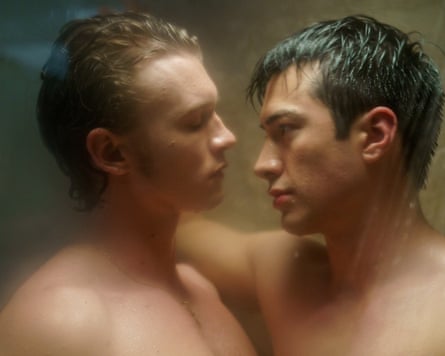
In the Close Up group chat, we’re already planning our spring around two very specific things: hockey and yearning. 🏒💕
Season two of Heated Rivalry – the queer Canadian ice hockey romance that became one of this year’s biggest breakout shows – is dropping in April. That means more of hockey hotties Shane and Ilya, and more unhinged fan edits. And the same month, the second season of Amazon’s Off Campus (another sexy hockey series) is also out.
We’ve also been obsessed with the phrase “low-budget vagina, Amanda!” If you don’t know what I’m referring to, you need to watch this clip from the Real Housewives of London reunion that went viral last week. The internet did what it does best and there are already multiple club remixes, which we’ve been sharing nonstop. This is my favourite.
after newsletter promotion
Top five: Julia Roberts movies
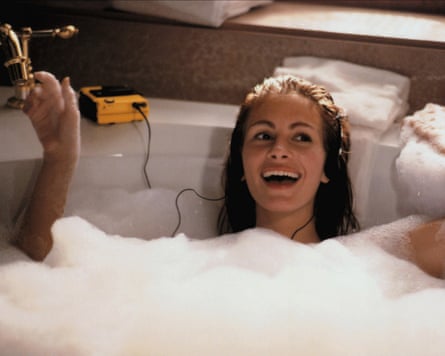
On this Sunday’s culture swap, Lanre and I are watching classic films we’ve never seen. You’ll get to hear why I avoided the Terminator movies for so long, and Lanre’s very strong opinions about Richard Gere’s wardrobe and performance in Pretty Woman. My love for Julia Roberts runs deep – she is one of the ultimate film stars and such a joy to watch, even when the film itself falls short (see After the Hunt, Ticket to Paradise). So here are my top five movies starring the woman with the megawatt smile.
-
Pretty Woman | A plot that’s also a critique of financial capitalism, and chemistry so good that she and Gere reprised it for the unofficial sequel Runaway Bride. I stand by this film as Roberts’s best work.
-
Erin Brockovich | Based on a heartbreaking and inspiring true story of a woman’s fight to get justice for a community affected by groundwater contamination, this film rightly secured Roberts the Oscar for best actress.
-
Notting Hill | United with Richard Curtis and Hugh Grant for one of the ultimate 90s romcoms. And a supporting cast to die for (Rhys Ifans! Emma Chambers! Gina McKee!)
-
Mystic Pizza | An underrated cult classic about three young waitresses coming of age in coastal Connecticut. Inspired by a real restaurant that still exists.
-
Mona Lisa Smile | Art, education and womanhood – a lovely comfort watch.
What’s your favourite Julia movie? Are you a fellow Mystic Pizza obsessive? Will Steel Magnolias always have your heart? Let me know your thoughts by replying to this email, or contacting me via thecloseup@theguardian.com, and we may include them in a future newsletter.
Year-end fundraiser
$0 of $2,000,000 goal
A moment full of possibility – and risk
We hope you appreciated this article. Before you close this tab, can we ask you to support the Guardian at this crucial time for democracy in the US? With Black Friday approaching, our most impactful monthly support option is just $7.50 a month for six months.
In the last two years alone, Donald Trump has eroded many of the pillars of US democracy – slashing funds for universities, undermining science, shutting down arts institutions, and attacking the free press as an “enemy of the American people” and “a threat to our national security”. While he and his allies have enriched themselves and spread lies, federal forces have harassed and imprisoned innocent people and violated the constitutional rights of many Americans.
Now, in a sweeping change election, the American people have spoken: Donald Trump, Pete Hegseth, RFK Jr, Elon Musk and the tech oligarchs may finally be held to account. A majority of American voters have demanded an end to the costly and immoral wars, the flagrant profiteering, and the corrosive attacks on communities and democratic institutions.
It’s a moment full of possibility, with more stories than we can possibly cover. New leaders are emerging from Texas and Michigan to Iowa and South Carolina – and heading to Washington to fight for affordability, against wealth inequality, and for human survival in the face of AI and the climate crisis.
These new leaders will be facing a cornered Trump and his hardline chief of staff, Stephen Miller, who have nothing left to lose. The next few years are critical for the future of the country. Journalism that covers the epic clash between these forces has a vital role to play right now.
Investigative journalism provides a fact-based paper trail for an emboldened Congress to follow. Members of Congress – and the American public – often rely on our in-depth reporting to inform the tough questions, to connect the dots and to pursue accountability for wrongdoing.
At the Guardian, our newsroom is devoted to uncovering the truth and conveying it to as many people as possible. We’re not alone in this mission, but this kind of journalism faces unprecedented hurdles: big tech threatening our financial stability and stealing our work for AI, billionaire owners telling journalists what to publish, and a hostile executive branch intent on suppressing our reporting.
The Guardian is free to dig deep without fear because we’re funded by our readers. Our readers hold us to account, and we hold the powerful to account.
However, this only works when enough of our readers contribute. Against the advice of most industry analysts, we’ve refused to put up a paywall – we believe good journalism should be freely available to all people, regardless of ability to pay. If you’re counting on our reporting, and you can’t afford to pay, please stop reading this message and go back to our articles.
If you can afford to contribute, please know that your support is not only helping yourself – from voters in Kansas to immigrants in Minnesota and families in Gaza, your generosity is bringing factual news to people around the globe.
Today is among our most important fundraising days of the year. To sustain our unique financial model, our goal is to raise $2,000,000 before the new Congress is seated on 3 January. More than 19,000 people have contributed already. All gifts are gratefully received, but for the next several days only, our most impactful monthly support option is $7.50 a month for the first six months. If you can afford 37 seconds, please join our ranks – and show your support for the rekindling of democracy in the US and around the world.
KioskNews shows a cleaned-up reading view extracted from the publisher’s page — the original always lives on their site, not ours.