Trump says US will cut military aid to Israel: Why now, and what can actually happen?
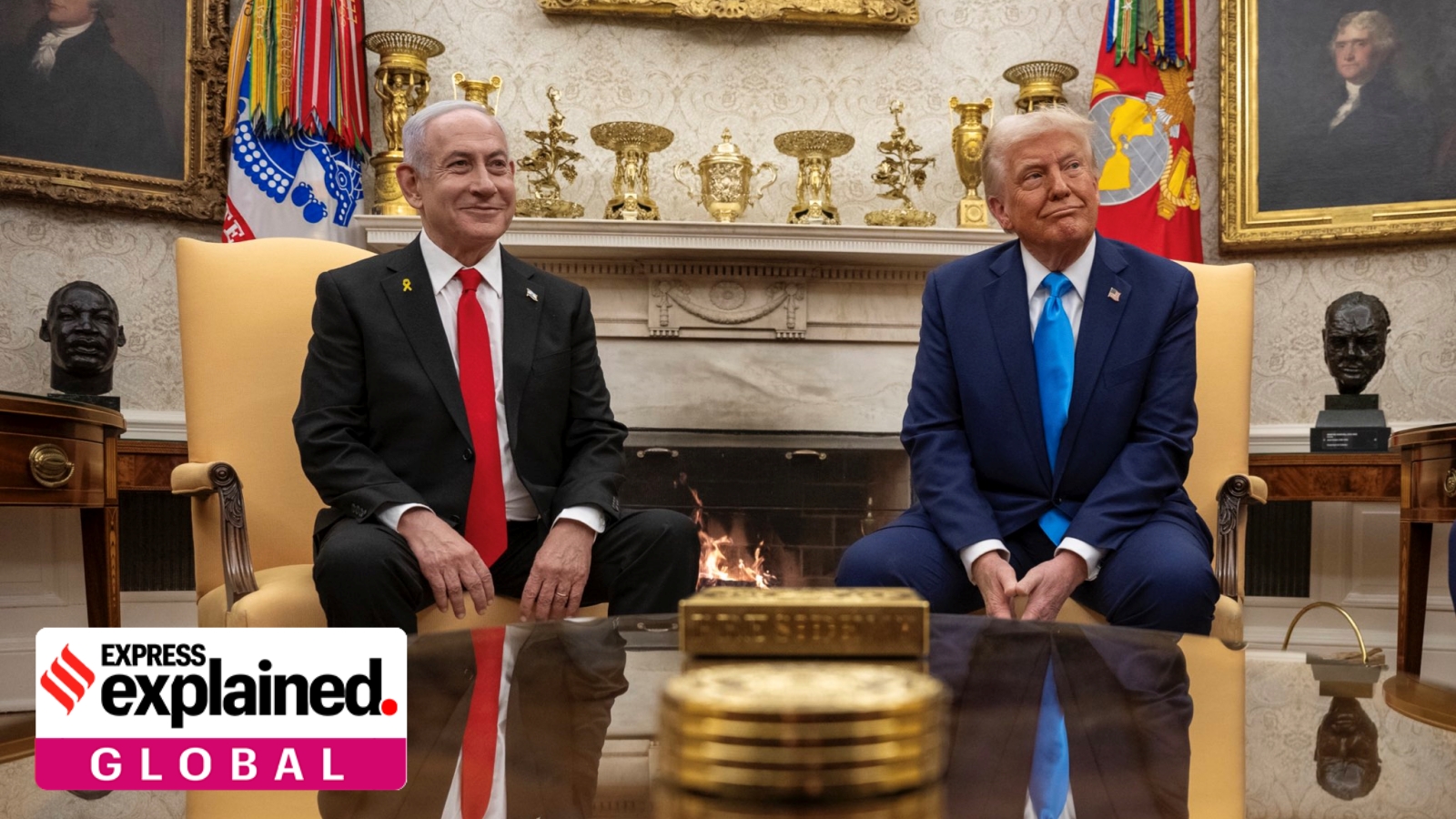
US President Donald Trump has said Washington will stop providing nearly $4 billion in annual military assistance to Israel by the end of 2026, claiming that the country no longer needs the money. In a Fox News interview on November 3 (Tuesday), as Americans voted in the midterm elections, Trump said he had reached an agreement with Israeli Prime Minister Benjamin Netanyahu to end the funding. The US would still sell weapons to its Middle East ally and help them when needed, Trump said.
The announcement on the face of it sounds momentous, coming specially from a US President who is a steadfast Israel backer. But Trump offered no details on how the cutoff would be implemented, and the existing US-Israel military aid agreement runs until September 2028.
Why is Trump talking of cutting aid to Israel now?
Trump said aid to Israel had become a “bad talking point” for Democrats, singling out Abdul El-Sayed, the new Democratic Senator from Michigan.
“Why should we suffer the slings from lunatics like an El-Sayed when they don’t need it?” Trump said, arguing that Israel was prosperous enough to do without American funding.
His remarks came amid declining US public support for Israel, particularly among Democrats, following the war in Gaza. A Quinnipiac University poll found that 48% of voters and 66% of Democrats believed the US was too supportive of Israel, compared with 16% and 20%, respectively, when the question was first asked in 2017.
The issue has also become contentious within Trump’s own political movement.
Story continues below this ad
The timing, on Election Day, therefore suggests a domestic political calculation: removing an issue Democrats can use to attack Republicans. Trump has said Netanyahu himself proposed ending the aid. However, the Israeli prime minister had previously discussed phasing it out over a decade, rather than stopping it abruptly.
After the midterms, now that Democrats have control over both Houses of the US Congress, pushing through new aid for Israel would anyway be more difficult.
How much aid does the US give Israel?
Israel has received more US aid, including military aid, since its creation, than any other country in the world.
The current arrangement stems from a 2016 memorandum of understanding (MoU) signed under President Barack Obama. It provides for $38 billion in military assistance over 10 years, from fiscal years 2019 to 2028.
Story continues below this ad
This amounts to $3.3 billion annually in Foreign Military Financing (FMF), alongside $500 million for joint missile defence programmes, taking the annual total to $3.8 billion. Additional assistance has been provided outside this framework, particularly following the October 2023 Hamas-led attack on Israel and the ensuing war.
Crucially, this is not simply a cash handout. Under FMF, Israel uses American financing to purchase US-made military equipment, services and training. The arrangement therefore also benefits American defence manufacturers.
What could US curtailing aid to Israel mean?
Netanyahu has himself acknowledged that American assistance cannot be taken for granted. In an interview with The Economist in January 2026, he said he wanted to taper off US military aid over the next decade. Being tied to US aid makes Netanyahu vulnerable to US lawmakers’ opinion, especially if he comes to power again and continues his bloodshed in Gaza.
But an abrupt cutoff would be a different proposition. Opposition leaders have already criticised Netanyahu over Trump’s announcement.
Story continues below this ad
Gadi Eisenkot, a former military chief who is Netanyahu’s main rival for the top job, posted on X after Trump’s comments, “Israel’s special relationship with the United States is a key component in its national security. The fact that the security establishment, along with Israeli citizens, is learning about a change in the strategic relationship framework through the media highlights just how much Benjamin Netanyahu’s conduct poses a genuine danger. We can no longer rely on him and must replace him.”
Yair Golan, leader of the Democrats party, had a similar warning. “Precisely at a time when Israel’s defence expenditures have reached enormous proportions, when Israel needs to replenish its offensive weapons stockpiles, and when its air defence capabilities have eroded after such a prolonged war — Netanyahu chalks up yet another colossal failure on his record. The halt in American aid is a severe blow to Israel’s security and to the quality of life in the country…,” he posted.
Thus, Trump’s remarks come at an awkward time for Netanyahu, knee-deep in negotiations to cobble up the numbers for the next government. His closeness to Trump has been one of his big selling points.
Can Trump actually stop the aid?
Not simply by making an announcement. The existing MoU runs until 2028, and Congress plays a central role in appropriating the funds each year.
Story continues below this ad
The more plausible outcome may be a negotiated transition towards reduced direct assistance, potentially alongside deeper cooperation in defence technology and weapons manufacturing. Discussions about the future of US-Israel security cooperation are already under way. This has also raised concerns within the US, from quarters who don’t think Israel learning to build bigger and better bombs on its own is a good idea.
KioskNews shows a cleaned-up reading view extracted from the publisher’s page — the original always lives on their site, not ours.