21 Years Later, The Greatest Opening Line In Fantasy TV History Has Never Been Topped

Angel Shaw is a Lead Writer and Critic on ScreenRant's TV team, covering new-release and classic TV shows across all major streaming platforms. She has been a writer with ScreenRant since 2022 and specializes in Harry Potter, The Lord of the Rings, and fantasy.
Angel holds a bachelor's degree in language interpreting and is passionate about all things culture and communication—especially in how it relates to popular media throughout history (from Shakespeare to Friends to Game of Thrones).
Opening lines hold a lot of power, and that's true in the world of fantasy television as well. Any good show has to begin on a great hook. In a time when the fantasy genre is heavily saturated with a whole variety of projects, this is especially necessary. Viewers need a good reason to keep watching, and a great opening line can do much more than fill viewers in on what is going on or which characters we should be paying attention to. It can set the tone for the overarching series, establishing the magic from that very first moment of the fantasy TV show.
Interestingly, the idea of having a defined or specific opening line in TV is falling somewhat out of popularity. Shows tend to take a more organic approach, but when a true fantasy series hits the screen, it's often necessary for a few words to set the stage. Rings of Power did a decent job bringing this back, ultimately duplicating the Lord of the Rings movies' Galadriel monologue. Unfortunately, it's not an opening that is likely to stick with viewers—not nearly as memorable as, say, Katara's opening line in Avatar: The Last Airbender.
Water. Earth. Fire. Air. My grandmother used to tell me stories about the old days: a time of peace when the Avatar kept balance between the Water Tribes, Earth Kingdom, Fire Nation and Air Nomads. But that all changed when the Fire Nation attacked. Only the Avatar mastered all four elements; only he could stop the ruthless firebenders. But when the world needed him most, he vanished. A hundred years have passed, and the Fire Nation is nearing victory in the war. Two years ago, my father and the men of my tribe journeyed to the Earth Kingdom to help fight against the Fire Nation, leaving me and my brother to look after our tribe. Some people believe that the Avatar was never reborn into the Air Nomads and that the cycle is broken, but I haven't lost hope. I still believe that, somehow, the Avatar will return to save the world.
Avatar: The Last Airbender may be an animated series aimed at children, but it's also an absolute masterpiece. It premiered in 2005, and unlike many other projects of the time aimed at young audiences, it came with a meticulously fleshed-out lore. This fantasy world is simple in concept, leaning on the four elements for its magic system, but it fleshes them out with fairly complex social and political layers. Avatar could have feasibly spent an entire season diving into its exposition and establishing this war-torn world, but it found a much better alternative.
This intro does several jobs all at once. On the surface level, we learn the backstory of this war and the elemental powers of these nations. Going a bit deeper, we can get an immediate understanding of Aang's destiny, along with the question of "why did the Avatar vanish?" Then, most importantly, we get a valuable look at who Katara is as a character. By the end of the show, this hopefulness she expresses in the intro comes to mean everything. It's excellent storytelling from literally the first second.
Avatar: The Last Airbender Is Proof That Introductory Monologues Need To Make A Comeback

Introductory monologues as we get from Katara in Avatar: The Last Airbender have fallen away. Every fantasy show (or otherwise) has an opening line in some shape or form. However, today they aren't often used at the start of every single episode, as Avatar's are. The reason for this comes down largely to streaming. When Avatar originally aired, a viewer could discover it several episodes in and never really have the chance to go back and watch the first bit until they happened to catch the reruns. An opening monologue made sure that the start of every episode got viewers, more or less, up to speed.
This isn't really necessary with modern TV shows, since we are all watching from episode one, regardless of when we start. Still, Avatar perfectly demonstrates why it is truly a shame that this practice faded away. Katara's words became a key reminder of what this story was about thematically. It kept audiences' focus on the heart of the series—on Katara's hope and the nations' desperation. This allowed a handful of episodes to take a more distinctive approach, throwing out the routine in favor of something heavier-hitting for that particular situation.
By the end of Avatar: The Last Airbender, it's almost hard to listen to that opening monologue. This series has so much heart that finishing it feels like a heavy weight, and hearing that repeated monologue emphasizes both the nostalgia and the finality of it all. It's a tool that invites new viewers into the story while welcoming familiar viewers home. It just doesn't get more powerful than that.
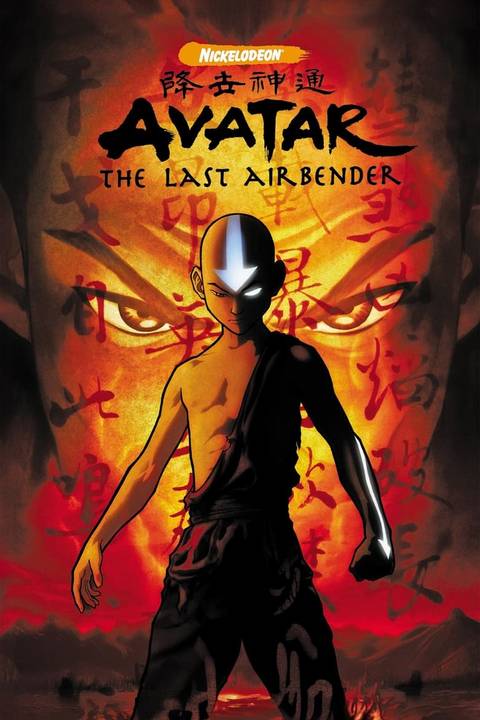
- Release Date
- 2005 - 2008-00-00
- Network
- Nickelodeon
- Showrunner
- Michael Dante DiMartino
-

Zach Tyler Eisen
Aang (voice)
-

Katara
- Directors
- Giancarlo Volpe, Ethan Spaulding, Lauren MacMullan, Dave Filoni, Joaquim Dos Santos, Anthony Lioi
- Writers
- Tim Hedrick, Elizabeth Welch Ehasz, Joshua Hamilton, James Eagan, Joann Estoesta, Nick Malis, May Chan, Katie Mattila
- Franchise(s)
- Avatar
- Creator(s)
- Michael Dante DiMartino, Bryan Konietzko
KioskNews shows a cleaned-up reading view extracted from the publisher’s page — the original always lives on their site, not ours.