Could major power politics stall the landmark High Seas Treaty?
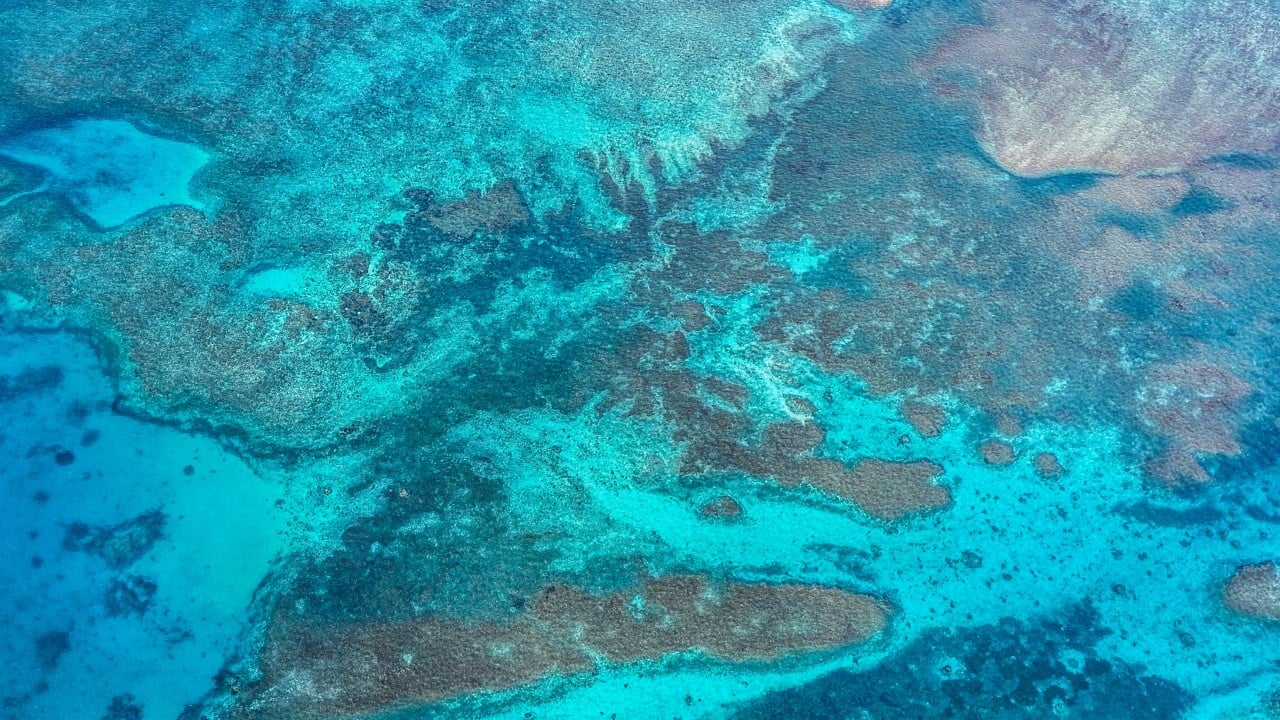
Nearly a year after taking effect, the landmark High Seas Treaty risks becoming another geopolitical battleground among major powers, observers have warned.
Ratified by 105 countries including China but not the United States and Russia, the Agreement on Biodiversity Beyond National Jurisdiction (BBNJ) is the most significant maritime pact in decades, governing international waters that cover nearly two-thirds of the global ocean.
While the treaty was designed to safeguard marine ecosystems and ensure the equitable sharing of ocean resources, turning its broad legal framework into enforceable rules is proving contentious.
Government delegates and environmentalists are expected to convene in New York in January for the first “conference of the parties” (COP) to finalise the mechanisms for putting the pact into practice – a process analysts said could be stalled by competing strategic and economic priorities.
“As implementation unfolds, countries will naturally interpret key clauses through the lens of national interest,” Wang Kuan-hsiung, a professor of political science at National Taiwan Normal University, said during a recent symposium on global maritime cooperation in Sanya, southern mainland China.
09:58
Will Batanes become the next South China Sea flashpoint?
That dynamic could affect some of the treaty’s core conservation measures, including the creation of marine protected areas (MPAs), which Wang cautioned might be “misinterpreted as tools for geopolitical boundaries or even maritime dominance”.
“We risk seeing negotiations over digital sequence information and marine genetic resources suspended between rivalries of international relations,” he said.
“If BBNJ develops into a game of geopolitical manoeuvring, the biggest losers will be the small island developing states … the African coastal states and the health of the ocean itself.”
One of the most contentious issues for January will be the establishment of marine protected areas in which fishing and other commercial activities could be restricted or prohibited, according to Christian Schultheiss, a senior research fellow at the Max Planck Institute for Comparative Public Law and International Law in Heidelberg, Germany.
By design, the High Seas Treaty applies only to waters and seabed beyond national borders and cannot be used to advance or resolve territorial claims. Under the pact, the COP, as the treaty’s governing body, has the authority to establish marine protected areas in those international zones.
Yet, countries are sharply divided over how to enforce the treaty when new ocean reserves are proposed.
The point dogged the original BBNJ negotiations and stayed unresolved as delegates tried to decide the treaty’s rules of procedure over the past months.
SCMP Plus is a new premium news platform that gives you an
all-inclusive edge to stay ahead on China news.
To access our exclusive content you’ll need to subscribe.
Already a subscriber?
LOG IN
Despite informal talks behind the scenes, countries were deadlocked over how to prevent marine reserves from getting entangled in territorial disputes, Schultheiss said at the conference in Sanya. “There are still incompatible positions,” he noted.
For instance, draft rules floated in March would have let a state file a written objection with the secretariat, the BBNJ’s administrative body, if a marine protected area proposal were to overlap with disputed waters.
Countries remain sharply divided over how the mechanism would work in practice. While some worry the rule is not strong enough to effectively halt contentious proposals, others warn it goes beyond the treaty’s scope and would function as a de facto unilateral veto – potentially even giving any country the power to block proposals.
Unease has also surfaced as to whether the rule is too vague, allowing any country to block ocean protections thousands of miles from its own shores, according to Schultheiss.
The core issue is that the treaty must rely on capable coastal and maritime powers to police protected waters, especially in contested regions like the South China Sea, he said.
“In practice, MPAs can only offer effective protection for the marine environment if the enforcement of MPAs is clearly organised.”
Schultheiss warned that creating marine protected areas without countries to enforce them would risk producing a “paper park” that “at worst … is counterproductive”.
Beijing has fought hard during the BBNJ negotiations to ensure that the scope of the agreement would not extend to disputed maritime areas.
Meanwhile, calls have mounted in the Philippines urging Manila to declare marine protected areas in the waters to bolster the country’s claims in the South China Sea.
Beijing has actively advanced the negotiations and taken them as a way to enhance its role in shaping international rules of order.
It has also proposed hosting BBNJ’s secretariat in Xiamen, a mainland coastal hub that sits on the Taiwan Strait. The bid rivals that of Belgium and Chile, which last week decided to combine their efforts to host the headquarters.
The secretariat’s location will be decided at the January COP conference. Beijing has criticised the Belgium-Chile bid as “politicising the bidding process”.
Speaking in Sanya, Shi Yubin, a professor at Zhejiang University and a specialist in the international law of the sea, said major powers should undertake leadership roles in implementing the BBNJ agreement.
Shi cited the example of the 2015 Paris Agreement on climate change. That landmark pact followed a 2014 announcement by Chinese President Xi Jinping and then US president Barack Obama in Beijing to jointly pursue plans to cut domestic greenhouse gas emissions.
“I believe that this support from two main countries contributed to or facilitated the conclusion of the Paris Agreement,” said Shi, who has been involved in BBNJ negotiations.
“Of course, for the future implementation of the BBNJ agreement, strong support from major states and also those states that are willing to undertake leadership roles is very important.”
KioskNews shows a cleaned-up reading view extracted from the publisher’s page — the original always lives on their site, not ours.