Germany, Sweden and Malaysia: When the political centre begins to tilt right — Phar Kim Beng
SEPT 12 — The rise of the far right in Germany and Sweden cannot simply be explained as a sudden outbreak of xenophobia.
Nor should it be reduced to Vladimir Putin, the war in Ukraine or some mysterious resurgence of European nationalism.
Its roots are deeper.
They lie partly in a growing perception among sections of European society that the political centre has ceased to listen to their anxieties about migration, welfare, identity, security and the pace of social change.
Malaysia should pay attention.
The political circumstances are obviously different.
However, the underlying mechanism — the gradual migration of mainstream politics towards harder positions when voters believe established parties are ignoring them — is increasingly familiar.
Germany provides the clearest warning.
The Alternative for Germany (AfD), once confined largely to the political margins, has just emerged victorious in the Saxony-Anhalt state election.
It secured 39 of the state parliament's 83 seats, although other parties continue to resist forming a government with it. It captured 44 percent of the votes.
Nationally, its strength has also made the traditional German political firewall increasingly difficult to maintain. Russian interferance alone cannot explain this.
For decades during the Cold War, West Germany lived beside something considerably more formidable than today's Russian Federation: the Soviet Union and the Warsaw Pact.
Soviet military power was positioned directly across the divided German frontier.
Germany survived this proximity without becoming politically unrecognisable.
What has changed is the domestic political psychology.
The refugee crisis of Germany began in 2015, followed by subsequent migration and then the enormous displacement generated by the Ukraine war, altered public perceptions of borders, citizenship and the responsibilities of the welfare state.
This does not mean that refugees simply enter Europe and automatically receive unlimited welfare benefits.
European asylum and social-security systems are considerably more complicated than that.
Ukrainian refugees in Germany, for example, can qualify for social assistance when they meet residence and financial-need requirements.
Either way, AfD does not want the Ukrainians in Germany.
But politics is driven as much by perceptions of fairness as by the precise wording of statutes.
Europe's Schengen system compounds this political sensitivity because it represents one of the most ambitious experiments in human mobility ever attempted.
Today 29 countries participate fully in the Schengen Area, encompassing more than 450 million people, with internal border controls generally abolished.
Schengen is an extraordinary achievement.
But every achievement produces political obligations.
If citizens believe the external borders are inadequately controlled, or that governments cannot distinguish efficiently between refugees, economic migrants, irregular migrants and people whose asylum applications have been rejected.
Freedom of movement can gradually be interpreted as loss of control.
That perception has political consequences.
Sweden demonstrates them vividly now.
For generations, Sweden was associated with social democracy, an extensive welfare state, humanitarian internationalism and relatively liberal approaches towards asylum.
Yet immigration, integration and crime have progressively transformed Swedish politics.
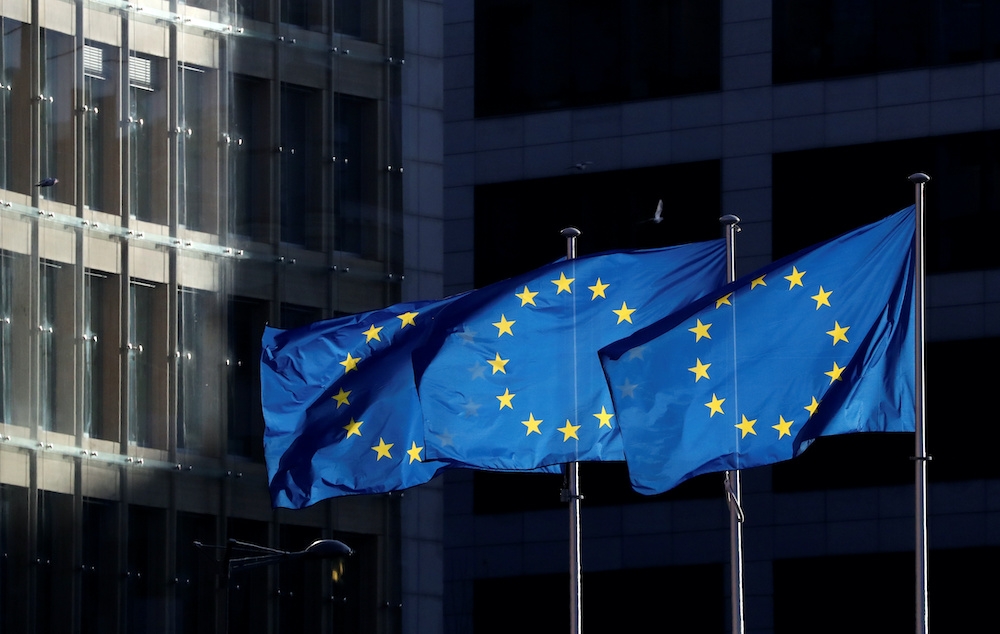
The author argues that Malaysia should learn from the European Union, particularly Germany and Sweden, by addressing legitimate public concerns without allowing mainstream politics to drift towards more extreme identity-based positions. — AFP pic
The Sweden Democrats have moved from political isolation into becoming indispensable to the country's governing right-wing bloc.
Prime Minister Ulf Kristersson has even indicated his willingness to include them formally in government should his bloc prevail in the September 13 election.
Meanwhile, Sweden has dramatically tightened migration policy.
Asylum applications have fallen to a 40-year low, while the government has introduced measures including tougher residency and citizenship rules.
It is even offering substantial financial assistance to some immigrants who voluntarily return to their countries of origin.
Something profound has therefore happened.
Policies that might once have been dismissed as belonging to the radical right have gradually migrated towards the political mainstream.
This is the real lesson for Malaysia.
Malaysia is not Germany or Sweden. Its historical formation, constitutional structure, ethnic composition and political economy are completely different.
Malaysia has also managed pluralism for decades through institutions and political arrangements peculiar to its own history.
Yet Malaysia is experiencing its own rightward gravitational pull.
Here the principal fault line is not Middle Eastern or North African immigration.
It is the increasingly intense competition overMalay-Muslim political identity.
When mainstream parties fear losing their core constituencies, they begin borrowing the vocabulary, symbols and political priorities of parties further to their right. This creates a dangerous cycle.
A party adopts harder positions to prevent its supporters from defecting.
Its competitors then move further right to distinguish themselves.
Before long, the entire political spectrum has shifted even though the electorate itself may not have moved by the same distance.
Germany demonstrates precisely how this can happen.
The AfD does not need to govern Germany nationally to influence Germany.
Its political importance already lies in forcing other parties to discuss immigration, borders, asylum, national identity, Ukraine and relations with Russia in terms substantially different from those of a decade ago.
Sweden offers an even stronger illustration. The Sweden Democrats spent years outside the political establishment.
Yet policies associated with their critique of immigration have increasingly shaped government policy.
The radical flank can therefore win without capturing the state.
It wins when everybody else begins speaking its political language.
Malaysia must avoid this trap.
Malay's concerns about economic security, social mobility, education, cultural confidence and political representation cannot simply be dismissed.
Neither should the concerns of Chinese, Indians, Sabahans, Sarawakians or other communities about equal citizenship and institutional fairness.
Suppressing legitimate anxieties merely creates political space for more extreme actors to monopolise them.
But acknowledging anxieties is different from weaponising them.
The European experience demonstrates what happens when complicated questions of migration, inequality, welfare, crime and national identity are compressed into a single politics of resentment.
Once every problem acquires an ethnic, religious or civilisational explanation, democratic politics becomes increasingly zero-sum.
Malaysia is already susceptible to such tendencies.
If every election becomes a referendum on which ethnic or religious community is supposedly gaining at the expense of another, the political centre will steadily hollow out.
The lesson from Germany and Sweden is therefore not that Malaysia should fear a European-style far right.
It is that Malaysia should understand how a rightward political tilt actually occurs.
It rarely arrives overnight.
It develops incrementally when citizens lose confidence in institutions, when mainstream parties become afraid of explaining complicated realities, and when political entrepreneurs discover that identity is easier to mobilise than policy.
Europe's predicament should consequently be studied rather than mocked.
Germany and Sweden show that prosperous, educated and institutionally strong democracies are not immune from political polarisation. Economic development alone does not guarantee moderation.
Malaysia's task is to prevent legitimate Malay-Muslim concerns from being transformed into permanent civilisational insecurity while simultaneously ensuring that non-Malay Malaysians never feel that their citizenship is conditional.
That requires something more difficult than moving left or right.
It requires restoring confidence in the political centre.
For when the centre stops explaining, listening and governing effectively, the political extremes do not have to conquer it. They merely wait for the centre to move towards them.
This is a major problem confronting Malaysia. Learning from Germany and Sweden provides an evidence-based discourse to prevent the lurch to the right.
KioskNews shows a cleaned-up reading view extracted from the publisher’s page — the original always lives on their site, not ours.