Deal vs deal? US, China trade calls to honour commitments before Xi-Trump summit
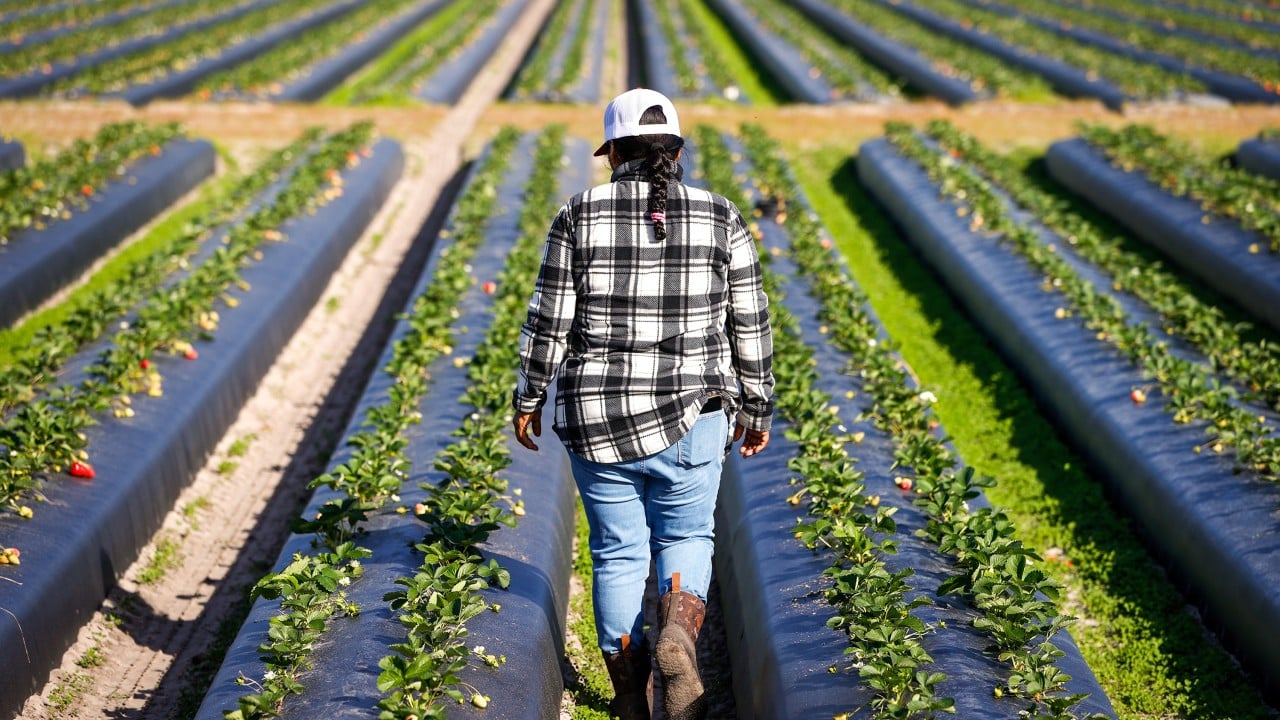
During a video call on Friday, US Trade Representative Jamieson Greer and Treasury Secretary Scott Bessent urged Chinese Vice-Premier He Lifeng to uphold China’s previous commitments on agricultural goods and rare earth exports.
A day earlier, Beijing reminded Washington to implement another deal – reciprocal tariff cuts covering US$30 billion worth of products on each side – as a precondition to buying more American farm products.
Just days before President Donald Trump meets Chinese leader Xi Jinping in Shenzhen, agricultural purchases have emerged as a major flashpoint, with both sides pressing each other to fulfil promises.
The issue gained prominence as rural strongholds across states like Iowa, Kansas and Texas broke with Republicans in the recent midterms in a backlash driven by war-driven fuel spikes, steep tariffs and lingering uncertainty over China’s buying commitments.
According to experts, Beijing is leveraging Washington’s appetite for farm sales to force progress on tariff relief, sensing vulnerability following the Republican losses in the midterms.
“China knows that a big purchase deal may be more attractive to the Trump administration, and they’re naming their price – cuts in US tariffs on some Chinese goods,” said Christopher Padilla, former US undersecretary of commerce for international trade.
“We can’t control whether China buys from us or not,” said John Bartman, an Illinois-based fifth-generation soybean farmer. He added that the midterm results showed the Trump administration “failed to listen to American farmers and their needs.”
Jeff Winton, a dairy producer in upstate New York, also argued that uncertainty over agricultural exports to China was “certainly a factor” in recent elections. “Farmers are feeling a sense of whiplash because of it,” he added.
“That’s why so many farmers voted the way they did … they were sceptical.”
Bartman noted that Trump’s tariffs and “his war in Iran have been absolutely devastating to the American farm economy”.
The conflict in Iran has driven up diesel costs, adding to the burden on US farmers already grappling with higher fertiliser bills. The loss of a substantial share of the Chinese market, coupled with the effects of Trump’s tariffs, has further squeezed farm incomes and intensified financial pressures across the sector.
Barb Kalbach, a corn and soybean farmer in Iowa, highlighted the problem that, despite a trade arrangement with China, conditions in the farming sector do not just “turn on a dime”.
“We are looking at 2027 right now, still with the elevated fuel costs and the fertiliser costs, and with no markets rebuilt.”
Following a brief trade war last year, the Trump administration placed agricultural sales to China at the core of the fragile truce it struck with Beijing in Busan, South Korea.
The soybean deal was a key outcome of that arrangement, which included tariff relief on both sides and a suspension of export controls on rare earths.
The agreement was further expanded at the leaders’ meeting in Beijing in May, where China committed to buying at least US$17 billion in US agricultural products each year for three years.
China also pledged to purchase 12 million metric tonnes of US soybeans in the 2025 season, rising to 25 million metric tonnes in 2026.
Even if China fulfils its soybean purchase commitments, shipments would remain 14 per cent below the annual average of 29 million tonnes recorded between 2020 and 2024, according to analysis by Purdue University’s Centre for Commercial Agriculture.
The broader agricultural trade commitments would also leave exports far below the US$40 billion worth of agricultural goods the US shipped to China in 2022.
On soybeans, China met the 2025 target and is on course to meet its 2026 promises.

However, the rest of the agricultural purchase basket has stalled. China bought US$7.2 billion worth of other agricultural products between January and September, a Reuters analysis showed.
Last week, China said that it remained open to buying more agricultural products, but only if the tariff-reduction deal was honoured.
“China has always maintained an open attitude towards expanding agricultural imports from the United States, provided that the agreed-upon reciprocal tariff reduction arrangement – covering US$30 billion on each side – is implemented,” Huang Ling, a commerce ministry spokeswoman, said on Thursday.
The office of the US Trade Representative did not respond to a request for comment.
The two countries formalised the bilateral Board of Trade mechanism in September, identifying non-sensitive goods worth up to US$30 billion on each side for potential tariff reductions.
The US import list covered a variety of consumer goods, including microwave ovens, electric irons, Christmas decorations and toys. China’s list focused on agricultural goods, such as corn, sorghum, dairy, beef and vegetables.
Last month, Greer said no timeline had been set for implementing the limited trade agreement. He described the tariff reductions under the new mechanism as “a policy outcome” that would require a legal determination.
“We have to stick to our legal processes,” he said.
In upstate New York, Winton stressed that many of his fellow farmers viewed China’s focus on implementing the trade agreement as a positive sign for their businesses. “They’re very optimistic that this will start to move our trade back to where it was.”
KioskNews shows a cleaned-up reading view extracted from the publisher’s page — the original always lives on their site, not ours.