In Philippines’ external defense push, resilience boils down to logistics
MODERN FLEET. The BRP Tarlac (LD-601) sails in waters close to Bajo de Masinloc (Scarborough Shoal) alongside partner navies for an ADMM-Plus joint sail in September 2026.
SUBIC, Philippines – When visiting the Philippine Navy’s newest warships at the Naval Operating Base (NOB) in Subic, most people — including military personnel — go through at least three gates. The long wait at the first gate speaks volumes of how the vision of a modern armed forces turns into reality.
Despite its ambitions, the Navy does not have its own docking facility to accommodate its brand-new frigates and offshore patrol vessels (OPVs). The big shipyard here that holds the country’s finest warships is owned by private firm Agila Subic Compass, which assigns its own civilian security at the first two gates that visitors enter.
Yet, what a sight to behold — a fleet of six modern gray ships now owned by a navy of an archipelago that had, for decades, had to make do with hand-me-downs from its allies.
 READ
State of PH Navy modernization: ‘Golden days will return’
READ
State of PH Navy modernization: ‘Golden days will return’
In August when we paid a visit one damp and humid evening, we saw the BRP Diego Silang (FFG-07) berth at the shipyard after almost a week out at sea for a maritime patrol and joint drills with Australia and the United States. Already docked beside the spot allocated for her was a fleet of the Navy’s pride — modern frigates that were acquired, in relative rapid succession, under the Revised Armed Forces of the Philippines (AFP) Modernization Act.
Silang docked beside her sister ship, the BRP Miguel Malvar, which was commissioned in the summer of 2025. With them were two similar ships, BRP Jose Rizal and BRP Antonio Luna, the first brand-new frigates that the Navy acquired in 2020 and 2021 after a long wait. Before this, the Navy had to live with old ships from other countries which it would refurbish.
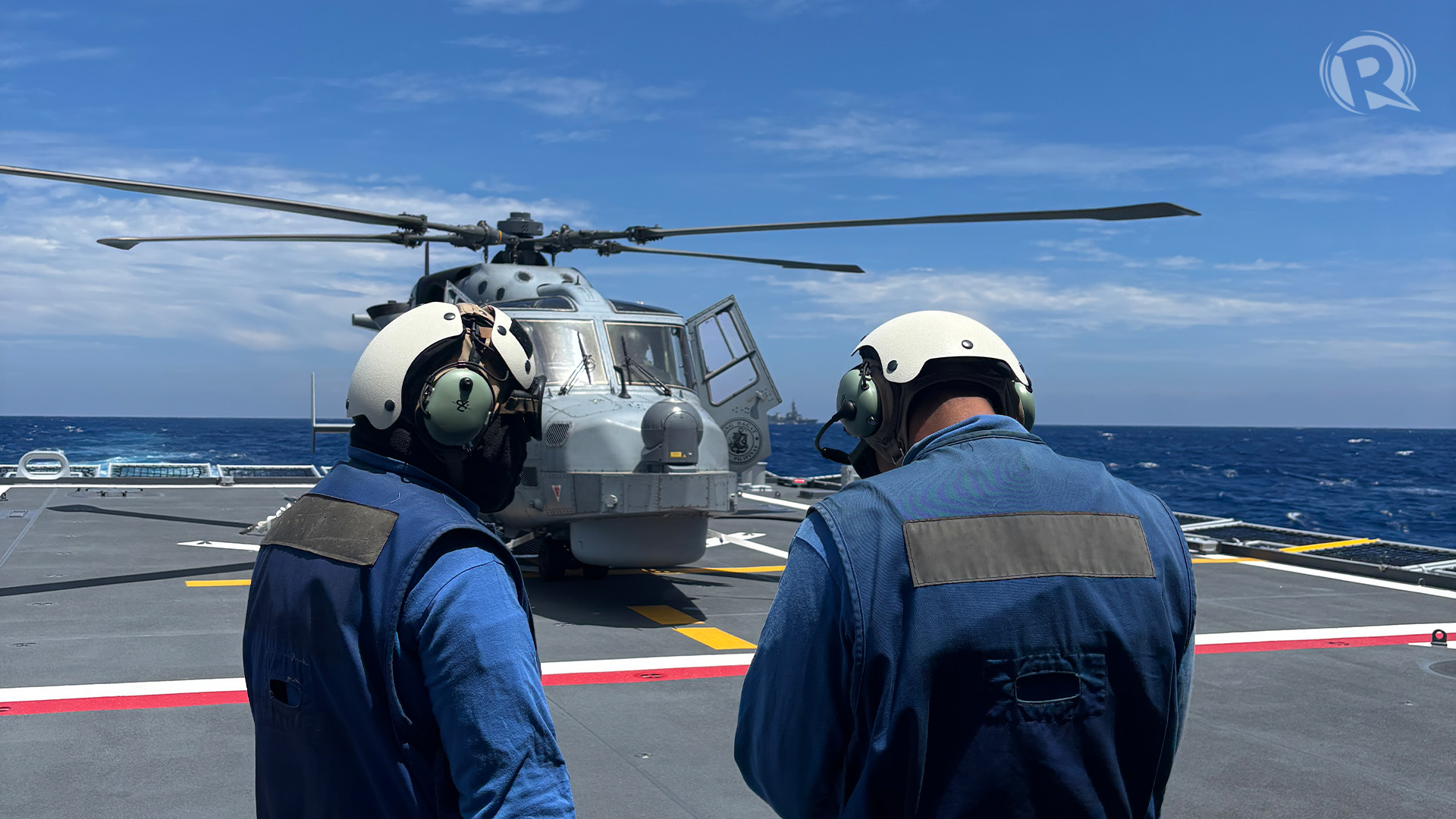
Flanking the frigates were the modern fleet’s first and latest acquisitions.
The BRP Tarlac, an Indonesia-made landing platform dock, was the first major vessel to be delivered in 2016 under the new modernization program. Beside it stood a similar ship, the BRP Davao del Sur. Both Tarlac and Davao del Sur are the largest of the Navy’s vessels that perform a wide array of tasks — humanitarian and disaster response, as well as resupply missions for features in the West Philippine Sea.
Beside Tarlac was the BRP Ramon Alcaraz, a US coast guard cutter commissioned to the Philippines in 2013. She’s a senior citizen in human years, but remains a steady and reliable workhorse for the fleet, especially for maritime patrols in all fronts of the country’s maritime spaces.
On the other side of the lineup was the freshly commissioned BRP Rajah Lakandula, an OPV. It was the first to berth at the Naval Station Jose Andrada in Manila, after dredging work in the area.
Reality check
That the Philippine Navy’s newest and most modern platforms are docked in a private facility in Subic, where the government must pay fees for usage, illustrates the difficulties the AFP continues to face despite strides in modernization since 2012.
The privately owned NOB-Subic is still the largest port facility for the Navy. The waters off the Naval Station Heracleo Alano in Cavite (popularly known as Sangley Point) are far too shallow for the newest assets of the Philippine Fleet.
This is why the defense department is looking to finally acquire and convert some 300 hectares of the state-owned Philippine Veterans Investment Development Corporation (Phividec) Industrial Estate in Tagoloan, Misamis Oriental, into a naval base that will include drydock facilities. However, over a year since Defense Secretary Gilberto Teodoro Jr. confirmed that the department was proceeding with the planned acquisition, talks have yet to wrap up.
 READ
Teodoro says Misamis Oriental will be center of Navy ops in Northern Mindanao, Visayas
READ
Teodoro says Misamis Oriental will be center of Navy ops in Northern Mindanao, Visayas
A rusty past
Things were vastly different a dozen years ago.
Then-military chief Gregorio Catapang Jr. recalled that in one naval gunfire exercise, rust icicles would fall on the beddings of sailors inside a hand-me-down battleship. At the time, the Navy’s newest vessel was the BRP Conrado Yap, a secondhand corvette from the South Korean Navy. Before her were the secondhand vessels from the US, the Del Pilar class.
Today, more vessels are coming — mostly brand-new ones, although both Japan and South Korea are also set to transfer their existing five and two warships each.
The Indonesia-made BRP Tarlac and BRP Davao del Sur, named after the home provinces of the presidents under whom they were commissioned, will soon be joined by the BRP Ilocos Norte and the BRP Leyte. At least four more OPVs of the BRP Rajah Sulayman class will be delivered to the Philippines, and the BRP Diego Silang will eventually be joined by two more sister ships.
Senior officers of the military are not one to take for granted the relative speed at which modernization has taken place.
- 2012Standoff at Bajo de Masinloc. Congress passes RA 10349 in December.
- 2013BRP Ramon Alcaraz commissioned
- 2016BRP Tarlac delivered, the program’s first major vessel
- 2020–2021BRP Jose Rizal and BRP Antonio Luna, the first brand-new frigates
- 2025BRP Miguel Malvar (summer) and BRP Diego Silang (December) commissioned
- 2027End of the program’s 15-year horizon
SILANG’S CHIEF. Captain John Percie Alcos is the first commanding officer of the BRP Diego Silang.
The AFP’s long-overdue modernization, to a large extent, was spurred by China.
In 2012, the Philippine Navy was in a brief standoff with Chinese maritime forces in Bajo de Masinloc (Scarborough Shoal).
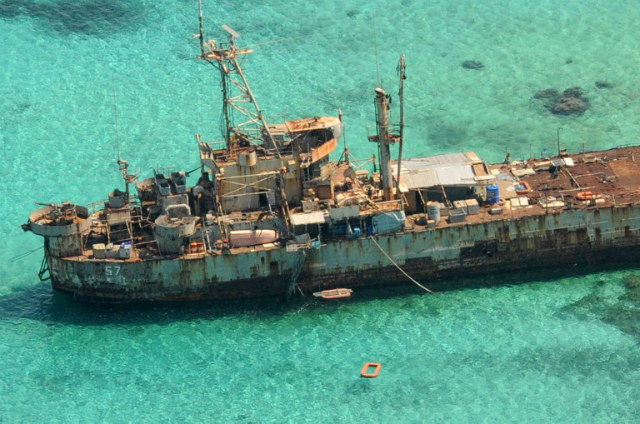
By June that year, the Philippines eventually withdrew the white-hulled Philippine Coast Guard (PCG) vessel, expecting China to do the same under a deal supposedly brokered by the United States. Beijing stayed.
To this day, at least one China Coast Guard (CCG) ship is stationed at the opening of the shoal, with at least one or two more roving within its vicinity. Chinese Maritime Militia serve as force multipliers in Beijing’s sovereignty claim over the shoal.
In early December 2012, the Philippine Congress passed Republic Act No. 10349 or the Revised Armed Forces of the Philippines Modernization Program Act, a 15-year plan divided into three horizons.
 READ
FAST FACTS: Big ticket items in the Philippine Navy’s modernization
READ
FAST FACTS: Big ticket items in the Philippine Navy’s modernization
China’s actions and apparent aspirations in the West Philippine Sea, an area that includes the Philippines’ exclusive economic zone (EEZ) and features where it has sovereignty claims, is the most obvious priority in the military and the reason for the Navy’s shift in focus to external defense.
But the western front is only one of five critical spots that the Navy must cover, through its fleet, the Marines, and other units that monitor and detect potential threats.
To the east is the Pacific Ocean, with the yet-to-be-tapped Philippine Rise in the northeastern part of the country’s vast maritime area. The “bigger domain” east to the Philippines is where the military must “start building infrastructure and logistical bases,” said Teodoro in an August 2026 budget hearing.
Down south are both sea-lanes and porous borders between the southernmost Philippines and neighbors Malaysia and Indonesia.
NORTHBatanes and Taiwan
WESTWest Philippine Sea
EASTPacific Ocean, Philippine Rise
BETWEENArchipelagic sea-lanes
SOUTHSea-lanes, borders with Malaysia and Indonesia
Between the major island groups are archipelagic sea-lanes that are vital not only for domestic use but also for international trade and freedom of navigation. The Philippine Archipelagic Sea Lanes Act codified the 2016 Arbitral Award by identifying where foreign vessels, including the military kind, may pass.
Up north is where the AFP, non-uniformed experts, and pundits may feel the most anxious. Taiwan, an issue that for China is even touchier than the South China Sea, is a flashpoint for tensions not only between independently governed Taipei and Beijing, but the rest of the region.
Self-proclaimed Chinese scholars have claimed that the northernmost Batanes province is part of Taiwan and therefore, also China’s. The Chinese embassy in Manila, in September 2026, claimed “sovereign rights” over waters between Batanes and Taiwan.
Tensions over northernmost features started after the Philippines and Japan announced maritime delimitation talks.
President Ferdinand Marcos Jr. has ruled out offensive attacks from the Philippines, even in the event of a Taiwan conflict. But the sheer proximity of the country’s northern provinces to Taiwan is also why Marcos has said that Manila would be dragged into the conflict “kicking and screaming.”
All of those potential flashpoints and weakpoints are where the Navy — the fleet, the Marines, and special units like the elite Special Warfare Force — is expected to always be on the frontlines and in the forefront.
 READ
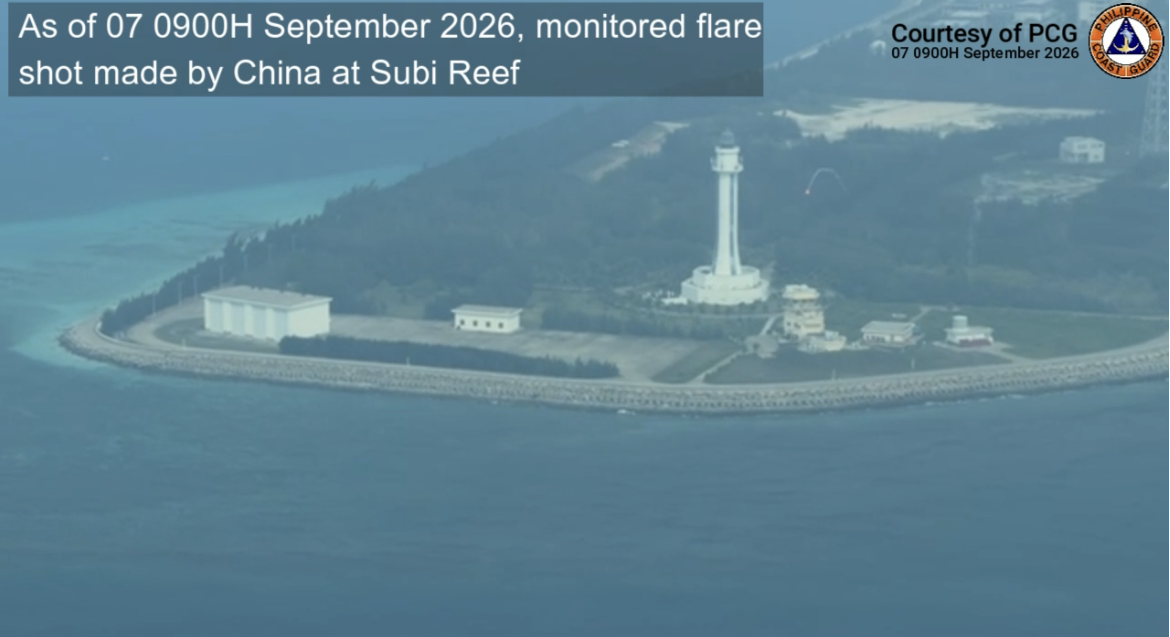
Philippines tells China: Leave Panganiban, Zamora reefs in West PH Sea
READ
Philippines tells China: Leave Panganiban, Zamora reefs in West PH Sea
It’s a tall order when budgets are perennially tight, assets remain limited to serve a vast archipelago, and resource gaps exist.
But as one officer once put it, the Navy and the rest of the armed forces have always managed to do the most with even the barest of means.
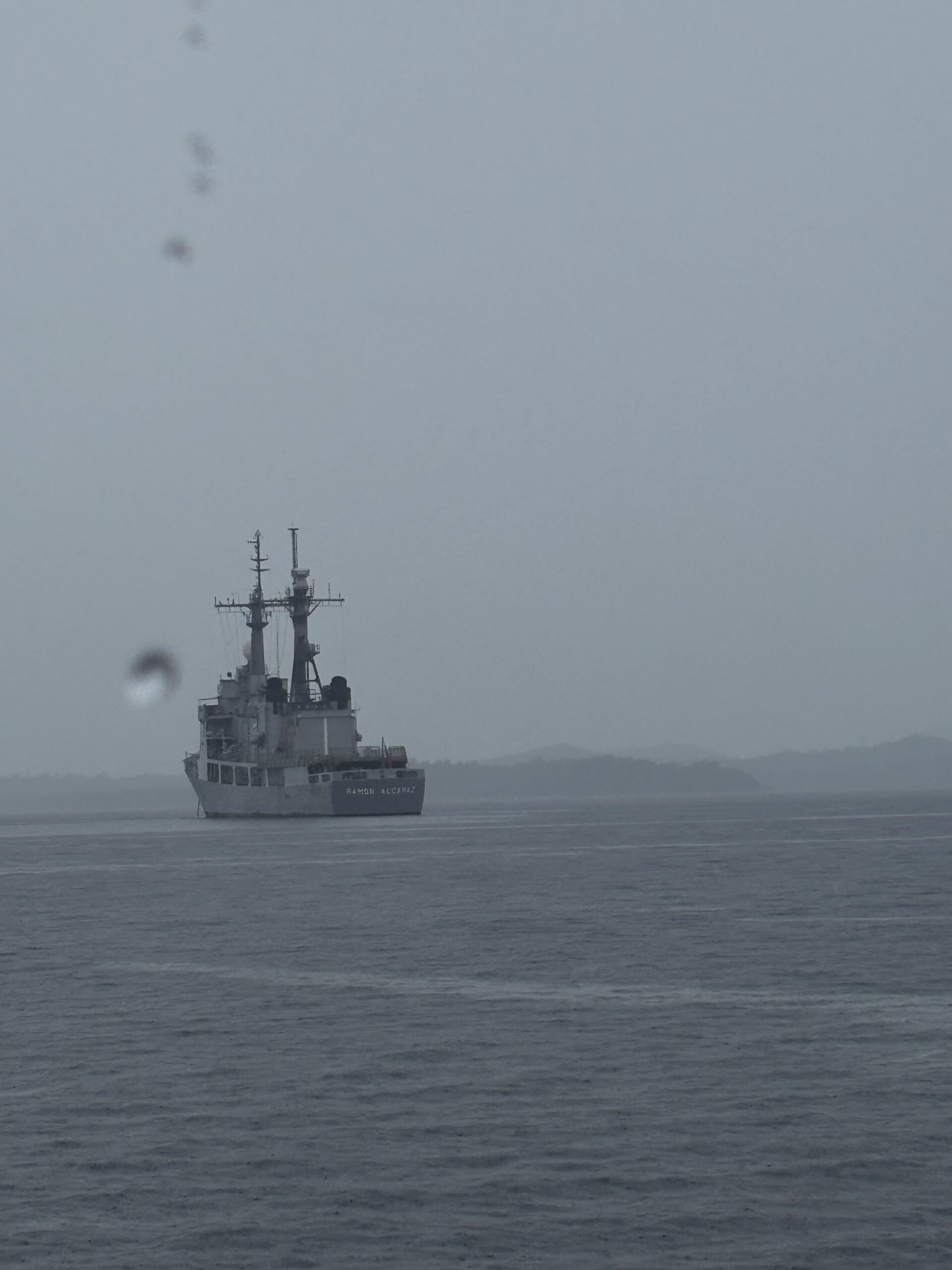
On most days, Ulugan Bay in Palawan is a picture of calm.
Tucked in the middle of Palawan island, the bay is close to the Western Command (Wescom) in Puerto Princesa City, the site of an air base where American troops may preposition assets under the bilateral Enhanced Defense Cooperation Agreement. It’s the center of West Philippine Sea operations for the Philippine military.
From Ulugan Bay, Pag-asa (Thitu) Island, the Philippines’ farthest civilian-populated island in the west, is just around a day’s sail away. It takes under two hours by military cargo plane to fly from Wescom’s Antonio Bautista Air Base to Rancudo Airfield in the remote island.
On a rainy June afternoon in 2024, the three vessels of the Del Pilar class — the BRP Gregorio del Pilar, the BRP Ramon Alcaraz, and the BRP Andres Bonifacio — were all moored in the middle of the bay as inclement weather slowly creeped into the Palawan mainland from the West Philippine Sea.
The Bonifacio had just narrowly missed bad weather in the West Philippine Sea after a weeklong Maritime Domain Awareness mission with reporters on board. The same weather conditions would cause a Chinese fishing vessel to run aground near Pag-asa (Thitu) Island.
The Del Pilar, former US Coast Guard cutters that were launched in the 1960s and commissioned into the Philippine Navy as frigates in 2011, 2013, and 2016, are the senior citizens of the Philippine Fleet.
They have since been upgraded beginning in the 2020s to more modern systems, as the South Korea-made frigates started arriving and the Del Pilar ships were reclassified as OPVs.
Dotting the shoreline of Ulugan Bay are private and public resorts and secluded homes — that is, until you get closer to Naval Detachment Oyster Bay, where smaller patrol ships, attack craft, and the Navy’s supply vessels are usually docked.
The detachment itself is surrounded by vast greenery.
In 2002, then-president Gloria Macapagal-Arroyo declared at least 1,838 hectares of land as part of the Ulugan Bay Naval Reservation, with most of it dedicated for what was then the proposed Naval Operating Base Ulugan.
More than two decades later, Oyster Bay is the site of major upgrades, thanks in part to the United States, treaty-ally of the Philippines. In 2025, the US announced several plans for the bay — a boat repair and maintenance facility, a fast boat base, and maintenance facility for unmanned surface vessels.
These planned upgrades are a huge boost to the capabilities of the Wescom, whose area of operation includes most of the West Philippine Sea — from the BRP Sierra Madre in Ayungin Shoal to Pag-asa (Thitu) Island, located beyond the country’s EEZ.
They’re part of the Navy’s “broader effort to strengthen the Armed Forces of the Philippines’ external defense capabilities, particularly its ability to sustain maritime operations in the West Philippine Sea,” said Navy public affairs chief Captain Marie Angelica Sisican in a message to Rappler.
Sisican, citing Teodoro’s earlier statements from 2024, said naval facilities on the western side of Palawan would “reduce the distance that naval assets would otherwise have to cover in conducting operations.”
US-funded projects, including the boat maintenance facilities, are “intended to enhance the [Philippine Navy’s] repair and maintenance capabilities for watercraft, including unmanned surface vessels, while improving existing infrastructure.”
The facility will cater to both the AFP and the PCG for “capabilities related to maritime security, maritime domain awareness, interoperability, and infrastructure development.”
Indeed, it’s the Wescom in Palawan and the Northern Command up north that have become the focus of US assistance.
America’s “once-in-a-generation investment” was first announced in 2024, a total of $500 million in foreign military financing for the Philippines. This has since grown to a $2.5-billion commitment in military aid over five years, from 2026 to 2030, under the US 2026 National Defense Authorization Act signed in December 2025.
2024 · Foreign military financing$500 million
2026–2030 · US 2026 NDAA$2.5 billion
The support for the US-Philippine alliance is one of the bipartisan issues in a deeply divided Washington, an indication not just of shared values but of common strategic interests. Even as US President Donald Trump has signaled a “strategic stability” with China, America still wants a “favorable, but durable, balance of power in which no state — including China — can impose its hegemony and hold the security or prosperity of our nation and our allies in question,” said US Defense Secretary Pete Hegseth at the Shangri-La Dialogue in Singapore in May 2026.
 READ
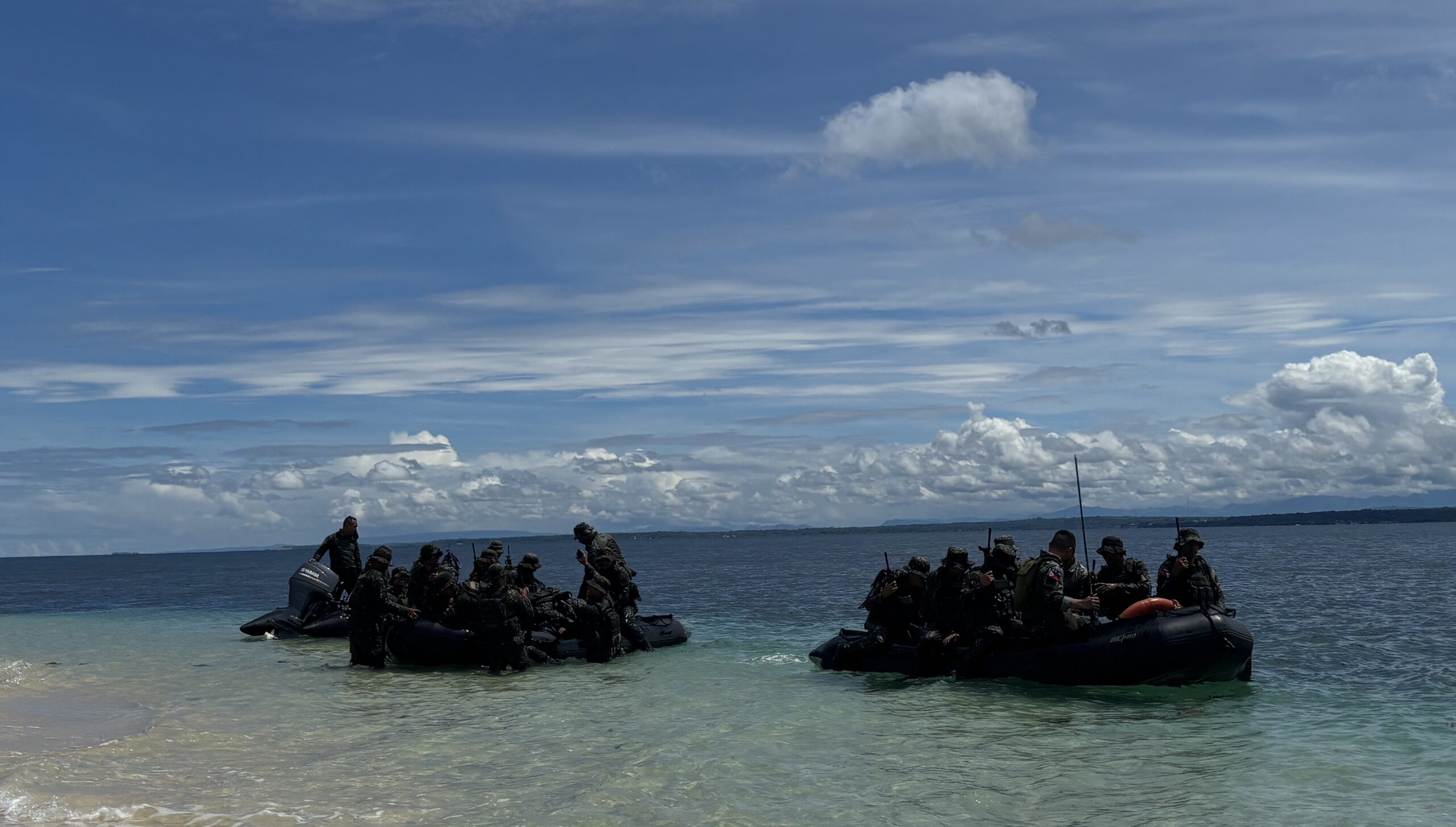
No alibis: Retooling and modernizing the Marines
READ
No alibis: Retooling and modernizing the Marines
But even with bipartisan support for aid to fund the Philippines’ military upgrades, the White House’s message for partners and especially allies is clear: burdens must be shared. “Alliances only work when they are true partnerships. It is a two-way street. You don't have a strong alliance unless everyone has skin in the game. No freeloading,” said Hegseth in Singapore.
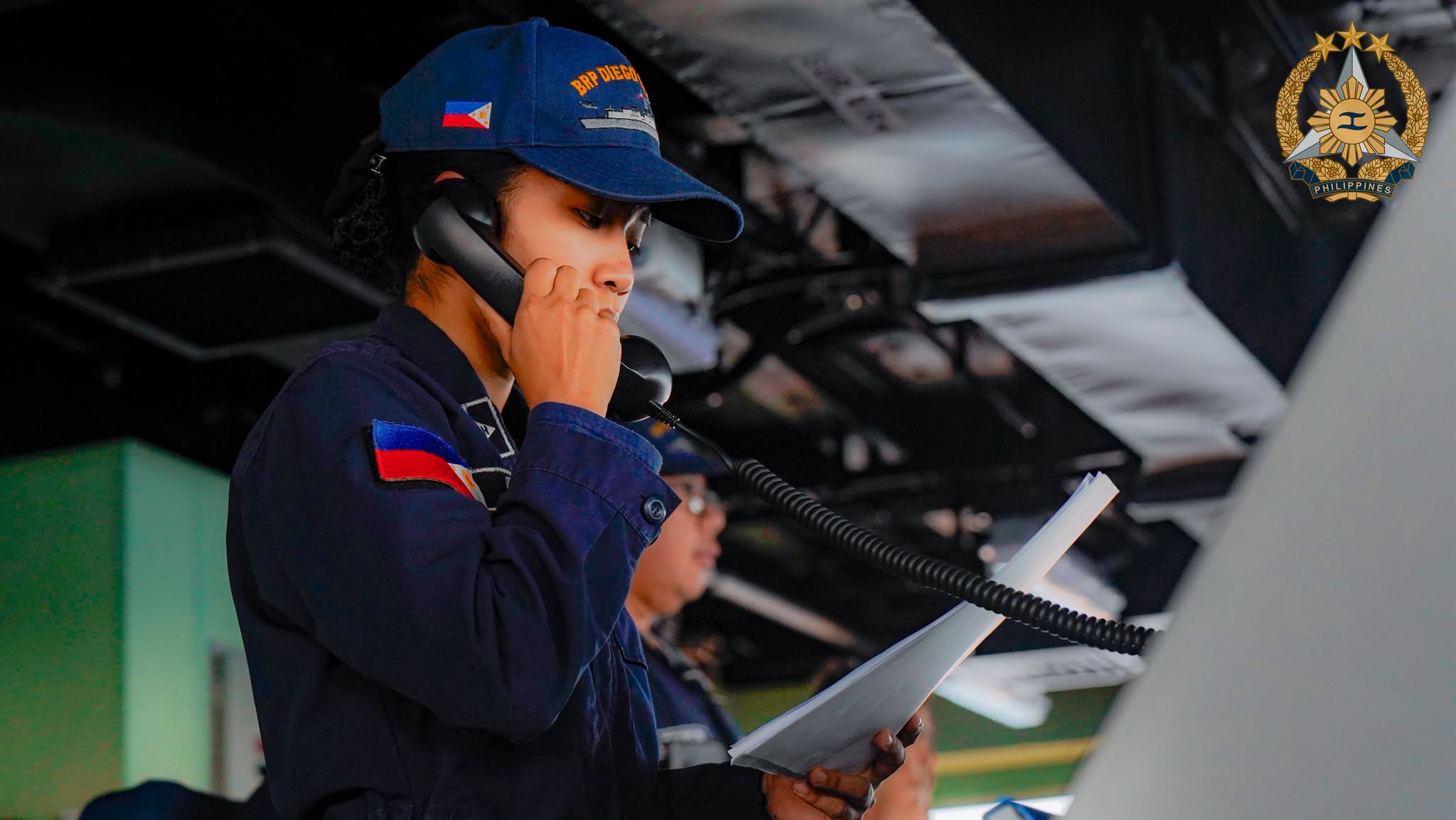
At the bridge of the BRP Diego Silang, a junior officer was calm as she pored over the lines that she would repeat many times over in the coming hour or so.
It was August 22, 2026, and a Chinese navy ship sailed nearby, some 7 nautical miles away, as the Silang headed to a point in Escoda (Sabina) Shoal for a maritime patrol and a joint sail with Australia and the United States. The People’s Liberation Army (PLA) Navy ship had been trailing the Silang since the day prior.
It was her turn, as the junior officer on duty, to issue Silang's challenge to the interloper.
Before she could settle into her station, the speakers crackled. From it, the bridge heard the slow and deliberate voice of a Chinese sailor claiming Beijing’s "indisputable sovereignty” over Escoda Shoal, a low-tide feature where sovereignty cannot be claimed.
It was the Chinese warship’s first response to the Silang after previous challenges went unanswered.
The junior officer and the rest of the crew were unperturbed. She picked up a phone handset and spoke deliberately. It was her voice that the bridge over at the Chinese navy ship heard. “PLA Navy 536, this is Philippine Navy warship 7. You are a state party to UNCLOS. You are endangering our security. Leave the vicinity immediately — over.”
The August 2026 exercise was just one of many the Silang has been part of since its commissioning in December 2025. There has been little rest — after its first exercise in Philippine waters was a long sojourn to Australia for the multilateral naval exercise Kakadu. Between drills with allied and partner navies, it spent a few weeks out at sea to safeguard a regional meeting.
Alcos, during the five-day mission at sea, showed some signs of tiredness, even as he was quick to say the pace of engagements is one that he welcomes. The Silang’s crew, especially its officers, are young and eager to learn.
Some had been assigned to older warships, a few more to the Rizal or the Malvar. Other personnel of the Silang may soon man the newly arrived OPVs. From her crew could be the future commanding officers of modern platforms — frigates, landing platform docks, or OPVs that are forthcoming.
At around 6:30 in the evening, the speaker system of the Silang crackled again — this time, for prayer that was slowly and deliberately recited for all of its crew to hear. Most of the lines were standard fare, but a few were specific to a soldier’s life.
“Ipagtanggol mo kami sa karahasan ng mga kalaban (Defend us from the enemy’s violent ways).” The short prayer also asked God to save the Silang’s crew and their comrades in the Navy from disaster and other harms out at sea.
In the vastness of the West Philippine Sea, faith is essential — in a God who looks after a ship and her crew, in skills that her officers have earned and honed through the years, and in a steadfast commitment to defend what Filipinos have always known is theirs. – Rappler.com
KioskNews shows a cleaned-up reading view extracted from the publisher’s page — the original always lives on their site, not ours.