Continue to hold firm on West Philippine Sea arbitral ruling, Carpio told Filipinos
Make this your preferred source to get more updates from this publisher on Google.
Filipinos must keep on standing their ground in the West Philippine Sea amid the latest tensions between Manila and Beijing over the country’s exclusive economic zone.
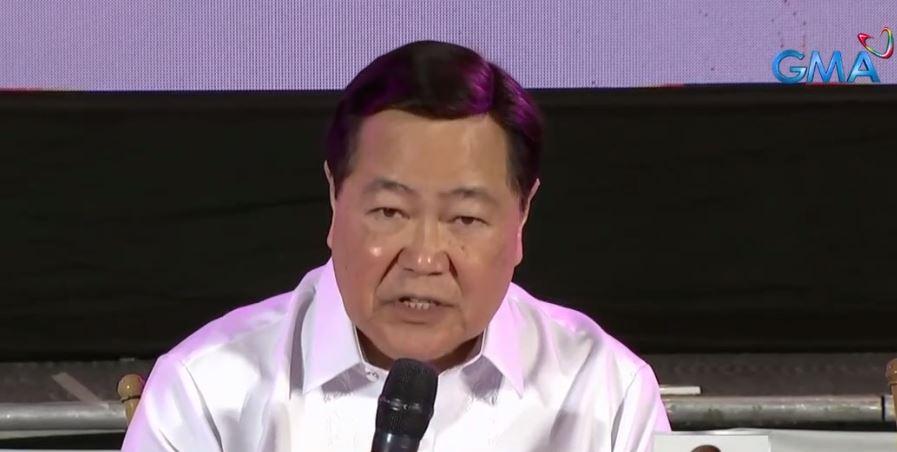
“It is our obligation to protect that, not only for the present generation, but future generations,” retired Senior Associate Justice Antonio Carpio said.
This was after Defense Secretary Gilbert Teodor Jr. received a note from a Chinese official, reiterating China's rejection of the 2016 ruling of the Permanent Court of Arbitration in favor of the Philippines over the maritime claims, during an international forum.
Teodoro lashed out at China's claim in the South China Sea after he was handed the unsigned note
Carpio said Filipinos should never compromise when it comes to national territory and sovereign rights. In The Unsinkable Spirit, a three-part documentary that narrated how generations of Filipinos have defended the West Philippine Sea from China’s aggression through diplomacy and commitment to international law, Carpio said that the work ahead is an intergenerational struggle.
He further said that the previous generation already laid out the foundation by winning the arbitral ruling but that it still not enough.
“The Constitution, in the end, only promises the inheritance. Each generation still has to go out and hold it,” Carpio said.
On July 12, 2016, the Hague-based Permanent Court of Arbitration ruled that China's sweeping claims over nearly the entire South China Sea had no legal basis under the United Nations Convention on the Law of the Sea (UNCLOS), in a case brought by the Philippines in 2013.
For geopolitical analyst and professor Chester Cabalza, the ruling is considered Filipino First in its purest constitutional form. The idea of Filipino First is often associated with late President Carlos Garcia and his economic policies in the 1950s and was eventually embedded in the 1987 Constitution.
“Our fisherfolk feed the Filipinos and if they could not fish, how could they feed us? The award was decided in their favor in the most concrete way available: Filipino fisherfolk have the right to fish in the West Philippine Sea,” Cabalza argued.
“A Filipino fisherman, inside a Filipino exclusive economic zone, exercising a right the Constitution reserved to him exclusively — and a state under a written obligation to make that right real,” he said.
Supreme Court spokesperson Camille Ting explained that the Filipino First policy requires the state to give preference to qualified Filipinos when granting rights, privileges and concessions involving the national economy and patrimony.
The strength of this policy was already proven some 30 years ago in a case between the Manila Prince Hotel and the Government Service Insurance System. Ting said “the policy is self-executing, meaning it can be enforced directly without an implementing law.”
“National patrimony is not limited to the country's natural resources. It also includes the Philippines' cultural heritage and other assets that form part of the Filipino identity,” Ting said.
Meanwhile, amid the still ongoing tensions, Cabalza emphasized that the theme right now, for many nations around the world, is strategic autonomy which means that a nation can stand on its own, even if it has treaty alliances. He noted that it was a Filipino idea to sue China and not because it was dictated by some ally.
“If we do not protect the Filipino First concept, it is so easy for major powers to just intrude in our homeland,” Cabalza said.
Philippine Coast Guard commandant admiral Ronnie Gil Gavan, for his part, insisted that Filipinos should always keep in mind the victory of the arbitration despite continued efforts from China to say otherwise.
"The law has remained to be the great leveler in the relationship amongst countries, big or small. We are equal insofar as the law is concerned. And it has remained to be the best friend of weaker countries,” he said. —AOL, GMA News
KioskNews shows a cleaned-up reading view extracted from the publisher’s page — the original always lives on their site, not ours.