Thailand bets on local AI as Chinese drones dominate its skies
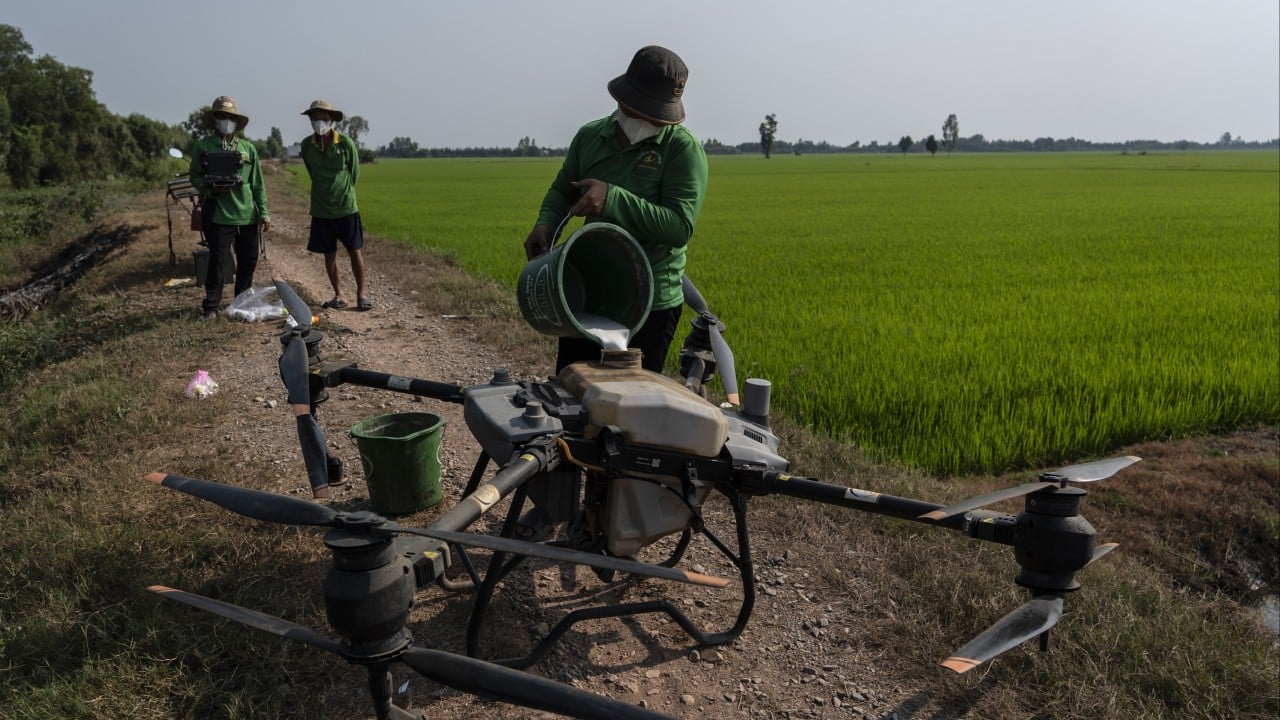
Drones could save Thai farmers fortunes in fertiliser and water management as a “super El Nino” withers harvests – while also mapping flood risks and safely scouring vast industrial sites, from oil rigs to solar farms, for damage.
Yet across Southeast Asia, Thailand is still heavily reliant on Chinese hardware to bring the technology into its economy, creating a price gap that prevents the benefits of drone technology from being shared equally.
Thailand is pushing hard on tech adoption to help withstand wider economic pressures, with AI-assisted drones already an essential part of the toolkit for larger agricultural and industrial businesses that can afford them.
The kingdom’s domestic drone market is worth around US$260 million and is growing at 10 per cent a year, according to organisers of the DronTech Asia exhibition, an annual industry trade show in Bangkok.
As part of that growth, “made-in-Thailand” software is being developed to tackle specific local challenges – such as cleaning acres of new solar farms or building data sets to manage increasingly severe floods and droughts.
At DronTech Asia this week, visitors perused everything from crop-spraying drones with 15-metre (49-foot) wingspans to agile, backpack-sized UAVs built for combat and surveillance - technology increasingly used by Thai security forces in the country’s restive south and along its borders with Cambodia and Myanmar.
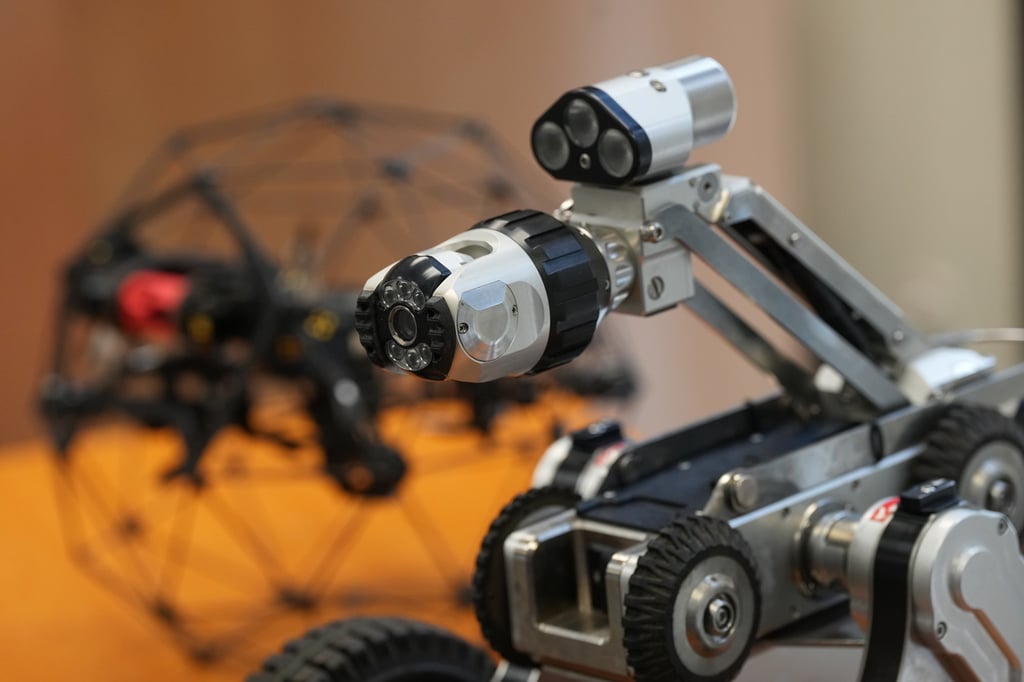
Other models on display are designed to deliver flood and rescue relief or have protective webbing around their rotor blades so they can safely navigate caves and flooded passageways to assess damage and search for survivors.
Data gleaned from aerial footage is already paying dividends for early adopters, said Piyadol Hirunjaruwong, chief operating officer at drone imaging firm SkyVIV.
“Drones can capture aerial imagery and map crop health. In a single day, they can cover nearly 10,000 rai [nearly 4,000 acres],” he said. “They help save time on work, eliminate the need to apply fertiliser uniformly across the entire field and improve precision in solving problems.”
With extreme weather increasingly decimating cropland – from seasonal monsoon floods to severe droughts expected to worsen this year as a super El Nino threatens harvests for sugar cane, fruits and the late rice crop – drones can also map which areas will flood first and worst to help mitigate losses, he added.
“Technology is advancing very fast. Early adopters may need to invest, but the data they get is worth it.”
But businesses still rely on imported drones, mostly from China, which dominates global production with an estimated 7 million to 8 million drones manufactured annually.
China also leads the world in the low-altitude economy, rolling out commercial drone deliveries for food, goods and medicine across several cities. According to Chinese civil aviation authorities, 3.29 million drones were registered nationwide by the end of 2025.
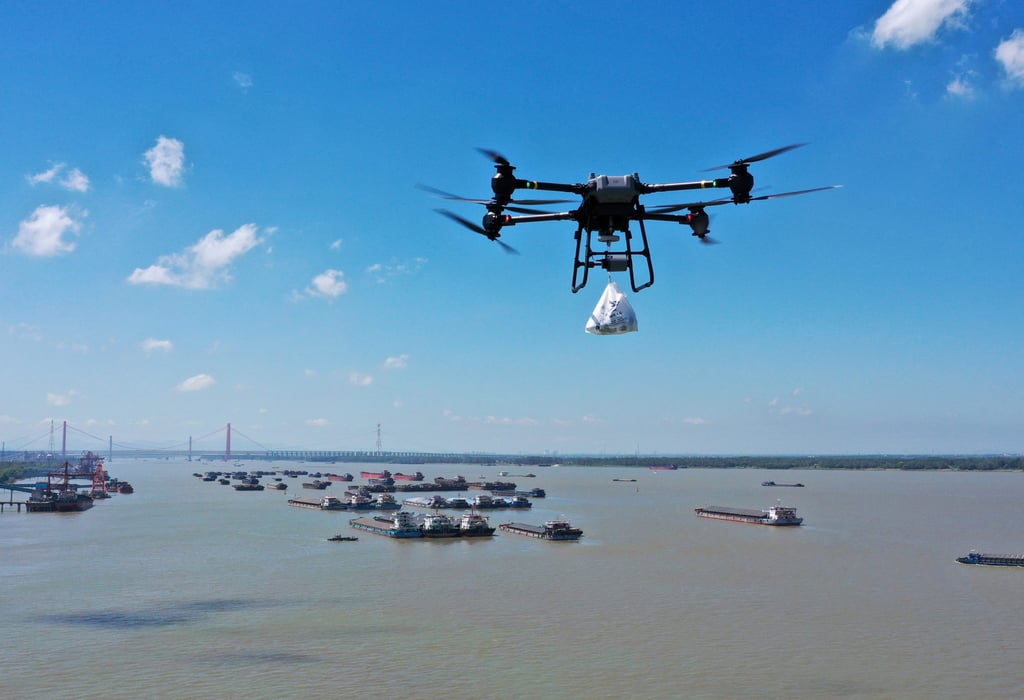
But for Thai firms, the cost of entry is steep. Industrial drones run anywhere from US$3,000 to well over US$50,000 per unit, restricting their use to larger companies, government-subsidised schemes and joint ventures.
The Thai government is keen to build up its advanced manufacturing base as it seeks to move up the value chain and wean itself off imported technology.
“Driving the digital economy is not simply about adopting new technologies,” said Nan Boontida Somchai, deputy minister of Digital Economy and Society, at the opening of DronTech Asia. “It also requires building Thailand’s capacity to develop, further advance and make practical use of these technologies.”
Among the expo’s show-stoppers were robotic dogs and a humanoid robot remotely controlled by a human linked to artificial intelligence.
Asawan Reungchoo, managing director of Thai robotics leader Systronics, said the country’s engineers were quickly building the software skills needed for the future.
“But really, we still have to import the hardware,” Asawan said. “Our target is the software – making the physical AI for real-world use in robots.”
KioskNews shows a cleaned-up reading view extracted from the publisher’s page — the original always lives on their site, not ours.