"Reckless": EU After Russian Ship Fires Flares At Danish Military Helicopter
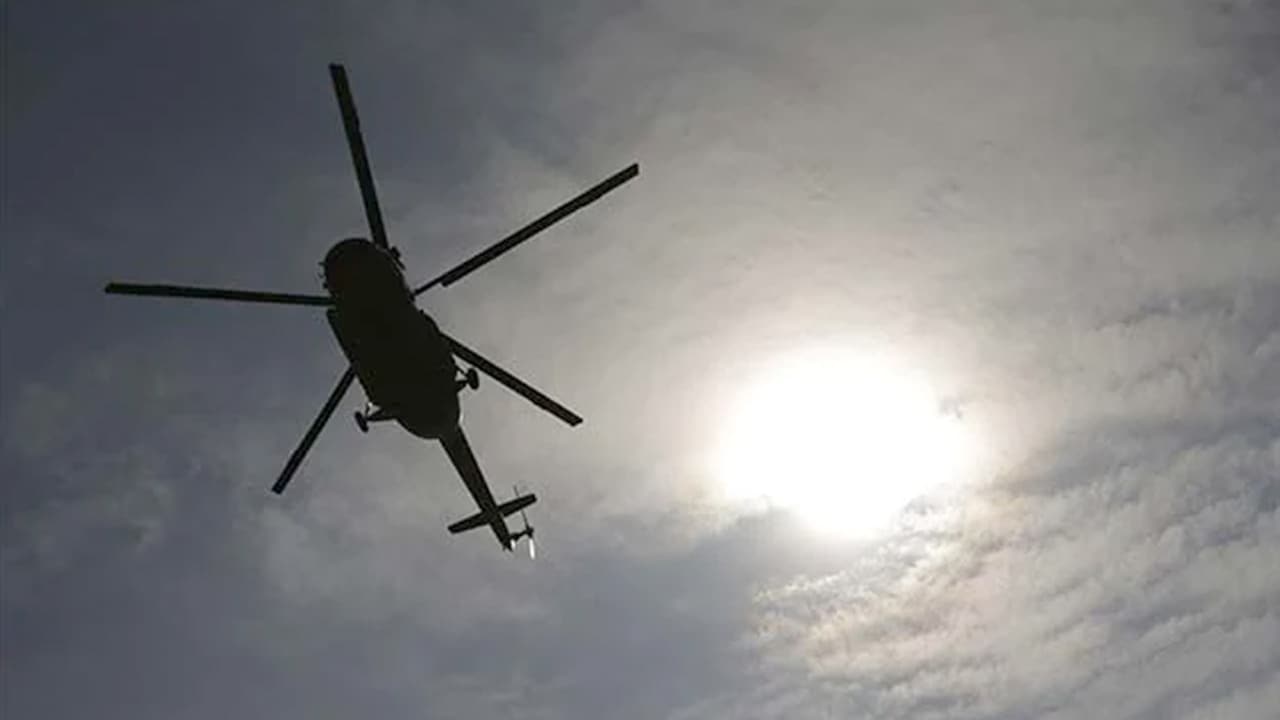
The European Union accused Russia on Tuesday of the "reckless" firing of flares at a Danish helicopter which, with the shooting down of a drone over Lithuania, heightened the continent's anxiety over the Ukraine-Russia war.
Amid a mounting security showdown, the Kremlin in turn focused its diplomatic fire on France's initiative to bring European countries under its nuclear umbrella, insisting it was "creating risks".
Denmark and Russia blamed each other for the flares fired at a Danish military helicopter monitoring a Russian frigate on Monday.
The Danish armed forces said that an air force Fennec helicopter was "fired at with flares during a routine photographic operation of a Russian frigate, which was located in international waters off Gedser", Denmark's southernmost town.
The frigate fired "two flares towards the helicopter. One of the flares passed at close range to the helicopter," said a military statement.
Lithuania announced that NATO fighter jets had shot down a drone over its territory, the latest security incident on the alliance's eastern flank.
President Gitanas Nauseda did not immediately say where the drone had come from.
But he said: "With Russia intensifying its aggression against Ukraine, such readiness is vital for our region."
Lithuania, Latvia and Estonia -- NATO members bordering Russia -- have regularly reported drone incidents since Russia launched its full-scale invasion of Ukraine in 2022.
'Dangerous Manoeuvres'
European Commission president Ursula von der Leyen condemned what she said was "reckless and dangerous Russian behaviour" after the security scares.
"These are not isolated incidents. They are part of a broader pattern of Russian aggression and provocation against Europe, testing our readiness and our resolve," von der Leyen said on X.
Danish Prime Minister Mette Frederiksen also condemned the "reckless action from Russia".
"Russian actions are meant to intimidate and divide. They will not succeed. We will not waver," she said.
Foreign Minister Lars Lokke Rasmussen said the actions were "completely unacceptable and could have put human lives at risk".
He said the Russian ambassador, Vladimir Barbin, had been summoned.
The latter said the helicopter had been at fault, however.
"The Danish side's attempts to explain the helicopter's provocative actions against the Russian frigate as 'routine practice' give rise to serious concern about the possible consequences of such recklessness," Barbin said in a statement.
"This is not the first time that Danish Air Force helicopters have carried out dangerous manoeuvres near Russian warships" outside Denmark's territorial waters.
He said he made a complaint last year over "dangerous flyovers and low-altitude hovering" by a Danish Air Force helicopter over an anti-submarine vessel.
Rising Tensions
In response, the foreign minister said Denmark's actions had been "completely legal".
"It doesn't give the Russians any kind of alibi to start firing at us, even if it's only with flares," it said.
Tensions around the Baltic Sea have risen sharply with the Russian invasion of Ukraine.
Denmark, a NATO member and staunch supporter of Ukraine, said last year that unidentified drones flew over several Danish airports and an air base where Ukrainian pilots are trained on F-16 fighter jets.
The flights began just days after Denmark announced that it would acquire long-range precision weapons for the first time, due to what it said was the threat posed by Russia.
With international efforts to end the war deadlocked and US President Donald Trump pressing Europe to pay more for its security, NATO's European members have stepped up support for Ukraine and their own defences.
On Tuesday, the Kremlin slammed a French initiative to extend its nuclear deterrent to other European countries after Finland said this week it would join the project.
"Of course, this is creating risks for us. And of course, we must control it," foreign ministry spokeswoman Maria Zakharova told reporters.
The project allows participating countries to temporarily host French nuclear-armed aircraft, while the final decision on the use of weapons would remain with the French president.
Zakharova called the scheme "reckless" and said the placement of French nuclear hardware closer to Russia's borders would only make it "simpler" for Russia's military to hit it in the event of a conflict.
(Except for the headline, this story has not been edited by NDTV staff and is published from a syndicated feed.)
KioskNews shows a cleaned-up reading view extracted from the publisher’s page — the original always lives on their site, not ours.