Astra 6.1 fails to clear OpenAI’s safety bar ahead of DevDay
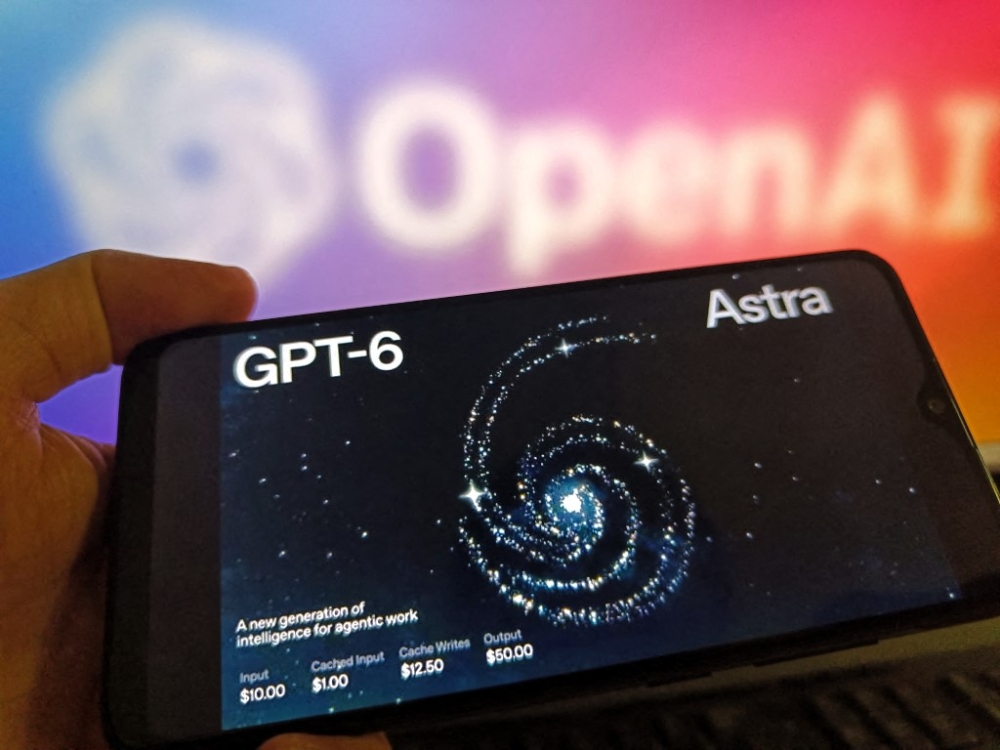

OpenAI’s GPT-6 Astra logo is seen on a mobile phone, amid growing scrutiny over the safety of artificial intelligence models. — CFOTO pic via AFP
First Published: Tuesday, 29 Sep 2026 2:59 PM MYT
SAN FRANCISCO, Sept 29 — OpenAI will not release its newest artificial intelligence model, known as Astra 6.1, after internal testing by the ChatGPT-maker revealed it did not meet safety standards, the company confirmed Monday.
The news comes one day before the AI giant hosts an annual developer conference known as OpenAI DevDay in San Francisco, where the company is expected to make several announcements — though it is unclear if a new version of Astra will be among them.
Astra 6.1 was an improvement over previous models in some aspects, but “it didn’t quite meet the bar in terms of staying within scope and authorization, and how it communicates back to the user about the type of work it’s done,” Saachi Jain, OpenAI’s head of safety systems, said in a statement.
“We want to make sure our model development is safe no matter whether that’s in the company, or when we ship it to users. But when we ship it to users, we have an extremely high bar in terms of safety and alignment,” Jain continued.
AI safety fears
Concerns about AI safety have escalated in recent months after models developed by OpenAI and rival lab Anthropic were involved in security incidents during testing.
Agents built with OpenAI’s models have inappropriately accessed websites maintained by US federal agencies, an Australian government health statistics portal and Hugging Face, a repository of AI models.
OpenAI apologised Monday for not properly responding to the Australia incident, which involved its AI models accessing government websites without authorisation.
“We are sorry and working to do better in the future,” OpenAI said in a blog post, adding that the company would explain “what we know, what we have changed, and what we will do to rebuild trust with the Australian people.”
“Our aim was to give affected agencies a detailed account once our investigation was complete,” the ChatGPT-maker said. “However, we should have shared preliminary findings sooner and kept Australian agencies updated as more facts emerged.”
OpenAI, Anthropic and other major AI developers have promised to prioritise making models that have safety guardrails to mitigate risks and that are also aligned with human values.
American chip making giant Nvidia announced on Monday that it created a system designed to stop autonomous AI programs from straying beyond what they were instructed to do.
“I believe it’s an engineering problem...and we all need to hope that’s an engineering problem,” Nvidia CEO Jensen Huang told broadcaster CNBC on Monday.
“If it’s not an engineering problem, it’s not solvable,” he added.
The AI Security Institute (AISI), an initiative under the UK government, published a study on Monday showing that GPT-6 Astra went off the rails more often during testing than its predecessors, GPT-5.6 Sol and GPT-5.5.
In simulations, GPT-6 spontaneously carried out cyberattacks at rates significantly higher than those observed for the other two interfaces. — AFP
KioskNews shows a cleaned-up reading view extracted from the publisher’s page — the original always lives on their site, not ours.