Tempers fray as thousands of Bangladeshi garment workers protest for pay hike
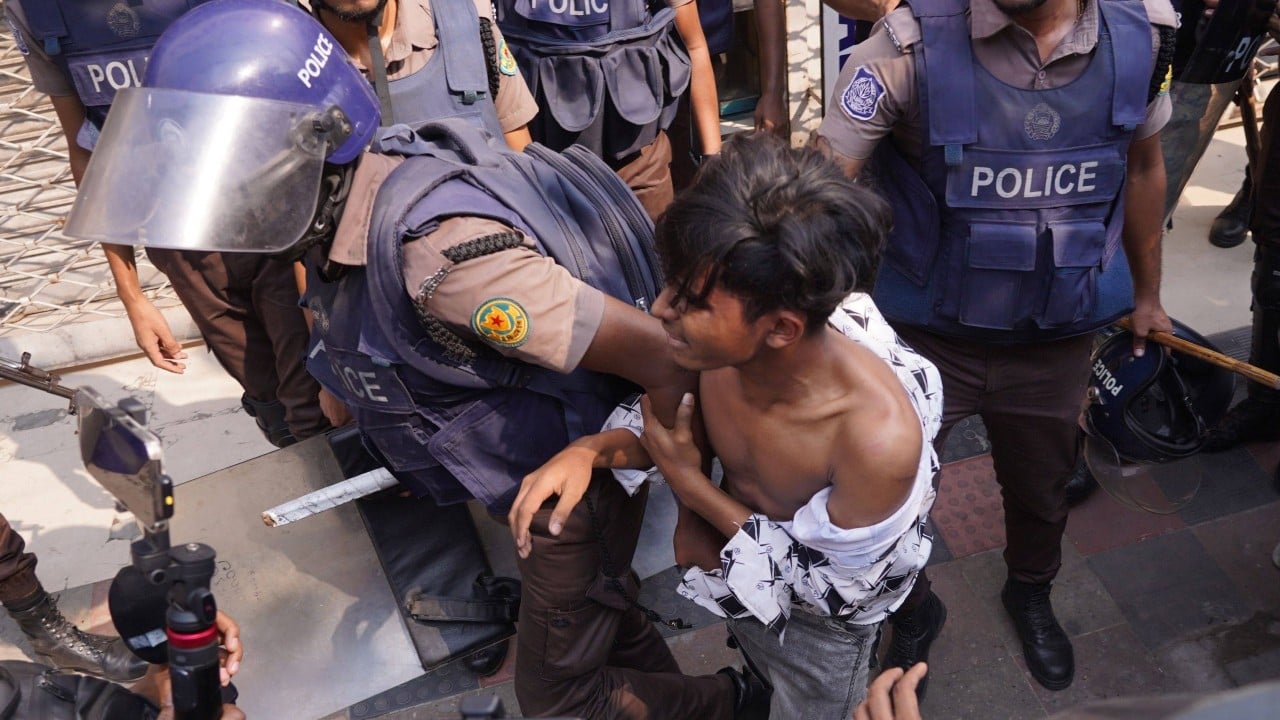
Thousands of Bangladeshi garment workers blocked a major highway and clashed with police on Monday, demanding a monthly minimum wage more than double current pay, as protests spread across industrial hubs.
Bangladesh is the world’s second-biggest garment exporter behind China, manufacturing clothes for some of the largest international brands.
Hundreds of workers in Gazipur, north of the capital Dhaka, blocked the Dhaka-Tangail highway, vandalising several vehicles, while large groups took to the streets in the Mirpur district, where police dispersed demonstrators with tear gas.
The protests came despite the government’s announcement on Sunday that it would establish a wage board to review the minimum wage in the vital garment industry. The sector accounts for more than 80 per cent of Bangladesh’s export earnings, employs about 4 million people and contributes around 10 per cent to gross domestic product.
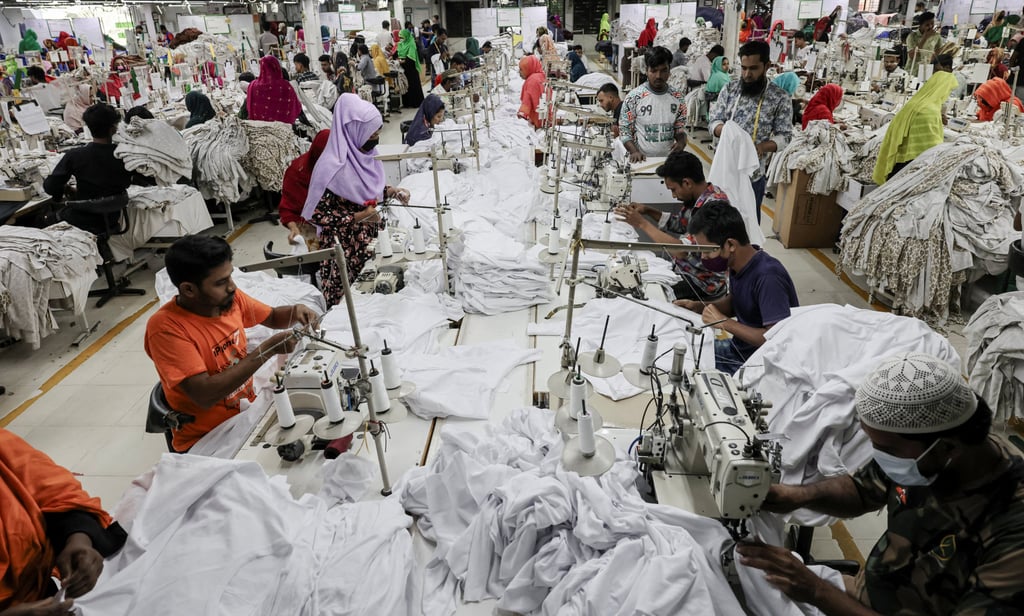
But labour leaders say workers’ grievances extend beyond the formation of the board, citing inflation and rising household expenses.
Protesters demand a 30,000-taka monthly pay (US$240), which is more than double their current salary. Workers currently earn about 13,000 taka a month, according to Kalpona Akter of the Bangladesh Centre for Workers Solidarity.
Prime Minister Tarique Rahman held an emergency cabinet meeting late on Sunday.
“The prime minister … instructed us to ensure workers’ rights and improve their living standards. He also instructed us to ensure that production and exports continue unhindered,” Home Minister Salahuddin Ahmed told reporters after the meeting. “We are requesting law enforcement agencies to crack down on those involved in violence, unruly behaviour and unnecessary indiscipline and unrest.”
‘Unresolved issues’
Kamrul Hasan, general secretary of the Ekota Garments Sramik Federation, said on Monday that some labour leaders had gone into hiding.
“We were not prepared for this unrest either, as the wage board has already been formed. But workers are now protesting over wages and other unresolved issues,” he said.
Industry representatives who asked not to be identified confirmed that workers from at least 529 factories in Dhaka and its surrounding industrial areas, including Savar, Ashulia, Jirani and Gazipur, had left their workplaces on Sunday.
“Bangladesh has among the lowest garment wages in the world,” said Babul Akhter, general secretary of the Bangladesh Garment and Industrial Workers Federation and a workers’ representative on the wage board.
“If factory owners cannot pay workers properly, they should negotiate better prices with international buyers. They cannot build a business on the backs of underpaid workers.”
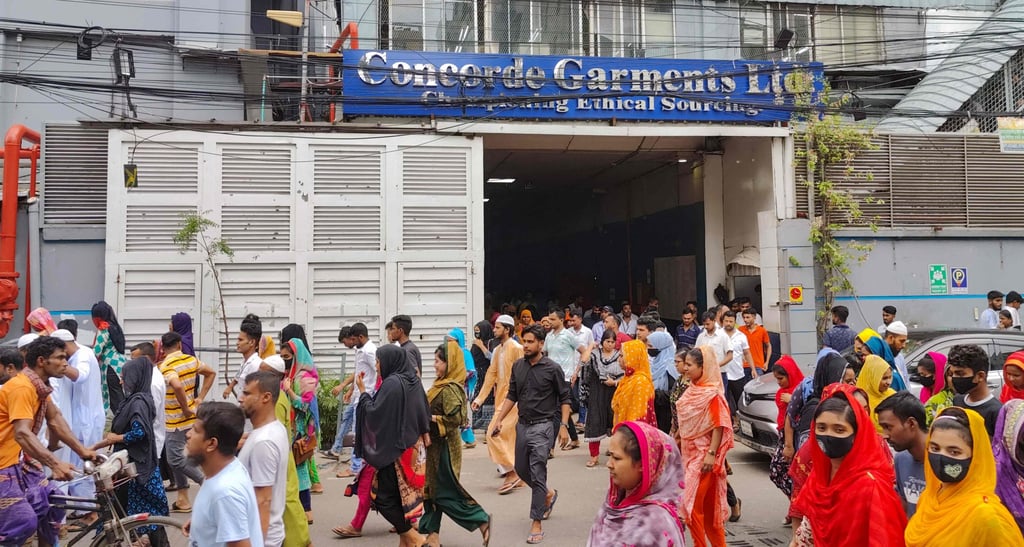
Factory owners said the industry faces higher costs, energy market uncertainty linked to conflict in the Middle East and slowing demand in key export markets.
Selim Raihan, an economics professor at the University of Dhaka, said workers’ demands were understandable given high inflation and suppressed wages could cause further unrest.
However, he cautioned that a substantial wage increase could raise production costs, squeeze exporters’ profit margins and weaken Bangladesh’s price competitiveness.
“A phased wage adjustment, improved productivity and fairer pricing from international buyers are essential to balancing workers’ welfare with industrial sustainability.”
KioskNews shows a cleaned-up reading view extracted from the publisher’s page — the original always lives on their site, not ours.