Freezing leftovers? Why some foods thaw well but others turn to goo
Bulk cooking and freezing your leftovers can be a great way to save money – while also reducing food waste and stocking your kitchen with convenient weeknight meals.
But which foods freeze and thaw well, and which end up a soggy mess?
A simple rule of thumb: foods that rely on being crisp for their texture tend to freeze poorly – think of a cucumber – while foods that are already soft, cooked, mixed or liquid often freeze well. Let’s explore why.
Which foods won’t survive the freezer?
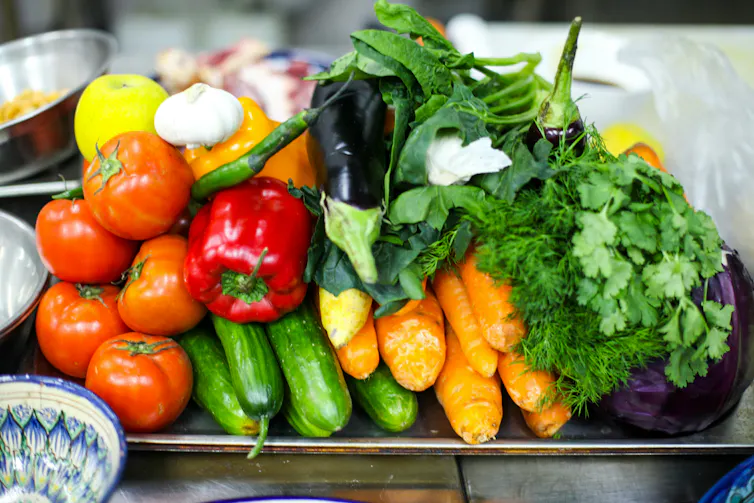
Many foods are made up of water-filled cells. During freezing, ice crystals can damage these cells, particularly in foods that rely on them for their crisp texture, such as berries, cucumbers and lettuce. When thawed, moisture leaks from the damaged cells, resulting in a soggy texture.
The faster foods are frozen, the smaller the ice crystals that form, resulting in less damage to the cells. That is why commercially frozen fruits and vegetables retain their texture much better than those you freeze at home, as industrial freezing systems freeze foods much more rapidly.
Certain dairy products, including milk, and high-fat foods, such as mayonnaise and cream, are also not good to freeze because the fat can separate, changing the taste and texture of the food.
Mayonnaise is particularly problematic because it is an emulsion – a mixture of oil and water – held together by ingredients such as egg yolk. Ice crystals can disrupt this emulsion, causing the mixture to separate during thawing.
What freezes well?
Foods that don’t rely on intact cells generally freeze well. These include rice, pasta, bread, soups, sauces, stews, cookie dough and pastry.
Freezing raw meat to later thaw and cook retains the overall quality very well.
But cooked meat can become drier after freezing, because moisture has been lost during cooking. However, this is less of an issue for meat in dishes where it is surrounded by liquid, such as sauces or stews.
Mixed dishes, such as curries, casseroles, bolognese sauces, chilli corn carne and soups, are particularly freezer-friendly because the ingredients are already cooked and surrounded by liquid or sauce.
Vegetables that are higher in fibre, such as carrots and peas, retain their texture quite well after freezing and thawing.
Cooked vegetables also freeze and thaw well because the cooking process changes their structure and the texture is no longer dependent upon intact water-filled cells. Cooking also helps to stop processes that contribute to food deteriorating.
Herbs freeze very well and retain much of their flavour. However, they tend to lose their crisp texture after thawing, making them better suited to cooked dishes than garnishes.
Wash and thoroughly dry herbs before freezing them whole, or put them in ice cube trays with a little water or oil. Once frozen, transfer the herb cubes to airtight containers or freezer bags, and add them directly to cooking without thawing first.
Does freezing affect nutrition?
Freezing does not necessarily make food less nutritious. In fact, frozen fruits and vegetables can retain most of their nutrients because freezing slows the chemical reactions that would otherwise cause nutrient losses over time.
To help retain quality, foods should be frozen in a leak-proof container, freezer bag or other airtight packaging.
It’s also best to freeze foods as soon as possible after cooking to help retain freshness and nutrient content. Ideally, food should be transferred into shallow containers as this helps it cool and freeze more quickly.
Waiting until food stops steaming before putting it in the freezer is a good rule of thumb, so that you don’t raise the temperature of the freezer too much. It’s fine to put warm food straight into the freezer, you don’t need to refrigerate it first.
To avoid food safety issues (such as bacterial growth), food should be refrigerated or frozen within two hours of cooking, so avoid leaving it on the bench for longer than two hours while it cools.
Rather than putting a big batch of leftovers in a large container, consider measuring it out into multiple smaller containers. This helps the food to freeze faster, which helps minimise the size of ice crystals formed and can improve food quality after thawing. It also means you only need to thaw the amount you want to eat, helping to reduce waste and freeze-thaw cycles.
It is okay to freeze different types of food (such as curry and rice) in the same container, especially if that’s how they’ll be eaten.
Food safety tips for freezing and thawing
Freezing preserves food by slowing microbial growth, but it does not kill most bacteria. Good food safety practices, such as cleaning containers before freezing, still matter.
Generally, food can last in the freezer for at least six weeks. Most home-cooked leftovers maintain their quality for around two to three months in the freezer. Labelling containers with the contents and date frozen can help you keep track of frozen items.
Thawing food in the refrigerator, microwave or during cooking is generally safer than thawing at room temperature.
Food thawed safely in the refrigerator can generally be refrozen. But repeated thawing and refreezing may reduce quality. And any time spent in the temperature danger zone (5–60°C) increases the risk of bacterial growth.
KioskNews shows a cleaned-up reading view extracted from the publisher’s page — the original always lives on their site, not ours.