Pump pressure: how rising fuel costs leave Hong Kong drivers running on fumes
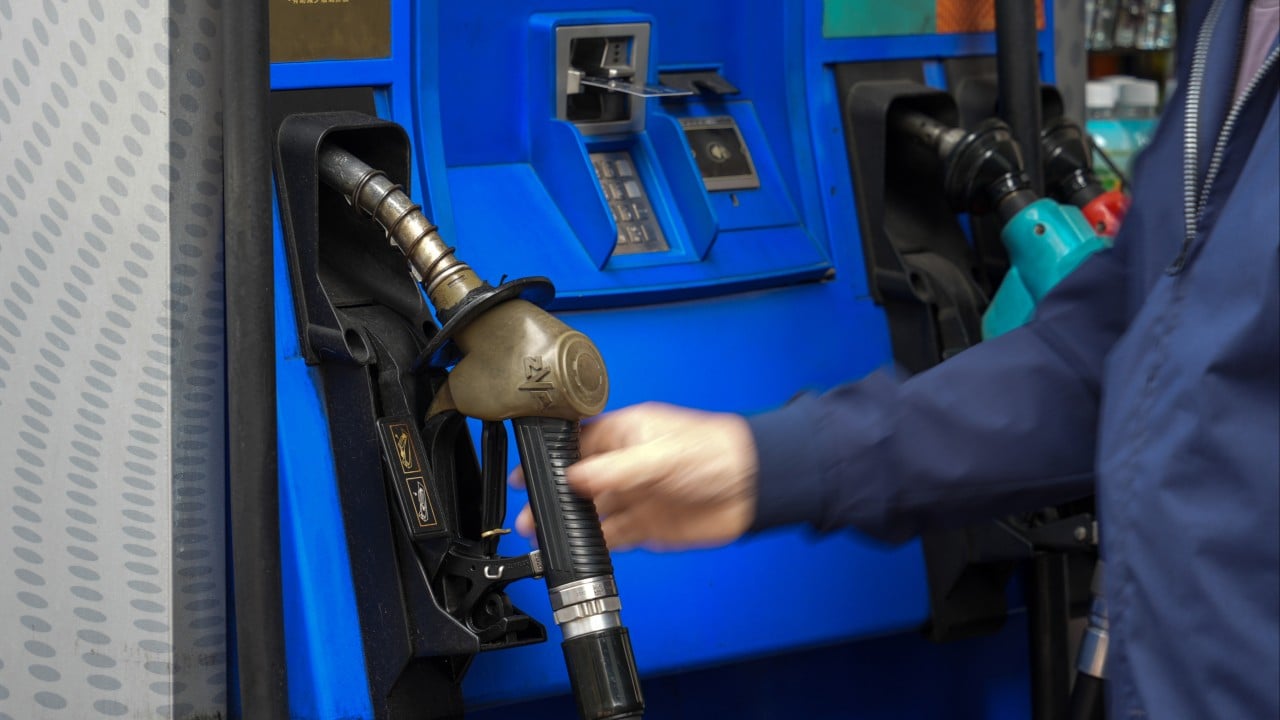
Van driver Wong Siu-po, 48, felt life was becoming more difficult than ever as mounting fuel prices cost him an additional HK$5,000 (US$640) a month, about a third of his monthly income.
With an 11-year-old daughter and an unemployed wife to support, he feels the pressure mounting.
“I need to work three hours longer per day to make up for the loss of income,” he said. “I will cut down on air conditioning to save costs.”
Wong’s plight echoed survey findings showing that nearly 98 per cent of commercial drivers deemed the government’s support “inadequate” or “very inadequate” as rising fuel prices, driven by the Middle East war and a global energy crisis, took a toll on their livelihoods.
Drivers called for further government support after a two-month subsidy ended in June.
The poll of 770 respondents, conducted earlier this month by the Talk To You Now People Livelihood Progress Group – a concern group active in Tuen Mun, Yuen Long and Tin Shui Wai areas – found that 98.7 per cent reported higher monthly fuel costs after a government subsidy ended.
More than a quarter said they paid at least HK$5,000 extra a month, while many said they worked longer hours, dipped into savings or cut maintenance to stay on the road.
The findings came after the price of Brent crude last week rebounded close to the year-to-date peak of US$118 per barrel in April, between US$111 and US$115 a barrel. The Middle East war had shown no signs of abating since it broke out on February 28.
Van driver Cow Lam, 38, who pays a car loan of about HK$6,000 a month, said rising fuel prices cost him an additional HK$3,000 per month, pushing up his living expenses by about 40 per cent.
“We need to cut down on food expenses to skimp and save,” he said.
Some 82 per cent of respondents called for immediate relief, urging transitional support for recent fuel-car buyers with ongoing vehicle loans.
Echoing 67 per cent of surveyed drivers, the group urged the government to provide clear electric vehicle replacement arrangements, increased purchase subsidies, low-interest loans, leasing or instalment payments.
“This is crucial to ensure these drivers are not left behind by the new policy simply because they cannot afford an instant vehicle swap. For drivers, securing cash flow is the first step towards a successful transition,” the concern group’s chairwoman Michelle Tsang said.
When asked whether they wanted to switch to electric vehicles that cost far less to run, nearly half the respondents, or 46.4 per cent, said they intended to switch or needed more information and time to consider. Some 11.8 per cent planned to switch within three years.
Among drivers with no present intention of switching, 61 per cent cited insufficient charging points at workplaces and overnight parking sites. More than 60 per cent said they needed more information about the net cost of switching to electric vehicles so they could better assess affordability.
Both drivers Lam and Wong called on the government to provide more subsidies to ease their burdens, such as tunnel, vehicle licensing and examination fees.

A spokeswoman for the Transport and Logistics Bureau said the Inter-departmental Task Force on Monitoring Fuel Supply would continue to dynamically assess the situation in the Middle East and fuel supply and prices, to ensure the stability of Hong Kong’s energy reserves.
Lawmaker Mark Chong Ho-fung said the government should at least dip into its multibillion-dollar dividend payments received from the MTR Corporation every year to provide fuel subsidies for bus companies and prevent them from repeatedly raising their base fares.
“If the base fares are allowed to factor in the rise in fuel costs, the fares will keep going up if the conflict goes on. This will affect the economy and deter people from going out and spending,” he said.
Recently, franchised bus operators applied to raise fares by up to 17.7 per cent to partially offset higher fuel costs while two power companies announced an increase in fuel charges last month.
The ripple effect of the fuel crisis has spread beyond transport operators.
Clerk Wong Po-yan, 34, who earns about HK$15,000 per month and commutes daily to the airport from her Sham Shui Po home for work, is also feeling the pinch, alongside Ma Chi-hung’s family. Ma, 49, a delivery worker, earns about HK$21,000 a month and has to support two sons.
Both households said they would cut down on food spending and refrain from going out to rein in transport costs.
Ma said the family’s transport expenses alone cost HK$3,500 a month while electricity usage was over HK$2,000 a month.
“I rarely go out now,” Ma said.
Taxi driver Yuen Tak, 68, said the high fuel costs had reduced his monthly income by more than HK$1,000 a month, about 30 per cent.
“I have 20 per cent less business per month as many people want to save costs and avoid taking taxis,” he said.
Analysts warned that the government had to think of ways to relieve the livelihood pressure on residents caused by rising fuel costs, otherwise Hong Kong’s economic activities would be stalled.
Gary Ng Cheuk-yan, senior economist for Asia-Pacific at Natixis Corporate and Investment Bank, said the high living costs would reduce people’s willingness to spend as they cut back on food and other expenses.
“There is nothing much the government can do. It should roll out some relief measures such as subsidies to ease the impact of high fuel costs,” he said.
Apart from drivers, many residents told the South China Morning Post that they were making trade-offs due to rising fuel costs.
Low-income households also faced steeper air-conditioning costs this summer, with an unusually high number of very hot days. The Observatory recorded the city’s highest-ever temperature for the traditional Chinese calendar’s “Frost” solar term on October 23.
Among those affected was single mother Rosaly*, 44, who earns slightly over HK$10,000 a month. She began to worry about rising electricity bills since the Middle East conflict flared up early this year, as she felt an increasingly tight squeeze on her income and savings.
“In the past, I paid about HK$700 for two months. But this summer I had to pay HK$1,200 for two months. The gas bill is also rising,” she said.
She then sought to cut back on electricity use, following the cost-saving tips of former Observatory head Lam Chiu-ying, which included turning air conditioning to 27 degrees Celsius and using fans.
She also saved gas by reducing hot water use and opening windows wide to ventilate her flat.
“Lam’s method works; my electricity use has returned to previous levels,” she said.
KioskNews shows a cleaned-up reading view extracted from the publisher’s page — the original always lives on their site, not ours.