‘Million-dollar missile' vs '$3,000 drone’: CDS NS Raja Subramani flags 3 shifts shaping modern warfare
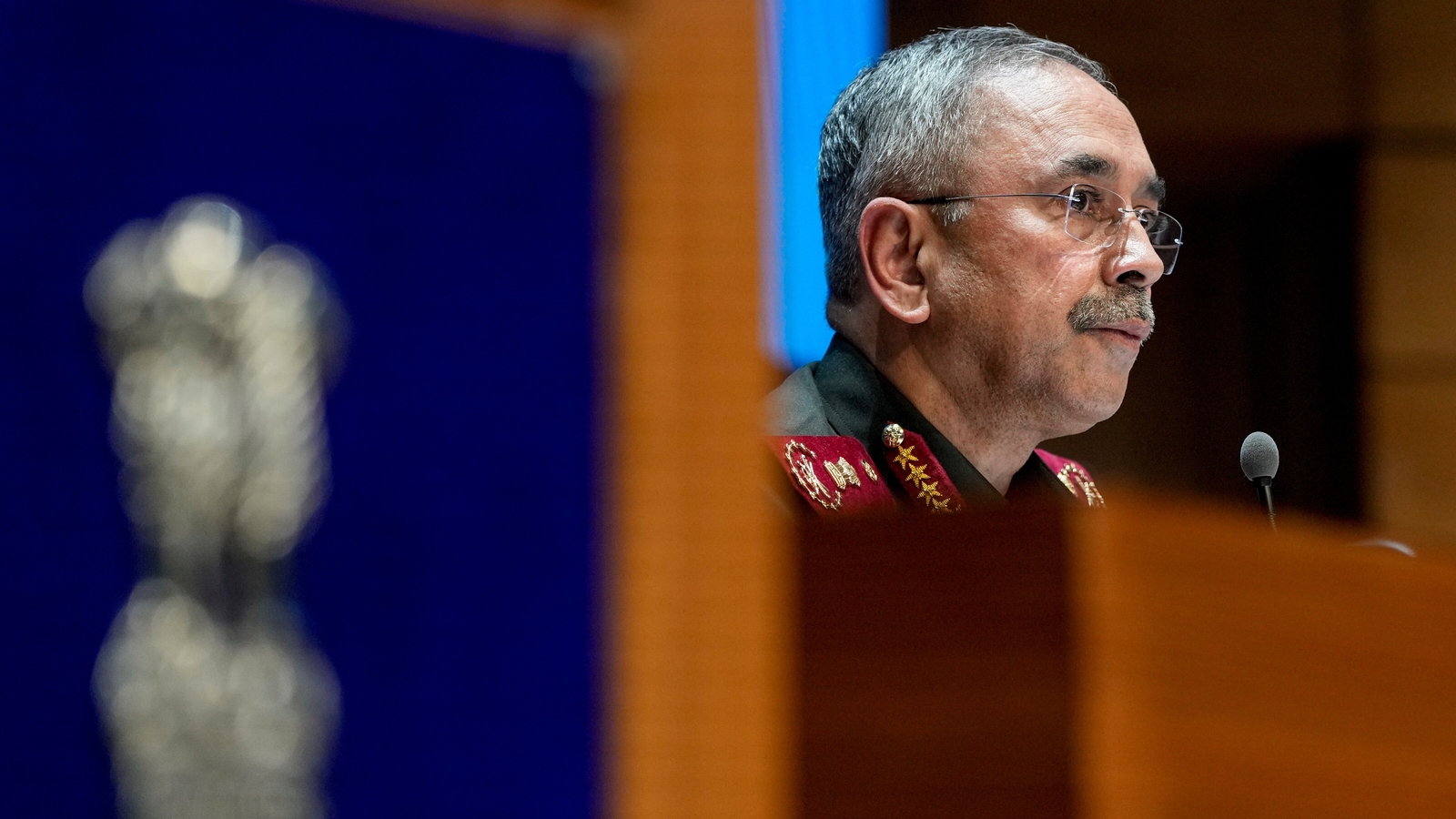
Chief of Defence Staff (CDS) General NS Raja Subramani on Monday spoke about what he described as three key shifts shaping modern warfare, saying the changing economics of warfare, the growing contest for technological superiority and the expanding battle space would increasingly determine how nations prepare for future conflicts.
Subramani said the growing use of inexpensive weapons such as drones was changing the cost dynamics of warfare, with cheaper weapons increasingly capable of overwhelming sophisticated defence systems.
Million-dollar missile vs $3000 drone
"If you are using a million-dollar missile to counter a $2500 or $3000 drone, then the economics of warfare are likely to go increasingly against you," he said, speaking at ANI news agency's National Security Summit 3.0 in Delhi, pointing to the need for countries to develop affordable, mass-produced military equipment alongside sophisticated weapons systems.
Citing what he called depletion of US Patriot missiles at “rapid rate”, the CDS said replenishing such stocks could take years, pointing at the importance of building the capacity to manufacture cheaper and more readily available military equipment.
He also flagged the growing contest for technological control, particularly in areas such as artificial intelligence (AI), data and critical minerals. Pointing to the competition between the United States and China, which he described as the current technological leaders, Subramani said other countries were also working rapidly to bridge the gap.
"Any country which needs to be economically strong, militarily strong, needs to control the critical technology that underpins its economic superiority as well as military capability," he said.
The third major shift, according to the CDS, is the expansion of the battle space, with warfare no longer restricted to traditional front lines. He said the distinction between the front and rear was increasingly disappearing, making the entire territory of a country vulnerable during a conflict.
"Previously, there used to be front and rear. Now there is no front and rear. Front, rear and depth: the entire nation's space is a battle space. Nobody is safe," Subramani said.
He warned that industries, communication networks, power centres and even citizens could come under attack as the range and availability of both cheap and sophisticated weapons increase.
"The battle space is no longer confined only to the front. Everybody, the networks that we rely on, the energy sources that power these networks, the data that is used to compute and to carry out decisions, all of them will be increasingly targeted," he added.
KioskNews shows a cleaned-up reading view extracted from the publisher’s page — the original always lives on their site, not ours.