Chinese bank in Mumbai cleared, then flagged $500mn Vedanta loan
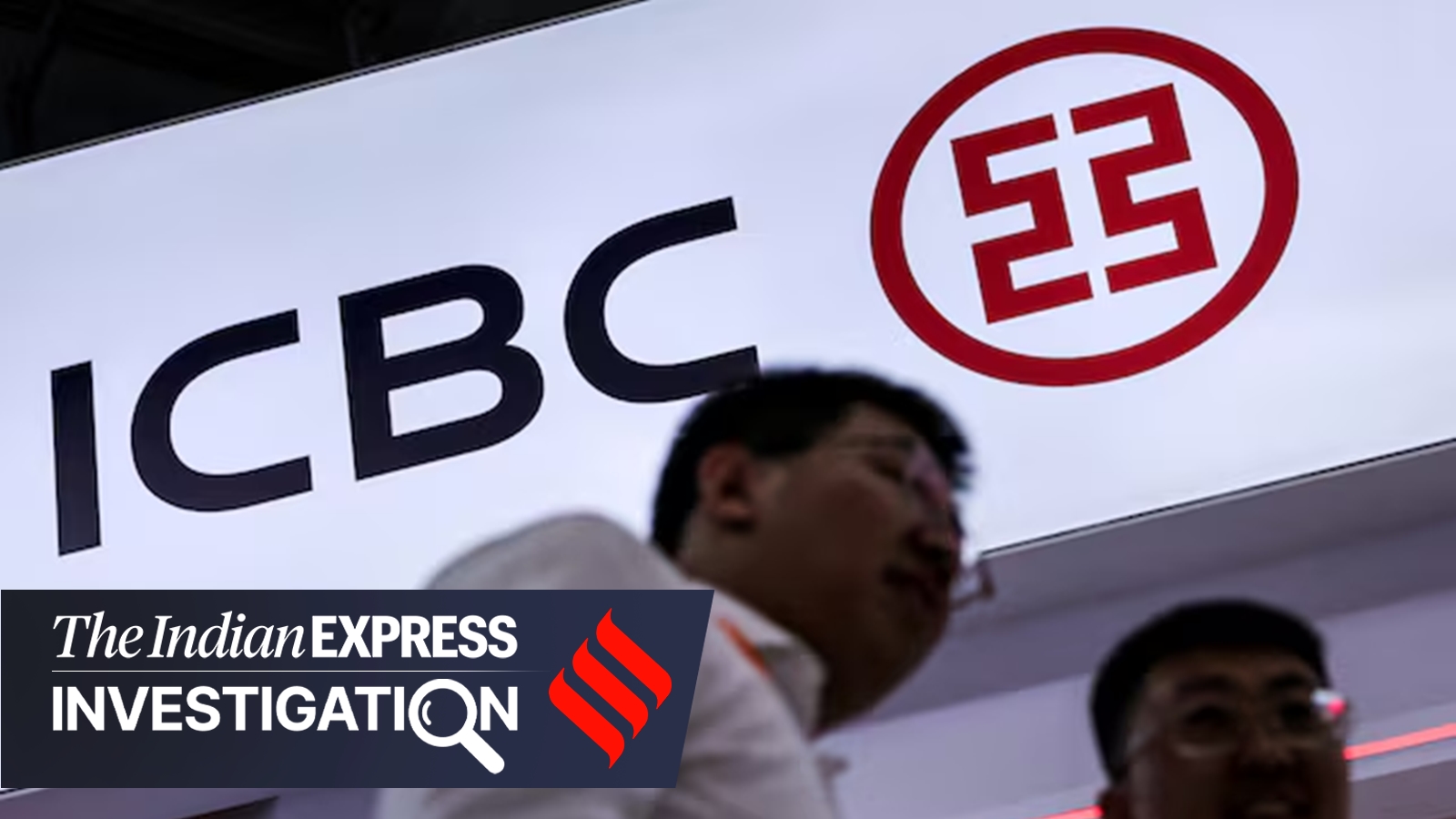
Records show ICBC joined a US$500 million four-year syndicated facility provided to Cyprus-incorporated Welter Trading Ltd, a wholly owned subsidiary of Vedanta Resources Plc, with the parent acting as guarantor. (Reuters Photo)
A complex corporate structure; the parent company’s limited access to much of the group’s reported cash; a weak standalone financial position; and, the borrower’s reluctance to provide information required for compliance checks.
These were among the concerns flagged in internal documents of the Industrial and Commercial Bank of China (ICBC) even as it placed a Cyprus-based subsidiary of Anil Agarwal’s Vedanta Resources on its internal watchlist in 2016 over a $500 million loan.
However, records show the bank’s exposure was repaid in full in 2017.
These records were reviewed by The Indian Express as part of China Capital — a global investigation by the International Consortium of Investigative Journalists (ICIJ), of which this newspaper is a partner, into 4.8 million files leaked from the London branch of ICBC.
Doklam in Mumbai
Chinese bank in Mumbai froze $185mn in loans during Doklam standoff
‘Internal and external’ challenges of Industrial and Commercial Bank of China’s lone India branch in ‘confidential’ summary.
Read the full story →
Internal records of 2014 trace the bank’s assessment of the loan to the Vedanta subsidiary from its decision to participate — and show that it commissioned an external enhanced due diligence review after the subsidiary allegedly failed to provide information required for compliance checks.
A Vedanta spokesperson said: “The syndicated facility was tied up with six leading international banks back in 2013 and since been repaid. As is common practice, the original lenders may transfer their exposure in the secondary market. Any exposure held by ICBC could have arisen through such a transfer and there is no current relationship. Vedanta has maintained transparent disclosures over the years, in line with its robust governance standards.”
Records show ICBC joined a US$500 million four-year syndicated facility provided to Cyprus-incorporated Welter Trading Ltd, a wholly owned subsidiary of Vedanta Resources Plc, with the parent acting as guarantor.
Story continues below this ad
It participated as a senior lender, with a total exposure of around US$65 million split between its London (US$29 million), Singapore (US$20 million) and Mumbai (US$15 million) offices.
China's Bank In India
China's Bank In India
$500M
Loan facility to Welter Trading
Why it matters
Arranged in 2013 with six banks for Vedanta subsidiary Welter Trading (Cyprus); ICBC joined as a senior lender in 2014.
$65M
ICBC's own exposure
Why it matters
A fraction of the total facility, split across ICBC's London, Singapore and Mumbai branches — not one branch's sole risk.
2016
Flagged on the internal watchlist
Why it matters
Amid a commodity slump, ratings downgrades and a covenant waiver — a routine risk-monitoring step, not a default event.
2017
Repaid in full
Why it matters
The watchlist flag never became a loss. ICBC recovered its full exposure within a year of the flag.
5×
Mumbai branch's asset growth
Why it matters
From its earliest available filing with the Registrar of Companies in 2015 — the branch grew through, not despite, this episode.
$0
Credit loss booked
Why it matters
Despite the watchlist flag, ICBC's own memo and the eventual repayment show no credit loss was ever recorded.
Vedanta has said any ICBC exposure could have come via a secondary-market transfer, and that it has no current relationship with the bank.
According to internal ICBC records, Vedanta remained compliant with the loan covenants and the credit “performed in a regular manner” until late 2015, when weakening commodity prices and successive ratings downgrades triggered scrutiny, with concerns escalating in February-March 2016.
An internal ICBC watchlist memorandum said “the cause for concern” was a combination of falling commodity prices, “a succession of multi-notch rating agency downgrades” and a waiver request under which “key financial covenants have been required to be relaxed”.
The waiver request came as Vedanta faced refinancing pressure on about US$1.3 billion of debt maturing in mid-2016, prompting S&P to downgrade the company in February 2016 and place it on CreditWatch with negative implications because of its weak financial position, refinancing risk and complex corporate structure.
Story continues below this ad
After the majority of lenders approved the waiver, S&P removed Vedanta from CreditWatch in April 2016, saying it had secured adequate funding, could refinance its maturing debt through intercompany loan repayments and had obtained covenant waivers that “eliminate[d] the risk of covenant breaches”.
Even after the waiver, however, ICBC placed the exposure on its internal watchlist.
An April 2016 memorandum noted that much of the group’s reported cash was held by Cairn India Ltd and Hindustan Zinc Ltd, but Vedanta Resources’ effective ownership interests were only about 37.6% and 40.8%, respectively. It cautioned that although the group reported large cash balances, only about one-third of that cash was effectively available to the parent company to meet its funding and debt obligations.
The cash-access issue coincided with Vedanta’s June 2015 proposal to merge with Cairn India, which the company said would simplify the group structure and improve access to Cairn India’s cash balances.
Story continues below this ad
The ICBC memo also characterised the parent company as having “no operating assets” and relying almost entirely on dividends from subsidiaries, resulting in what it called “an extremely weak financial profile” for the holding company.
Moreover, a client due diligence report in 2017 states that “there was a failure on the part of Welter Trading Limited to meet its obligations to provide ICBC (London) PLC with the regulatory requirements we communicated to them”.
It adds that the bank was “unable to complete the full due diligence due to client being reluctant to provide the required information”, prompting ICBC to commission an independent enhanced due diligence review from a third-party provider.
Even after the review, the report says “some areas were not detailed enough as per ICBC standards”, leaving questions over ownership, source of funds, controllers and other regulatory information. Despite these concerns, the relationship ended without credit loss — and Welter Trading was removed from the watchlist.
Story continues below this ad
China bank’s India folder
In India, ICBC’s sole Mumbai branch commenced operations in September 2011, growing nearly five-fold from its earliest available filing with the Registrar of Companies (RoC) in 2015 (see chart).
The Mumbai branch’s latest balance sheet shows its top 20 borrowers accounted for over Rs 2,203 crore, or 58.14 per cent of total advances, in 2025-26. It opened at Bandra Kurla Complex on September 18, 2011 — the first mainland Chinese bank branch in India — as a “commitment to building up the commercial bridge between India and China”.
The Chinese government holds over 70 per cent of ICBC, though offshore lending is just 8.5 per cent of its book, according to a CRISIL report in 2024. The report stated that the Mumbai branch “is mainly into corporate banking, trade finance and import/export related business”.
China\'s Bank In India
China's Bank In India
1
ICBC joined a $500 million loan to Vedanta subsidiary Welter Trading (Cyprus) in 2014, as a senior lender with $65 million exposure split across London, Singapore and Mumbai.
2
The loan was placed on ICBC's internal watchlist in 2016 amid a commodity slump, ratings downgrades and a covenant waiver — but was repaid in full in 2017, with no credit loss.
3
Even after the waiver, ICBC's own memo flagged restricted access to group cash and gaps in due-diligence information from the borrower.
4
Vedanta said the facility was arranged in 2013 with six banks, has since been repaid, and that any ICBC exposure could have come via a secondary-market transfer — with no current relationship.
5
This investigation is part of "China Capital," a global project by ICIJ regarding 4.8 million leaked ICBC files.
6
ICBC's Mumbai branch, operational since 2011, saw assets grow nearly five-fold from its earliest available filing with the Registrar of Companies in 2015.
On June 9, 2018, The Indian Express reported that the Ministry of Home Affairs (MHA) has “raised objections to a proposal” for ICBC “to open a second branch in India”, citing concerns that the bank “employed more than the authorised number of Chinese nationals at its existing Mumbai branch”. The bank is yet to open a second branch in India.
Story continues below this ad
ICBC did not respond to questionnaires from The Indian Express and ICIJ detailing the findings and seeking its response.
© The Indian Express Pvt Ltd

Jay Mazoomdaar is an investigative reporter focused on offshore finance, equitable growth, natural resources management and biodiversity conservation. Over two decades, his work has been recognised by the International Press Institute, the Ramnath Goenka Foundation, the Commonwealth Press Union, the Prem Bhatia Memorial Trust, the Asian College of Journalism etc. Expertise and Experience Mazoomdaar’s major investigations include the extirpation of tigers in Sariska, global offshore probes such as Panama Papers, Robert Vadra’s land deals in Rajasthan, India’s dubious forest cover data, Vyapam deaths in Madhya Pradesh, mega projects flouting clearance conditions, Nitin Gadkari’s link to e-rickshaws, India shifting stand on ivory ban to fly in African cheetahs, the loss of indigenous cow breeds, the hydel rush in Arunachal Pradesh, land mafias inside Corbett, the JDY financial inclusion scheme, an iron ore heist in Odisha, highways expansion through the Kanha-Pench landscape etc. ... Read More

Shyamlal Yadav is one of the pioneers of the effective use of RTI for investigative reporting. He is a member of the Investigative Team. His reporting on polluted rivers, foreign travel of public servants, MPs appointing relatives as assistants, fake journals, LIC’s lapsed policies, Honorary doctorates conferred to politicians and officials, Bank officials putting their own money into Jan Dhan accounts and more has made a huge impact. He is member of the International Consortium of Investigative Journalists (ICIJ). He has been part of global investigations like Paradise Papers, Fincen Files, Pandora Papers, Uber Files and Hidden Treasures. After his investigation in March 2023 the Metropolitan Museum of Art, New York returned 16 antiquities to India. Besides investigative work, he keeps writing on social and political issues. ... Read More
KioskNews shows a cleaned-up reading view extracted from the publisher’s page — the original always lives on their site, not ours.