Oregon, Texas A&M among six college football teams confronting major regression in 2026
Growth isn't linear, and that's especially true in this current era of college football.
A successful season one year is not a guarantee of another, and with how quickly rosters can change in the portal era, plenty of teams find themselves at the midpoint of the 2026 season wondering what happened to the optimism and hope surrounding their program last year.
A wild coaching carousel last year added to the chaos of the portal, and a handful of teams who exited the 2025 season feeling like they were on the ascension have come crashing back to earth in 2026. That can be a tough pill to swallow, especially for those who felt they were climbing the ladder into a contender role -- either at a conference level or nationally.
But six weeks into the season, there's nowhere to hide. While there's still time to salvage something positive from 2026, the reality is that these teams have taken a serious step back from last year and must identify how to begin climbing again.

Oregon
The Ducks began the season No. 2 in the preseason polls, but after a dismal performance at home against UCLA, Oregon's College Football Playoff dreams are on life support, and they're outside the top 25 entirely.
Oregon has a strong case for the biggest disappointment in college football this season. While the Ducks' struggles against UCLA were compounded by Dante Moore's absence, this Oregon squad hasn't looked right all season. The offense hasn't been as efficient or explosive as it was a year ago, and the defense touted as one of the nation's best coming into the season has been merely good, not great.
Once a national title favorite, Oregon has become college football's biggest disappointment
Austin Nivison
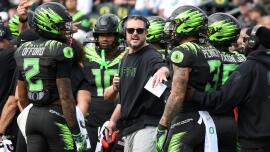
How did the Ducks get here? For starters, their staff was hit by the coaching carousel, with offensive coordinator Will Stein now thriving at Kentucky, while defensive coordinator Tosh Lupoi has gotten off to a rocky start back at his alma mater, California -- although they picked up a needed win on Saturday. Dan Lanning opted to promote from within, hoping continuity could keep the Ducks rolling, but to this point, neither side of the ball has played up to expectations, and it didn't take long for those promotions to be second-guessed.
At 3-2, Oregon still has a chance to reach the playoffs, but has no margin for error in its final seven games, which include a trip to Columbus to face Ohio State.
Texas A&M
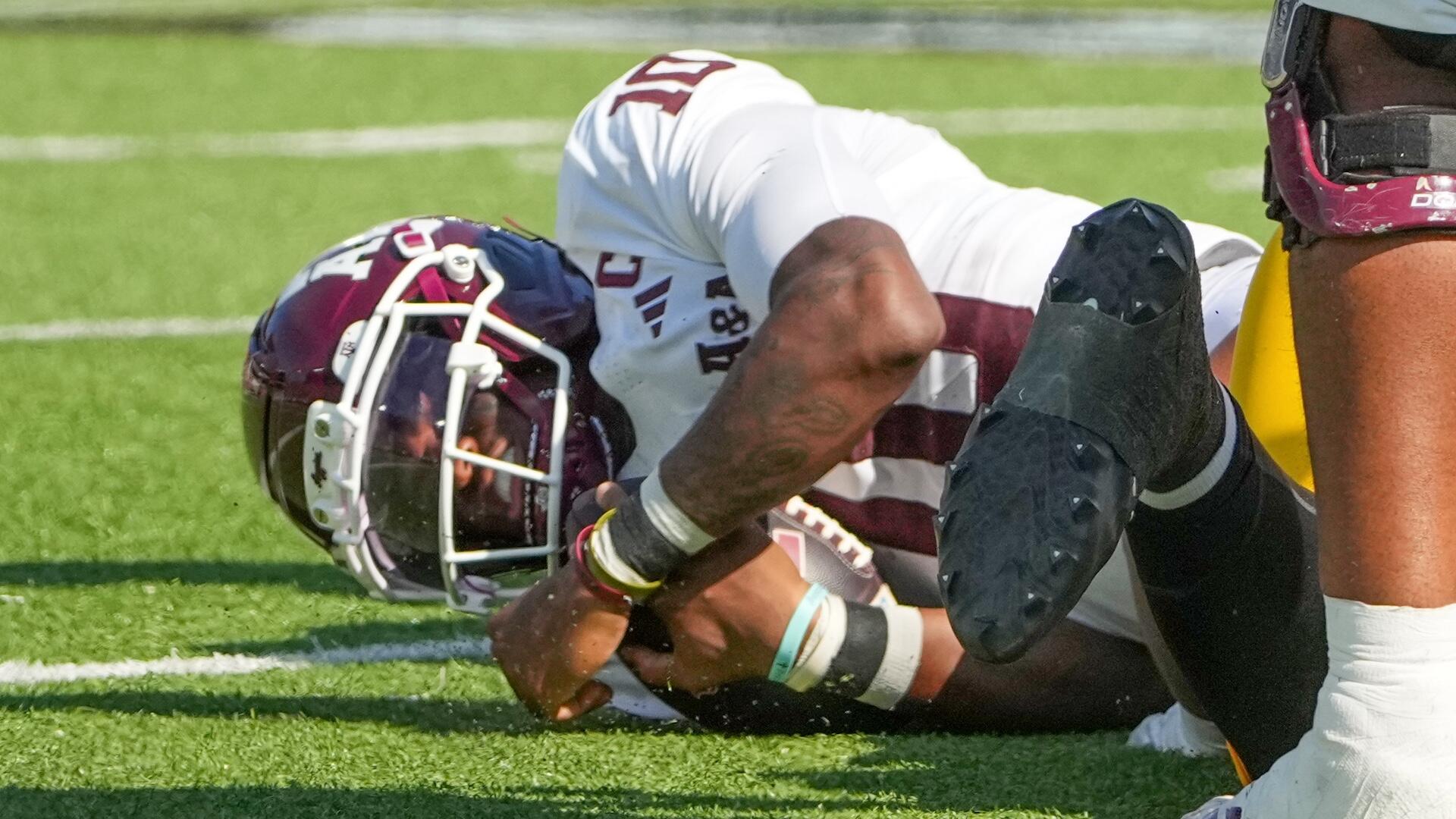
The Aggies have likewise gone from a playoff berth in 2025 to a preseason top-10 ranking to out of the polls by Week 6. Mike Elko's third season in College Station has already reached the "antagonize the message board fans" stage, and after getting dismantled in Week 6 by Missouri, there are real questions about whether the Aggies will reach a bowl game in 2026.
How did this happen? Well, like Oregon, the Aggies lost both of their top coordinators to the coaching carousel. Offensive coordinator Collin Klein took the Kansas State job and took co-defensive coordinator Jordan Peterson with him, while defensive coordinator Jay Bateman took the DC job at Kentucky. While the defense has held its own this year, the offense has fallen off a cliff.
It's hard to know how much of that falls on the shoulders of Holmon Wiggins (who was the co-OC with Klein before taking the reins in full this season) and how much of it is a step back by quarterback Marcel Reed, but the Aggies quite literally cannot move the football consistently against decent competition. The Aggies scored six points against LSU and Mizzou, and while they finished with 21 against Kentucky, 14 of those came in the fourth quarter with the game out of reach.
With Alabama, Tennessee and Texas still to come, there's a chance the Aggies are fighting for their lives just to get to .500, and the excitement in College Station has been replaced by anxiety in record time.
Washington
Washington was ranked in the preseason and was considered a potential dark horse in the Big Ten coming off a 9-4 campaign in 2025. Six weeks into the 2026 season, the Huskies have proven to be nowhere near contender status, and the excitement about what Jedd Fisch was building in Seattle has evaporated.
The Huskies fought hard to bring quarterback Demond Williams Jr. back this offseason after he received overtures from LSU, but the offense has cratered even with the star QB back under center. The Huskies have not found suitable replacements for Denzel Boston and Jonah Coleman at receiver, as they now play on Sundays.
Offensive coordinator Jimmy Dougherty moved down the road to work with the Seahawks, and Fisch opted not to replace him, instead taking over the offense himself. That's not yielded positive results, as the Huskies rank in the bottom half of the country in most offensive metrics.
However, Washington's issues extend beyond the offense. The defense, which was winning them games to start the season, has begun to spring leaks, most notably yielding a season-high 41 points in a loss to Iowa on Friday night that set off alarms in Seattle.
At 3-3 and riding a three-game losing streak, the Huskies suddenly find themselves trying to claw their way to a bowl game. Back-to-back road trips to Purdue and Nebraska look far more daunting than expected, and the Huskies end their season with an Indiana and Oregon back-to-back that won't be easy, even with Oregon's relative struggles this year.
Louisville
Louisville began the year ranked, and after hanging around with Ole Miss and knocking off SMU in the first three weeks, it seemed Jeff Brohm might indeed have himself an ACC contender. However, since then, the Cardinals have seen their hopes of reaching the ACC title game implode with losses to Wake Forest (respectable) and NC State (brutal), before finally righting the ship against Florida State.
Brohm has built his reputation as a big-game coach, but for Louisville to reach the top tier of the ACC, he has to figure out how to avoid the letdowns that always seem to follow those big wins. The defense has been leaky, allowing 30-plus points in four games already under new defensive leadership in Mark Ivey and Steve Ellis.
That's put considerable pressure on Brohm's offense, led by Ohio State transfer Lincoln Kienholz. The offense has been good, but not quite elite, which is the level they've needed to be with a defense susceptible to big plays. After getting a fresh contract extension this offseason amid reported interest from Penn State, Brohm has ample job security, but his goal is to lead his alma mater back to contention in the ACC, and so far, he's not been able to get them to that level.
At 3-3 with two losses in conference play, they would need some help getting to Charlotte. While the schedule doesn't feature any more ranked opponents in ACC play (only the final game of the year against rival Kentucky), the Cardinals' propensity to play up and down to competition is a concern with some opponents that won't get the blood pumping on their own.

Illinois
After 19 combined wins over the last two seasons in Champaign, Bret Bielema had the Illini knocking on the door of the upper tiers of the Big Ten. However, a 3-3 start with losses to Duke and Purdue has instead proven they're closer to the bottom than the top in 2026.
Illinois made a change at defensive coordinator coming into the season, bringing in former Montana head coach Bobby Hauck in what seemed like a coaching coup. Instead, it became a disaster, with Hauck resigning after four games as the Illinois defense ranks among the worst in all of FBS.
The bright spot for the Illini has been the offense, with Katin Houser playing well after transferring from East Carolina, but he's now sidelined with a broken hand. The result feels like a lost season in Illinois, and while it shouldn't warm Bielema's seat too much, it is a reminder of how fine the margins are for teams in the middle of these power conferences.
Illinois had put together back-to-back quality campaigns, but now seems more likely to finish below .500 than go on a second-half run for another. Bielema and his staff will have to spend the second half conducting an internal audit to figure out what went wrong and how to fix it for 2027, so they don't give back all their progress from 2024 and 2025.
Georgia Tech
The Yellow Jackets won nine games in Brent Key's fourth season in charge, seemingly taking a major step forward as a program. Key was rewarded with a handsome contract extension to keep him in Atlanta, but the Tech faithful may be feeling a touch of buyer's remorse midway through the 2026 season.
Georgia Tech lost quarterback Haynes King to the NFL and offensive coordinator Buster Faulkner and backup quarterback Aaron Philo to Florida, where the Gators got off to a fast start this season, only adding to the frustration in Atlanta. The Yellow Jackets pulled in Alberto Mendoza in the transfer portal, but the reigning Heisman Trophy winner's younger brother has not been able to get the Tech offense into much of a rhythm.
After building their identity on running the ball under Key -- tied for fourth in rushing success rate a year ago -- the Yellow Jackets have fallen off considerably as a rushing attack in 2026. A suspect offensive line runs counter to everything Key is about, and when a team loses its ability to do what made it effective so quickly, it raises serious concerns.
A win against Duke this past Saturday stopped the bleeding in Atlanta and gave Key a moment to breathe, but at 2-4, the Yellow Jackets have lost any margin for error after their slow start. The rest of this season is about trying to restate their identity as a tough, physical team to avoid questions about whether the foundation Key seemed to have built has cracks.
KioskNews shows a cleaned-up reading view extracted from the publisher’s page — the original always lives on their site, not ours.