Myanmar, Syria top list as global landmine casualties hit 5-year high of 7,000

Casualties from landmines or unexploded ordnance reached a five-year high in 2025, with Southeast Asia making up a disproportionate number of those killed or wounded, largely due to Myanmar’s civil war, a report released on Tuesday showed.
The annual global report by the International Campaign to Ban Landmines found civilians were the most affected, making up some 84 per cent of the 6,929 casualties recorded in 2025, and half of them were children.
In Myanmar, where both government military forces and the militias fighting against them make widespread use of mines, 1,891 casualties were recorded in 2025, the highest number of any country for the third consecutive year.
“Myanmar has gone beyond crisis to catastrophe, and has claimed the ignoble title of top producer of landmine victims for a third year in a row,” said Yeshua Moser-Puangsuwan, a co-author of the Landmine Monitor 2026 report. “There is now contamination at some level in almost two-thirds of the townships of the country.”
On average, five people are killed or wounded by landmines daily in Myanmar, according to the report.
Driven by the Myanmar figures, Southeast Asia, where there is also widespread mine contamination in Cambodia, Laos, Vietnam and elsewhere, accounted for 27 per cent of global casualties in 2025 despite having just over 8 per cent of the world’s population.
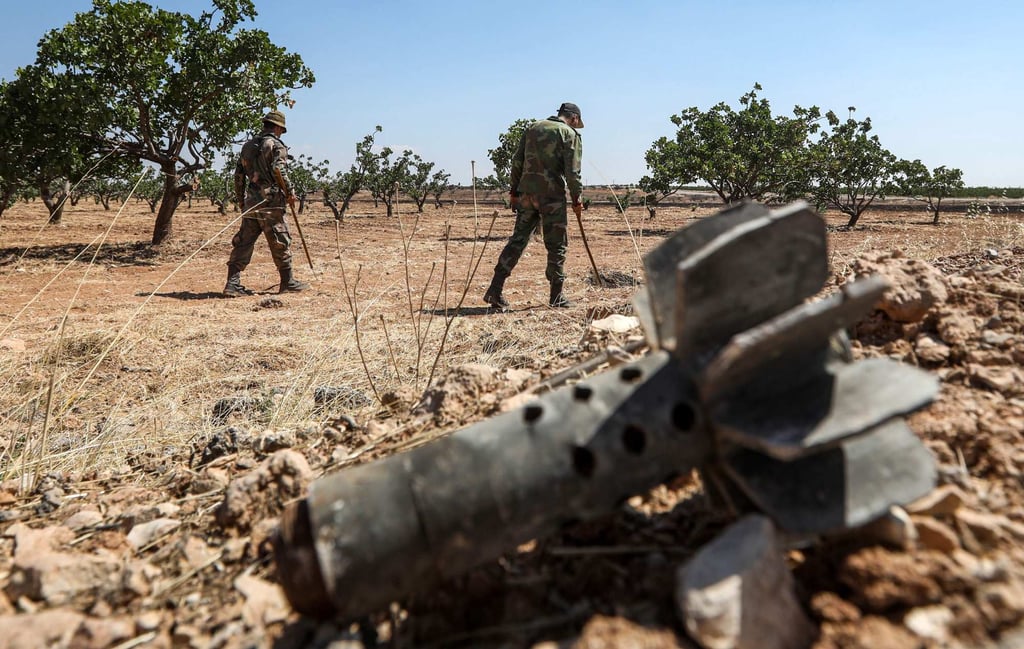
Syria, which experienced a large-scale return of civilians after the fall of Bashar al-Assad’s government at the end of 2024, saw a spike of more than 50 per cent to 1,602 casualties in 2025 – a testament to the ongoing dangers of mines and leftover ordnance even after fighting has stopped.
“Syria is huge, but it is a post-war crisis,” Moser-Puangsuwan said. “People are now returning and that is driving the casualty figure. They need to radically scale up their clearance capacity.”
In addition to posing dangers long after conflicts are over, landmines and unexploded ordnance also impede access to food, water, schools, hospitals and other basic needs and restrict freedom of movement, according to the report. They also endanger transit and prevent the safe return of refugees, and impede the delivery of humanitarian aid.
Economically, they take a toll by contaminating farmland, and countries also have to divert funds that could have been used for other pressing societal needs to remove mines
Suffer the children
Children made up 36 per cent of all civilian casualties, where the age of the victim was known, recorded by the organisation since 1999, the report said.
“Driven by curiosity, a lack of awareness, or high-risk behaviour and bravado, children in general are more likely to deliberately handle explosive items than adults, often mistaking them for toys or other play objects,” the report said.
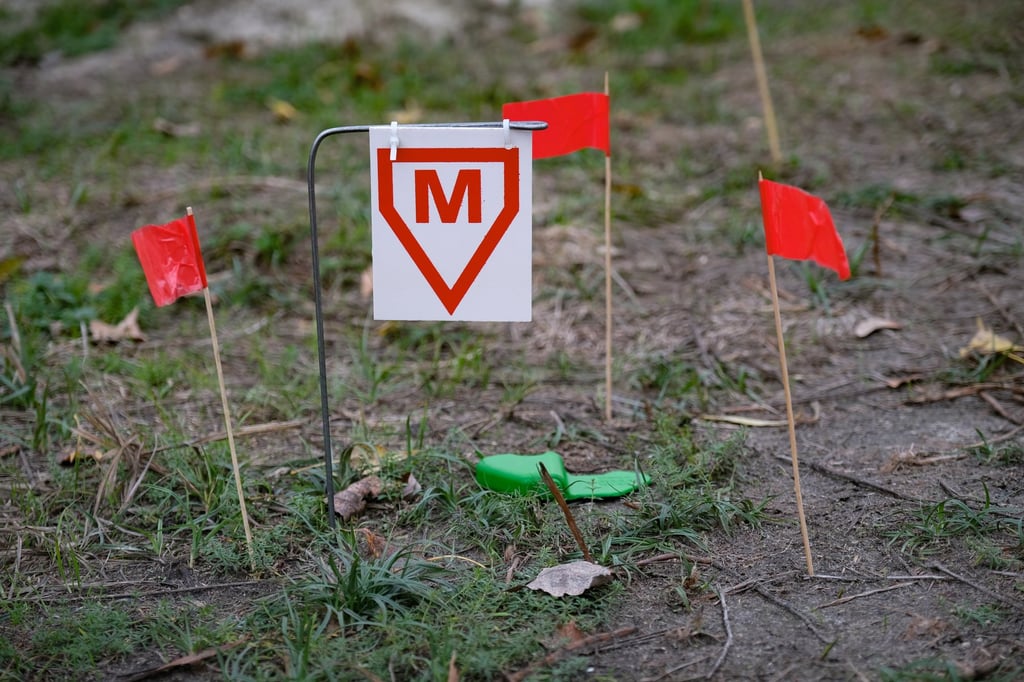
The International Campaign to Ban Landmines urges more countries to join the 1997 Mine Ban Treaty and respect its requirements for the immediate end of the stockpiling, production and transfer of anti-personnel mines.
This past year saw the opposite happen, however, with Finland, Estonia, Latvia, Lithuania and Poland – all with borders next to or near Russia – pulling out of the treaty, citing the “security situation in our region”.
Ukraine, meanwhile, notified the United Nations it had decided to suspend the implementation of the treaty, even though such a move is not allowed under its provisions.
Russia, not a party to the treaty, has been making widespread use of mines in its invasion of Ukraine, and Landmine Monitor found that Ukraine had been using them as well.
Lebanon, the Marshall Islands and Tonga all joined the mine ban treaty during the reporting period, and 162 countries are now bound by it.
In addition to Russia, Ukraine and Myanmar, the study found new use of anti-personnel mines by North Korea and Iran. It also reported new use by non-government groups in Colombia, India, Pakistan, Benin, Burkina Faso, Cameroon, Central African Republic, the Democratic Republic of Congo, Mali, Niger, Nigeria and Togo.
There was also evidence of use by unconfirmed actors in the border region between Thailand and Cambodia, as well as in Bangladesh and Sudan.
Landmine Monitor noted a report by Netherlands-based investigative group Bellingcat suggesting the United States, which is also not a signatory to the mine ban treaty, had deployed mines by air in Iran during the early days of the ongoing war, based upon satellite imagery. The White House has refused to comment on the report.
KioskNews shows a cleaned-up reading view extracted from the publisher’s page — the original always lives on their site, not ours.