From hummingbirds to howler monkeys: Hiking adventures in Chiapas
The colonial city of San Cristóbal de las Casas sits in a mountain valley in Chiapas at an altitude of 2,200 meters (7,200 feet), surrounded by cloud forests, limestone formations and rugged hills, with a remarkable variety of landscapes within easy reach of town.
Add to this the colorful markets, excellent cafes and restaurants, centuries-old churches and colonial buildings, and the living cultures of the Tzotzil and Tzeltal Maya communities in the surrounding highlands, and you have a city that is hard to resist.
And then there are the trails. Some lead through forests, some climb hills for spectacular views, and others take you into landscapes that seem a world away from the busy streets of San Cristóbal.
I asked local guide Emiliano López, who works for an outfit called Explora Travel, to tell me about some of his favorite hikes.
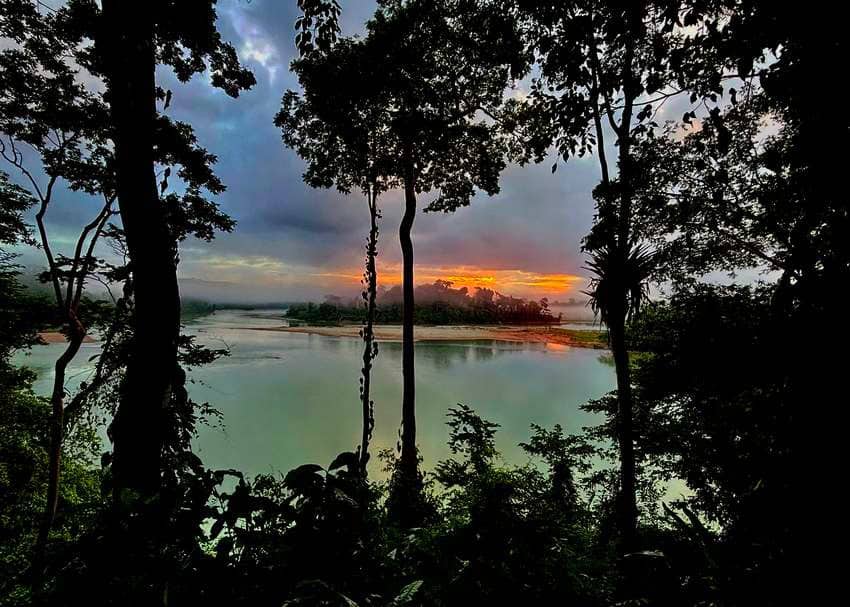
“First off,” López said, “I should mention that our organization originally specialized in multi-day excursions inside the Lacandon Jungle. But then along came COVID-19 and there was no way the public was going to spend all day getting there, packed inside a van with a bunch of strangers. So we began taking people of all ages, from 5 to 80, to the gorgeous mountains just outside San Cristóbal, places you can drive to in minutes.
“There we would talk to them about the history of the place and the biology, and we would look for birds. And it turned out that people loved these hikes … and they still do!”
Huitepec: Hummingbird mountain
One of López’s favorite sites is El Cerro de Huitepec, a cloud forest atop an extinct volcano. At 2,750 meters (9,022 feet), it is one of the highest points in Chiapas. The word Huitepec means “Hummingbird Mountain” in Nahuatl, and in the forest you may be lucky enough to spot a few of the eight species of hummingbirds usually buzzing around this place. If you go there on a night hike, you might even see a flying squirrel or the curious ring-tailed cacomistle.

“Besides the hummingbirds, there are 92 other species of birds on the mountain,” López told me. “If you want to see some of them, the ideal time to leave is 7 a.m. Twenty minutes later we will be there. The trail is a loop of around 10 kilometers, and there’s an altitude gain of about 550 meters. We typically get back to San Cristóbal at noon or at the most by 2 p.m.”
According to Lopez, Huitepec is an iconic landmark in San Cristóbal. “For the Mayas, it’s a sacred mountain, and up at the highest of its three peaks there’s a ceremonial center where rituals are still carried out,” he explained. “The general public no longer has access to it, but we can still hike to the other peaks.”
Moxviquil: Where paths meet
Another fascinating outdoor site — the closest of all to San Cristóbal — is the Moxviquil Ecological Reserve and Orchid Garden, a conservation project dedicated to protecting the region’s remarkable plant life.
Its greenhouses display an impressive collection of native orchids, including rare and endangered species, along with bromeliads and other tropical plants. When you’re out hiking, most orchids are high in the branches above your head, but here they’re all at eye level where you can appreciate their beauty and scent … yes, some orchids in Chiapas are wonderfully fragrant!
But Moxviquil — which means “Meeting of Paths” — offers more than gardens. A short hiking trail climbs into the surrounding oak and pine forest, where you can discover ferns, wildflowers and other native vegetation while enjoying views of the highland landscape. If you’re lucky, you may glimpse the extraordinary red-lipped arboreal alligator lizard, which is native to Chiapas.
This walk offers a welcome escape from the city and a chance to experience the natural world of Chiapas up close.
1 of 3
Experience the jungle: Río Ixcán Camp
This campsite is deep inside the Lacandon Jungle, Mexico’s largest rainforest.
“We have set up this site for people who really want a jungle experience,” López said. “There’s no electricity, no telephone, no internet, but yes, we have water: hot water, in fact.”
Reaching the jungle site from San Cristóbal involves a 5.5-hour drive to Las Nubes Ecotourism Center (via the town of Comitán), and 90 minutes boating or kayaking down the Lacantún River.

Macaws, spider monkeys and honey bears
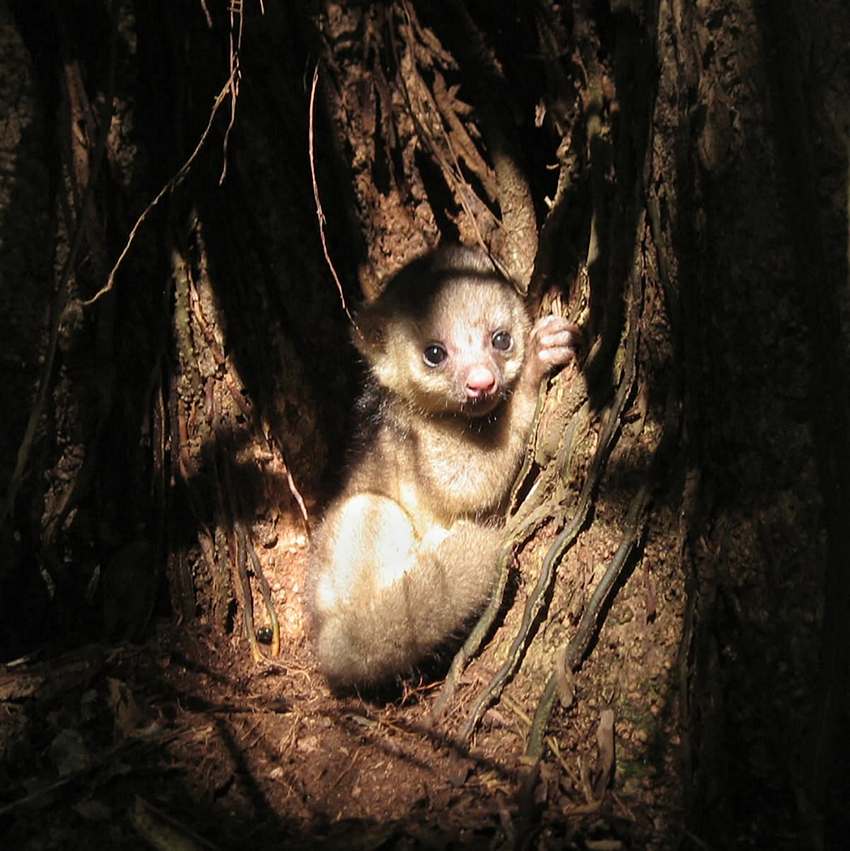
“The camp is on the edge of the Montes Azules Biosphere Reserve, famous for having the greatest biodiversity in all Mexico,” López said. “Here you’ll find macaws, motmots, spider monkeys and — hidden in the canopy — the nocturnal kinkajou, also known as the honey bear. And you will see gigantic ceiba (silk cotton) trees that are incredibly tall: 40 meters (131 feet) high. For the Maya, these sacred trees represent the axis connecting the sky, the human world and the underworld.”
The likelihood of seeing wildlife in the Lacandon Jungle, López told me, depends on luck and timing, “and it is diminishing day by day, due to competition from high-impact activities.”
He went on to say, “So here we are trying to practice responsible tourism. We’re supporting solid conservation projects and the involvement of the local people.”
If you love the Amazon Rainforest, then you will love the Lacandón Jungle in Mexico
From Camp Ixcán there’s an 8.5-kilometer trail through the Lacandon Jungle to the top of Pico Ixcán, with an altitude gain of 650 meters.
“We do this over a period of two days,” said López, “accompanied by two local guides. We camp at the base of the mountain on day one. The next day we top the mountain and return to base. During the hike, we typically see deer, tapir and birds like toucans, macaws and the very rare tinamou, a member of one of the most ancient living lineages of birds.”
Suffice to say, by the time you leave Río Ixcán, you’ll have enough stories to entertain generations of grandchildren.
John Pint has lived near Guadalajara, Jalisco, for more than 30 years and is the author of “A Guide to West Mexico’s Guachimontones and Surrounding Area” and co-author of “Outdoors in Western Mexico.” More of his writing can be found on his website.
KioskNews shows a cleaned-up reading view extracted from the publisher’s page — the original always lives on their site, not ours.