Witnessing the explosive sledgehammer ritual in San Juan de la Vega, Guanajuato
A door in the street cracked open just enough for a hand to slip through. A kid, maybe 15, curled his fingers toward himself: come here, come here, then pulled back into the dark. I looked around the street. Nobody. I stepped inside.
The house looked like a drug kitchen. Two folding tables stretched across the room, their surfaces dusted white and yellow. On one side, a bucket of potassium chlorate. On the other, sulfur. Three kids stood around the tables, working the powders together with their bare hands. One kid looked up at me and grinned, then went back to scooping powder into small plastic bags.
Josué was the one who had waved me in from the doorway. One of the boys had no hands. Both arms ended at the wrists. I didn’t want to ask. I asked anyway. He told me it happened during the explosions, a few years back. He said it the way someone tells you about a stolen bicycle, part of life.
Don Juan David, Josué’s father, walked into the room. He greeted me with a handshake and a smile, glanced at the tables of explosive powder where their children worked, and walked back out.
A dangerous tradition
Every year, on Shrove Tuesday, the townspeople of San Juan de la Vega pack homemade explosives onto sledgehammers, carry them to the streets and open fields, and slam them against the ground. People lose limbs. This time, something was different. For the first time in the town’s history, authorities had banned the use of explosives during the carnival.
La Xiqueñada: A first-timer’s guide to Xico’s raucous weeks-long festival

Families wanted to talk. Each family insisted theirs was the true story. The carnival, they all agreed, celebrates San Juan de la Vega, a saint who saved the town from gold robbers centuries ago. The explosives reenact the gunshots from his battles.
Every family also wanted to make sure we knew that the big explosions, the ones the town is famous for, are not the real tradition. The real tradition is small. Modest. A respectful crack of gunpowder in honor of the saint. Kids started making bigger and bigger explosives, destroying city piping. Everything breaks, they said, shaking their own heads. This is not what we are.
A man named Aquino de la Vega was moving silver shipments by mule along the Camino Real when bandits started robbing him. He prayed to San Juan Bautista. The robbers stopped. Aquino vowed he would honor the saint every year, forever, and so would his sons.
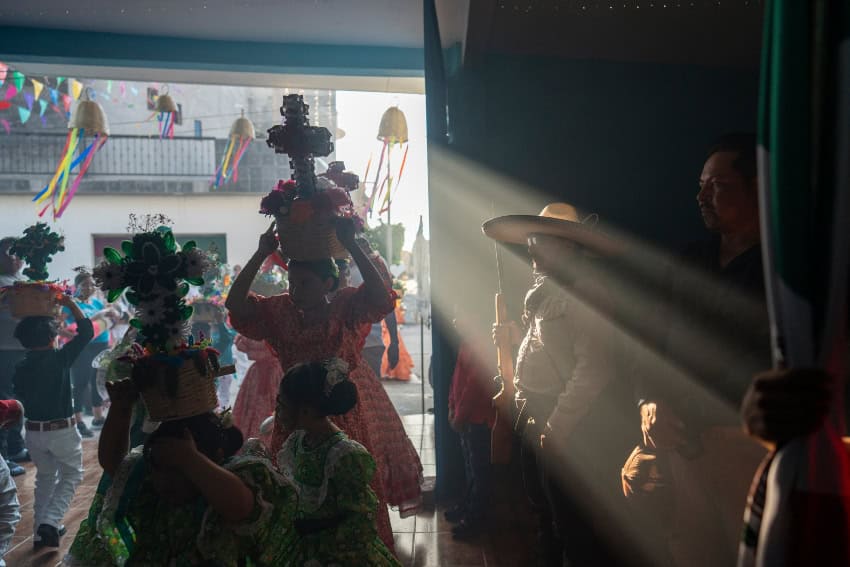
Six families still carry that vow. Each one is tied to a barrio. The families fund the music, the food, the processions. They keep the image of the saint in their home for a year.
Adrenaline and danger
The word I heard more than any other was adrenalina. The afternoon before the carnival, I found Josué sitting on a curb outside a corner store, rolling a cigarette. He was quiet.
“I’m always scared before I do it,” he told me. “But once I blow up one, I can’t stop. The adrenaline is too strong. I want to keep going.”
I asked about the dangers, and stories came easily: a man who burned, another who was paralyzed, people who lost fingers, hands, arms, legs. Accidents happen because the explosives are powerful enough to send 25-kilogram sledgehammers flying through the air. A hammer goes up, a hammer comes down, and sometimes there is a head in the way.
“Police always try to take them away,” one man said, sitting in a plastic chair outside his house, two kids playing in the dirt beside him. “But they will never stop the tradition. Nothing will change.”
On the afternoon before the main event, the streets were empty. Doors closed. No music. No voices.
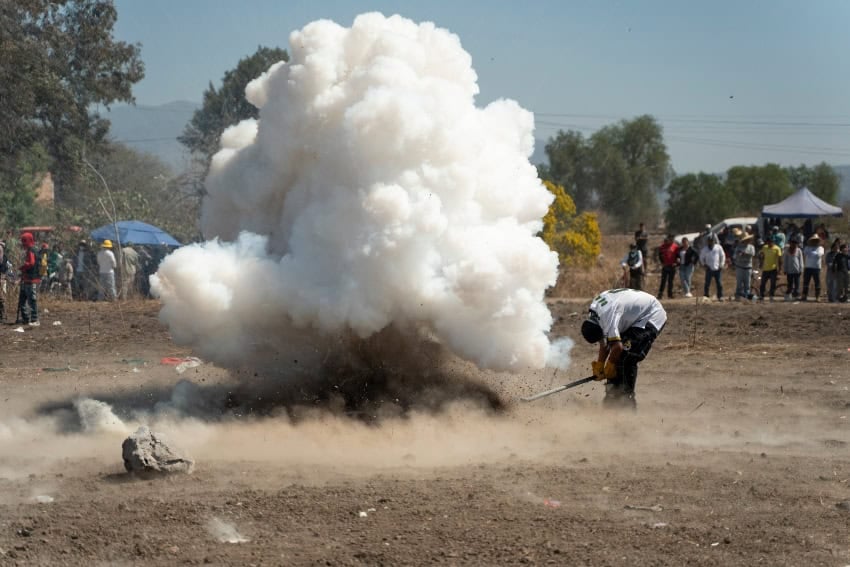
Boom. The first hammer hit the ground as soon as night fell.
The sound moved through me. The ground shook under my feet. My ears whistled, even from 100 meters away. My chest vibrated. Windows cracked. The pipes beneath the street groaned and split.
Then came another. And another.
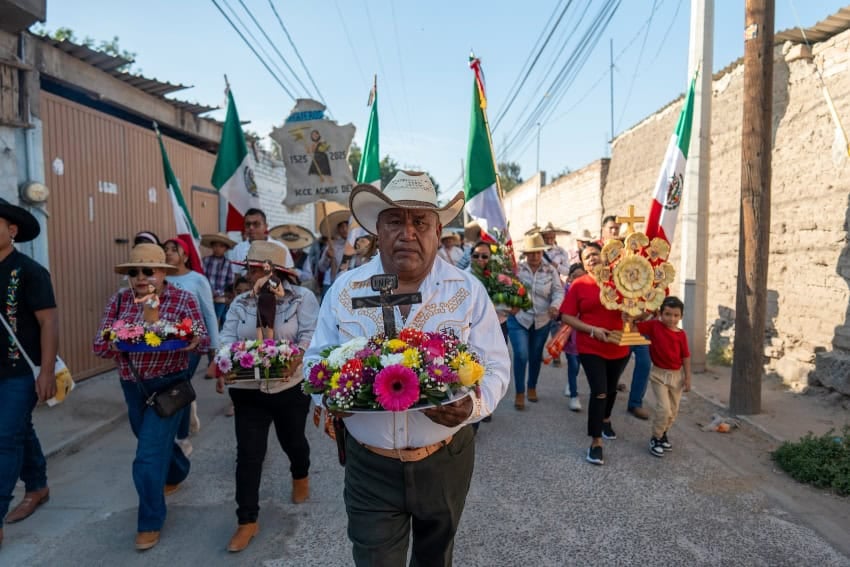
Parades took the streets. Villagers singing, dancing, playing instruments, carrying the image of San Juanito through the town. Following them in the back, kids dressed as soldiers, some in boots and gas masks, others with no gloves, no protection of any kind. Everyone carried sledgehammers and backpacks stuffed with explosives.
Defying the ban
I found Josué in the crowd. Face covered in soot, eyes wide. He swung a hammer down and the detonation threw him sideways. He got up laughing and loaded another charge.
Around midnight, the first police cars appeared.
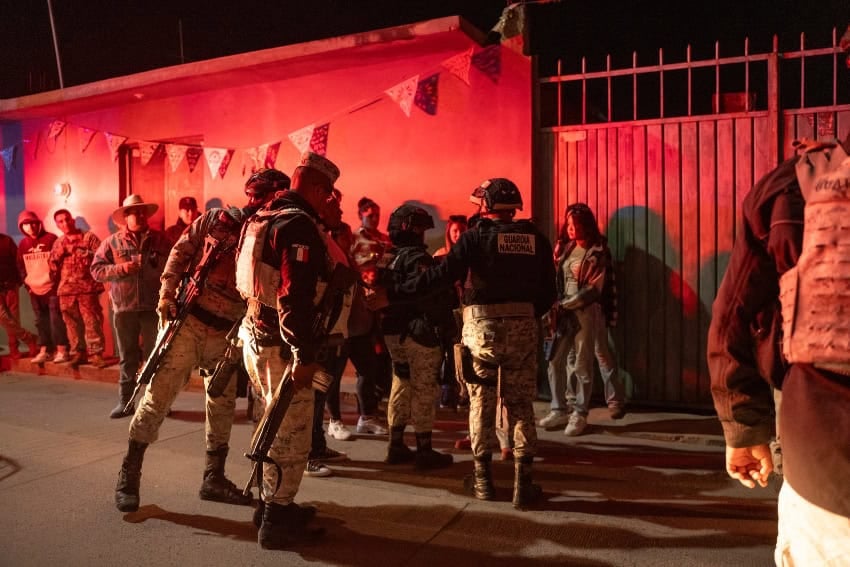
The crowd froze. About 10 men climbed out with SWAT gear, assault rifles and bulletproof vests. They walked toward the kids with the backpacks. The boys scattered.
I saw a grandmother crack her front door open. She let the kids shove their backpacks full of explosives through the gap; she closed the door, and she stood in front of it. When the police asked to enter, she stood immobile like a statue until they were gone.
The police confiscated what they could, caught a few guys, and left. Within minutes, the parades reformed. The hammers came back out. The explosions picked up where they had stopped.
At around 3 a.m., we walked back toward town to catch some sleep. I did not sleep. The bed shook after every boom. Even with earplugs, my ears hurt. It went on until 7 a.m.
We walked outside. Over 10 police cars patrolled the town. They had shut everything down. But beyond the edge of town, we could hear it. Boom. Boom.
We followed the sound.
Moving to the tracks
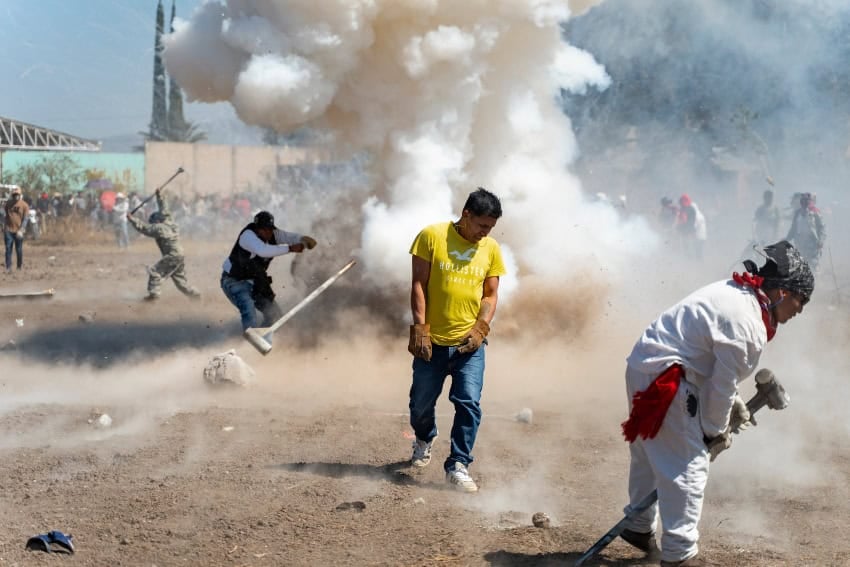
The townspeople had moved to the train tracks. Flat, open land, sand, rocks and gravel, not a piece of shade anywhere. They placed explosives on the rails and waited for trains to roll over them. Between trains, they took turns blowing up hammers on steel bars laid flat against the ground.
There, away from the police, the hammers got bigger.
It was noon. The sun was directly overhead. People packed more and more powder onto the sledgehammers and took turns. Huge hammers flew tens of meters into the air.
I watched a kid swing a hammer down. The explosion threw him back onto the ground. The hammer launched upward, spinning, and came down on his head. The ring of steel on skull. He tried to stand. Blood ran from his scalp, down his face, into his eyes. His friend pulled off his own shirt, wrapped it tight around the kid’s head, and hauled him onto the back of a motorcycle. They disappeared down the road.
Nobody stopped. The next person stepped up.
The next morning, the market opened in the square as always. People walked slowly, said good morning to each other. A dog slept in a doorway. The church bell rang at 8.
Here was Josué, down the road. He waved.
I went to say goodbye to Don Juan David. He pulled me into a hug that lasted a long time. He held on. We had barely talked. When he finally let go, his eyes were wet. He thanked me. He begged me to come back next year.
“Sí, San Juanito permite,” he said. If San Juanito allows it.
Mattia Astori and Daniele Colucci make Sacratos, a documentary project on extreme rituals with photos, interviews, articles and videos. They’ve worked in Mexico, India, Bolivia, Thailand and Italy.
KioskNews shows a cleaned-up reading view extracted from the publisher’s page — the original always lives on their site, not ours.