7 Fantasy Books With Time Travel That Are 10/10, No Notes

Jessica is a journalist, editor, TCA critic, and multimedia storyteller with a decade of experience covering pop culture, film, TV, women's sports, lifestyle, and more. She earned her degree in journalism from the University of North Carolina-Wilmington with a focus in creative writing before moving to N.Y.C. and getting her start at The Huffington Post. (She still misses those nap pods.) She's covered multiple film festivals, recapped some of your favorite series, worked too many red carpets to count, and even yapped on a podcast or two. When she’s not interviewing your favorite showrunner or ranking Ryan Gosling's best roles for places like UPROXX, Teen Vogue, Marie Claire, The Daily Beast, and Cosmopolitan, she’s busy being a full-time hype woman to her cat, Finn. You can find her on Bluesky and, sadly, Twitter.
Sign in to your Collider account
Time travel is one of those narrative devices that can go sideways fast. Get it wrong, and you've got characters explaining paradoxes to each other while the reader checks out entirely. Get it right, though, and you end up with something that rewires how you think about love, or history, or what it even means to be the person you are right now.
These fantasy books get it right. Very right. They use the mechanics of moving through ages and eras to ask questions that regular old linear storytelling just can't, and they do it while being flat-out impossible to put down. There's a love story told entirely in letters hidden across timelines, a murder mystery you have to solve in eight different bodies, and a 19th-century lord who ends up making cheese in Vermont. No one said time travel was predictable.
'This Is How You Lose the Time War' (2019)

Red and Blue are agents on opposite sides of a war fought across timelines. Red works for the Agency, a faction that leans hard into technology and conquest, while Blue serves Garden, something closer to an organic, sprawling consciousness. Their job is to nudge history in their side's favor, slipping through battlefields, plagues, and dying civilizations to tip the scales one timeline at a time. They're very good at it. And at some point, for reasons neither of them can fully explain, they start leaving each other letters. What begins as taunting turns into something more intimate and more reckless with each exchange.
Authors Amal El-Mohtar and Max Gladstone wrote alternate chapters of this one, each voicing one half of the correspondence, and the novella they built together is so lyrically bonkers that you might forget you're reading about a temporal Cold War. It's short enough to finish in an afternoon and the kind of book that rattles around in your brain for weeks after. The time travel here isn't about paradoxes or fix-it missions. It's about two beings choosing each other across every conceivable version of the world, consequences be damned.
'Outlander' (1991)
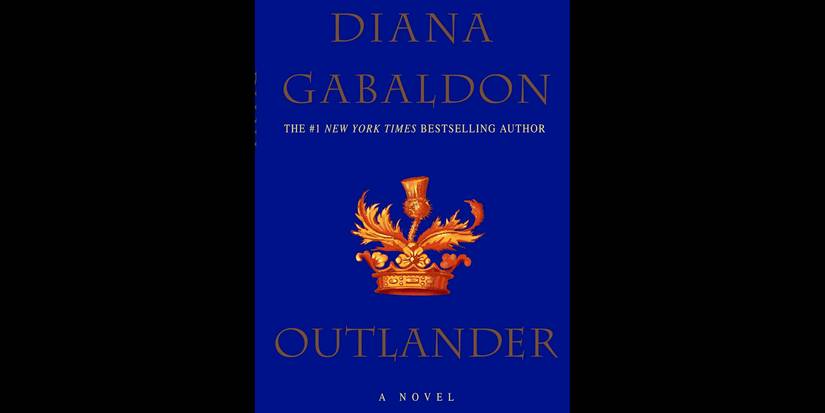
In 1945, Claire Randall is a former British combat nurse on a second honeymoon in the Scottish Highlands with her husband Frank. She touches the standing stones at Craigh na Dun and wakes up in 1743, where the first person she meets tries to kill her and the second one, a wounded young Highlander named Jamie Fraser, comes to her rescue. What follows is 850 pages of Claire trying to survive 18th-century Scotland with 20th-century medical knowledge, a sharp mouth, and a growing attachment to a man she was never supposed to meet.
Diana Gabaldon's talent for world building is what makes this book, and all the ones to follow, so compelling. Outlander's historical detail is dense and lived-in without ever feeling like homework, from the Jacobite clan politics to the grim realities of what passed for medicine in the Highlands. Claire is deposited into all of it with zero preparation, and Gabaldon never makes the past feel romantic or quaint. The time travel works because it bridges the past and the future in a way that never feels too farfetched.
'Kindred' (1979)

Octavia Butler was the first published Black woman in science fiction, a two-time Hugo and Nebula winner, and the first sci-fi author to receive a MacArthur Fellowship. Kindred, published in 1979, is her most widely read novel by a long stretch, with over a million copies sold, and it landed in a genre that had almost no interest in telling this kind of story. Dana, a Black woman living in Los Angeles in 1976, is dragged without warning to a Maryland plantation in the antebellum South, where she arrives just in time to save a drowning white boy named Rufus Weylin. Rufus is the son of a slaveholder and, as Dana discovers, her own ancestor. Every time his life is in danger, she gets pulled back again.
The time travel is involuntary and brutal: Dana has no control over when she goes or how long she stays, and each visit drops her deeper into a system designed to treat her as property. There's no portal fantasy comfort here. The book forces Dana, and the reader, to sit inside the machinery of American slavery and understand it from the position of someone who knows how it turns out and still can’t escape it. Butler never explains the mechanism behind the trips, but she really doesn't need to.
'The Midnight Library' (2020)

Somewhere between living and dying, there's a library. It's infinite and every book on its shelves contains a life you could have lived if you'd made a different choice. That's where Nora Seed ends up on the worst night of her life, after years of abandoned careers, a canceled wedding, and a best friend she let move to Australia without her. The librarian, Mrs. Elm, who also happens to be Nora's childhood school librarian, is waiting for her with a very large catalog. Nora can open any book and step into that version of herself: The Nora who became an Olympic swimmer, the Nora who married Dan, the Nora who moved to the Arctic to study glaciology. If she finds a life she wants to keep, she stays. If the disappointment catches up, she snaps back to the library and Mrs. Elm is there, waiting with the next book.
Author Matt Haig uses this setup to do something sneaky with the multiverse concept in The Midnight Library. It looks like a choose-your-own-adventure at first, but the longer Nora browses, the clearer it becomes that no single life is the fix she's looking for, and that realization is the point.
Collider Exclusive · 8 Questions · 2 Minutes Which Star Wars Faction Do You Belong To? Rebels · Empire · Mandalorians · Crimson Dawn
Eight honest questions about how you actually are: how you feel about rules, where your loyalty goes first, what you do when somebody criticises you in front of other people. Answer them and we will tell you whose side you would really have ended up on. Four factions are recruiting: the believers, the organisation, the ones with a code, and the ones with a price.
✊Rebel Alliance(Andor)
🛰️The Empire(Original Trilogy)
🪖Mandalorians(The Mandalorian)
🌅Crimson Dawn(Solo)
01
How do you feel about rules at work? This one sorts people faster than anything else.
02
What is your relationship with money? Nobody answers this the way they think they will.
03
What makes you respect somebody? Whatever you pick, you apply it to yourself too.
04
How do you behave under real pressure? Your friends would probably answer this for you.
05
Where does your loyalty go first? Everybody has an order, even if they never say it out loud.
06
Somebody criticises you in front of other people. What happens? Be honest about the first thing you feel.
07
What does a good life look like in ten years? Pick the one you would actually be happy with.
08
What do you want more than anything else? Eight questions in, this is the one that picks your side.
The Transmission Is Decoded Your Faction Is…
Four sides, four completely different answers to the same question about how a galaxy should work. Here is where you would have signed up, what it would ask of you, and what it would give you back.
Rebel Alliance
You belong with the side that has almost nothing and keeps going anyway. The Rebellion is not a glamorous posting, and anybody who tells you otherwise has not seen what it actually costs the people inside it.
- You are wired to notice when something is wrong and to say so, which makes you useful here and awkward almost everywhere else.
- Andor is the best thing Star Wars has made in years precisely because it shows the unglamorous half, which is the meetings, the paperwork and the people who never get a medal.
- Your kind of courage is the ordinary kind, done repeatedly, by somebody who is fully aware of the odds.
- The Alliance wins because enough people decided separately that they were finished being quiet about it.
The Galactic Empire
You belong to the machine, and the uncomfortable truth is that the machine mostly runs on people who are competent, orderly and convinced they are doing their job properly. Very few of them think of themselves as villains.
- You want structure, clear expectations and a way to measure whether you are doing well, none of which the other three factions can offer you.
- The Empire is frightening because of how ordinary it is on the inside, which is the single smartest thing Star Wars has ever done with it.
- Your risk is the quiet one, which is looking at something wrong and deciding it is somebody else's department.
- You would be genuinely good at this, and that is exactly the part worth thinking about.
The Mandalorians
You belong to the people who lost their planet and kept their code anyway. Mandalorian culture is not a nationality so much as a promise, and anybody who makes that promise and keeps it is one of them.
- You are loyal to people rather than to institutions, which is why an organisation chart has never once told you who you actually owe.
- A code only counts when it costs you something, and you are the sort of person who would pay rather than bend it.
- Mandalorians spend the whole saga arguing about what being one even means, and that argument is far more interesting than the armour.
- The Mandalorian and Grogu took the creed to cinemas over Memorial Day 2026, the first Star Wars film in seven years.
Crimson Dawn
You belong to the syndicate, where nobody wastes your time pretending the galaxy runs on ideals. Crimson Dawn deals in leverage, and it is the only faction on this list that would tell you so to your face.
- You read a room for who owes what, and you are usually right, which is a talent that makes people slightly wary of you.
- Qi'ra is the most interesting thing to come out of Solo, because she is the one character who learned the actual lesson about power.
- You would rather be the person setting the terms than the person being told what the terms are.
- The catch is simple enough. In a syndicate, everybody is leverage, including you, and the smart ones never forget that part.
'The 7½ Deaths of Evelyn Hardcastle' (2018)

The setup of Stuart Turton's debut sounds like someone threw Groundhog Day, Agatha Christie, and a body-swap comedy into a blender and hit purée. A man wakes up in a stranger's body on a 1920s country estate with no memory, knowing only that a woman named Evelyn Hardcastle will be murdered at the party tonight, and he has to figure out who kills her. He'll relive that same day eight times, in eight different bodies, with a figure in a plague doctor mask trailing him and delivering cryptic rules about how to escape.
The protagonist, Aiden Bishop, cycles through hosts who range from a portly financier to a ruthless butler, and each body gives him a different slice of access to the social dynamics of Blackheath Manor. Turton builds the mystery methodically with details that seemed meaningless three hosts ago turning out to be vital. The whole thing gets more tangled with every restart. There isn't another book like it on the shelf, and you'll want to read it twice just to see how he pulled it off.
'The River of No Return' (2014)

Lord Nicholas Falcott, Marquess of Blackdown, is fighting in the Peninsular War in 1812 when he takes a fatal wound and, instead of dying, wakes up in 2003 London. A secret society called the Guild finds him, explains that he has jumped forward in time, gives him a new name (Nick Davenant), and lays out the one unbreakable rule: The river of time flows in one direction, and there is no going back. Nick settles into the 21st century, makes a small fortune in Vermont cheese (really), and tries to forget the life he lost. Then the Guild sends him back to the Regency era on a mission, which should be impossible given their own rules, and he meets Julia Percy, a woman whose strange ability to manipulate time makes her a problem for the Guild and a bigger one for Nick's composure.
Author Bee Ridgway clearly knows her Regency history cold, and she pairs that with a romantic tension that sneaks up on you The River of No Return. The book takes its time-travel mythology dead seriously while also being a fully swoony love story. The world she builds, with rival factions, forbidden temporal mechanics, and a conspiracy that stretches across centuries, is deep enough to get happily lost in.
'A Wrinkle in Time' (1962)

Madeleine L'Engle shopped this manuscript to 26 publishers before someone finally said yes in 1962. It won the Newberry Medal the following year, has sold over 10 million copies, and basically invented the template for the brilliant girl hero in genre fiction decades before Hermione Granger showed up.
A Wrinkle in Time follows Meg Murry — awkward, furious, terrible at fitting in — who learns that her missing physicist father is alive on a distant planet and that she, her unsettling prodigy of a little brother, and a schoolmate are going to rescue him by folding the fabric of space and time. Three extremely odd celestial women (Mrs. Whatsit, Mrs. Who, and Mrs. Which) are there to help. Sort of. The "tesseract" that gives the book its title is a wrinkle in the fifth dimension that lets the characters leap across galaxies, but L'Engle was never interested in the physics. What she cared about was the question underneath: Whether love is strong enough to fight anything, even a totalitarian evil that wants everyone to be the same.

A Wrinkle In Time
- Release Date
- March 8, 2018
- Runtime
- 109 minutes
- Director
- Ava DuVernay
- Writers
- Jennifer Lee, John Stockwell
- Budget
- $100-130 million
- Studio(s)
- Disney
- Distributor(s)
- Disney
KioskNews shows a cleaned-up reading view extracted from the publisher’s page — the original always lives on their site, not ours.