Is feminist theory the key to understanding new antisemitism? A scholar lays out her case
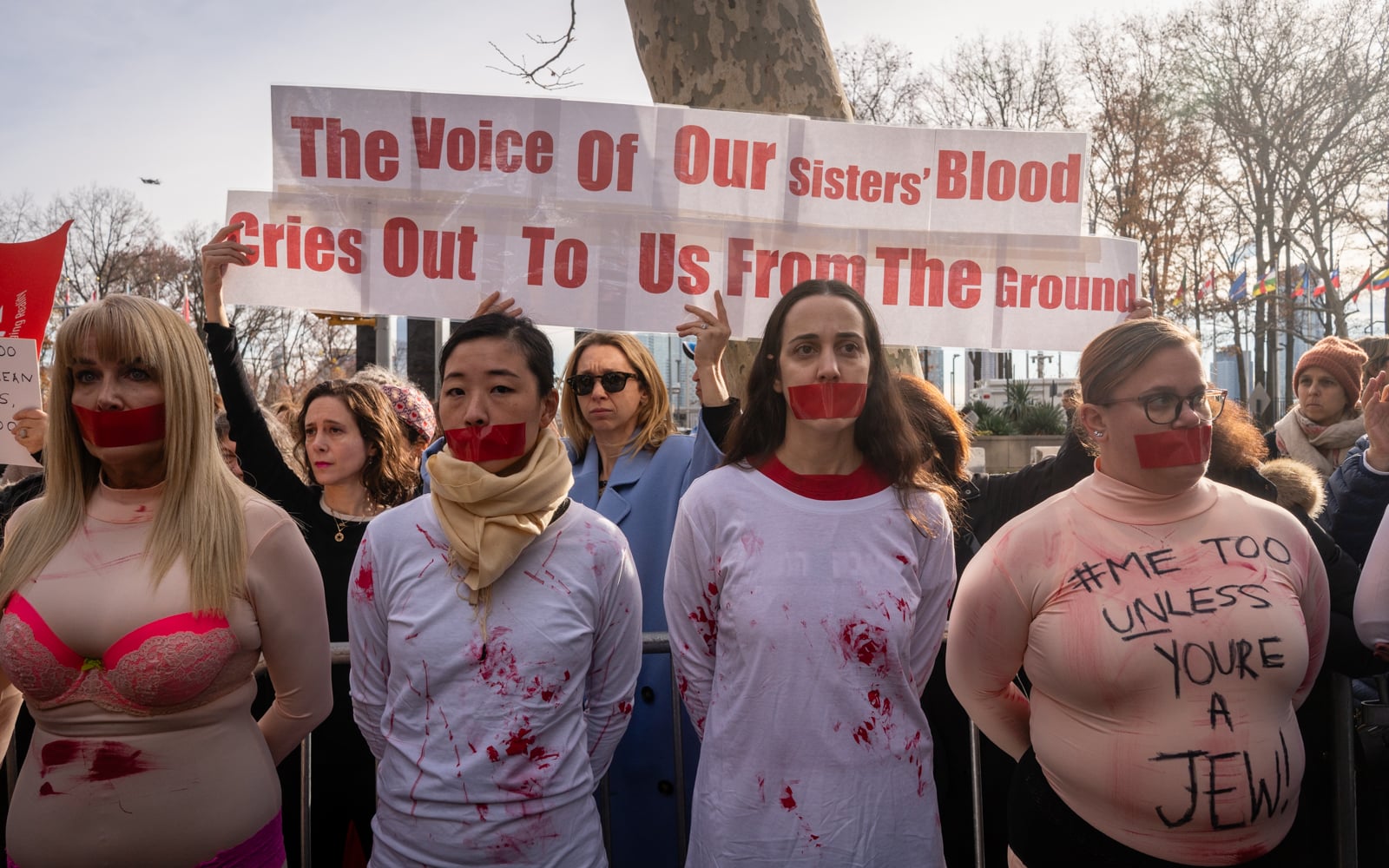
In December 2023, Jewish women protested outside the United Nations in New York City, accusing the UN of betraying Israeli women by staying largely silent about Hamas’s rapes during the terrorist invasion of Israel months before.
A line of protesters, wearing red tape over their mouths and red paint splattered on their shirts, stood under a banner that read, “The voice of our sisters’ blood cries out to us from the ground,” a reference to the Book of Genesis.
Other protesters held signs that said, “Believe Jewish women,” and chanted, “Rape is rape.”
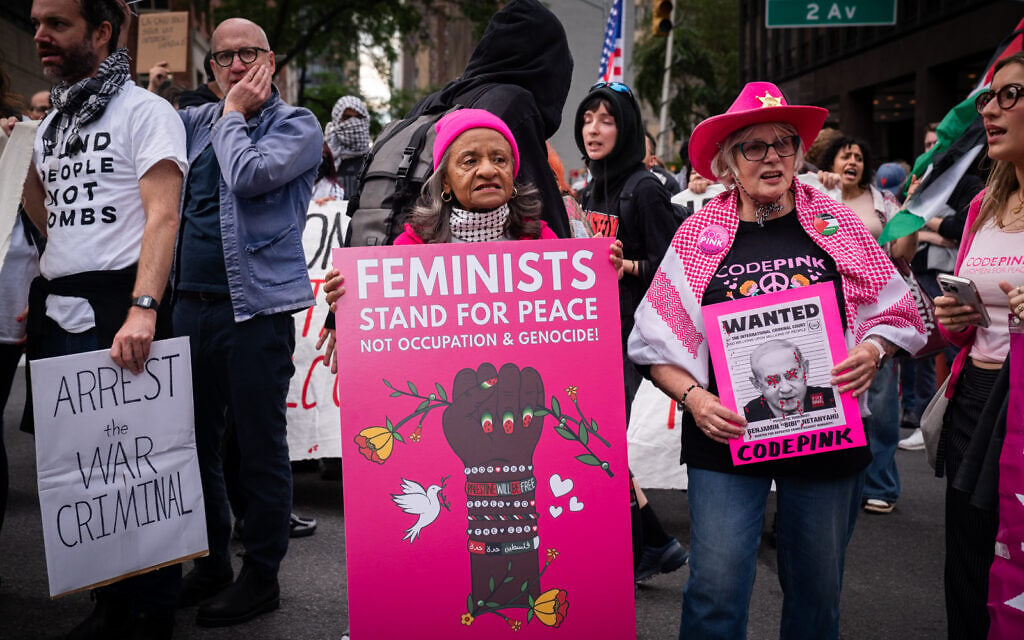
UN Women took almost two months to denounce Hamas’s sexual violence. At the same time, women in US cities ripped down posters showing Israeli women victims, and women’s and gender studies university faculties backed the Palestinians and condemned Israel after the attack, without mentioning Israeli women.
Why were purported feminists callous to Israeli women’s suffering?
A new book, “Feminist Antisemitism: An Intellectual History,” by New York-based scholar Kara Jesella, argues the response was the result of feminist theory’s long trajectory. The book is the first to focus on feminist antisemitism.
The 200-page book, published in June by the London Centre for the Study of Contemporary Antisemitism, is an academic work structured in a series of essays.
Jesella writes that feminist academia is a “vanguard” in the left’s antipathy toward Israel and “feminist thought [is a] a weapon of war.”
In an interview with The Times of Israel, she lays out how many of the theories and tropes are migrating from the movement to the broader public.
A shift in perspective
Jesella grew up in a mixed Catholic and Jewish household in upstate New York. She majored in women’s studies at Vassar College and became a feminist journalist. She wrote a 2007 book about a girls’ magazine, “How Sassy Changed My Life,” then returned to graduate school to get a PhD in feminist theory.
She was finishing her degree in 2021 when fighting broke out between Israel and Hamas. She says she saw leading feminist scholars circulating a petition that demonized Israel as “colonialist” and noticed feminist friends posting comments about Israel that she “knew weren’t true.” She realized the leftist antisemitism that she had heard about was a real issue.
“That’s when I really started this in earnest and was trying to figure it out,” she says in an interview. “It became clear to me pretty quickly that there was a whole story and there was a whole trajectory for me to follow.”

Jesella writes that she had “no special attachment” to Israel at the time and had never visited, but didn’t understand why some feminists sought to “destroy any nation,” particularly the home of a historically persecuted group.
She read decades of feminist literature, including academic journals, poetry, magazines, and hundreds of books, for her research.
Before the October 7, 2023, Hamas invasion, when she discussed the project, “People would look at me like, ‘That’s crazy and you’re wrong.”
“Unfortunately, that’s not the response I get anymore,” she says.
A fractured sisterhood
“Feminist Antisemitism: An Intellectual History” follows feminist intellectual trends chronologically, starting in the 1960s, arguing that antisemitism existed in the movement then.
The feminist movement was not a unified “sisterhood,” but was rife with infighting. The Jewish writer Betty Friedan’s 1963 book, “The Feminine Mystique,” galvanized millions of women, but others pushed back, particularly far-left Black feminists, who argued Friedan’s approach neglected race and class. The aspiration for sisterhood was recast as racist.
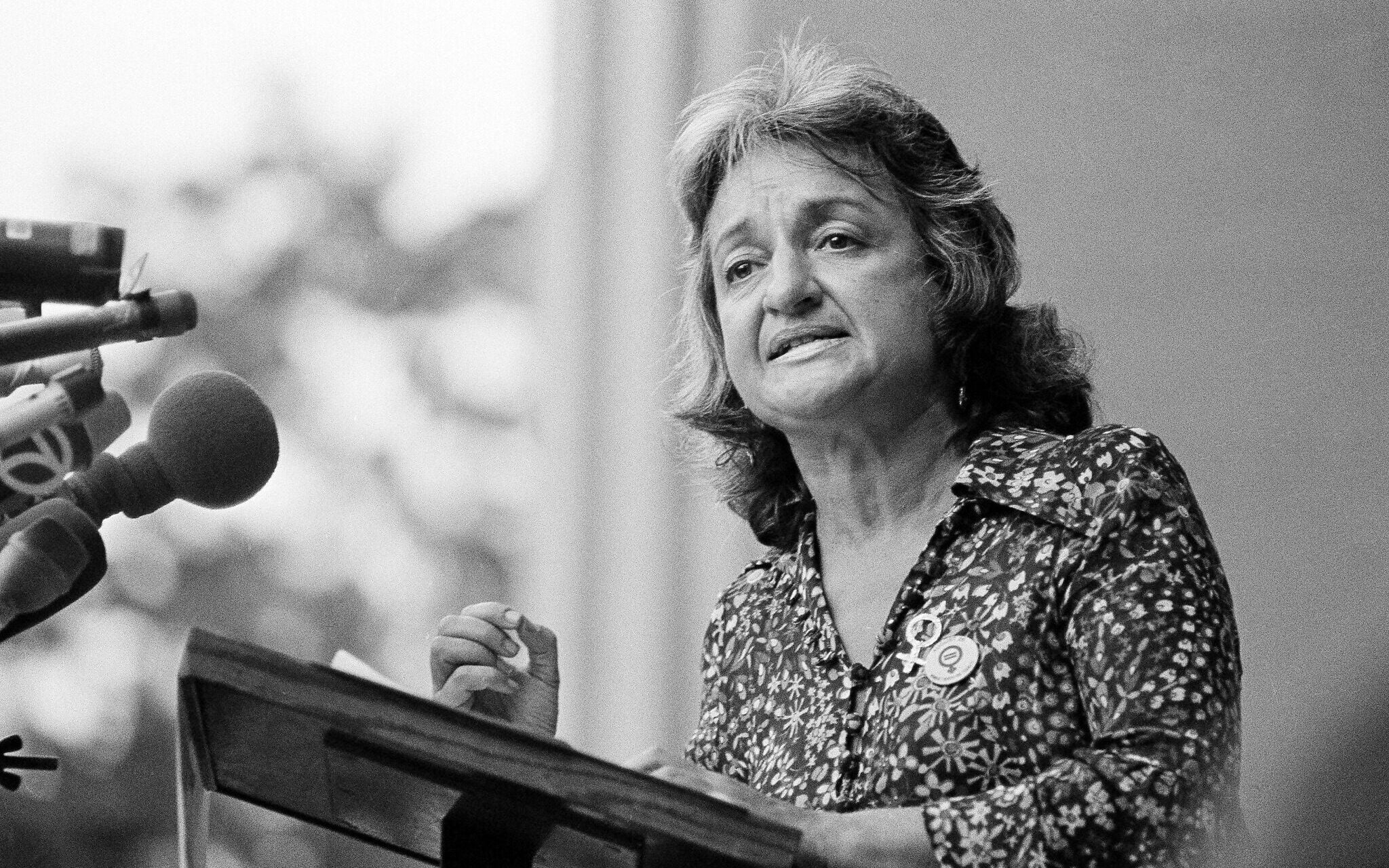
Feminist theorists began to focus more on inequalities between women, and less on inequalities between women and men. Socialism, racial politics and decolonization replaced the goal of universal sisterhood.
“Early on, this idea of Jews being white women becomes really important and becomes what this other group of women are writing against,” Jesella says. The criticism was directed against white women, not specifically Jews, but Jesella argued that commentary leaned into the era’s stereotypes of Jewish women, such as describing them as “pushy.”
This image — of the Jewish woman as a white woman as a liberal as a racist and as worse than almost any man — has been an indelible image of some strands of feminism since the 1960s
“This image — of the Jewish woman as a white woman as a liberal as a racist and as worse than almost any man — has been an indelible image of some strands of feminism since the 1960s,” she writes.
By the 1970s, minority feminists were allying with people of color from abroad, seeing themselves as more similar to women who were “decolonizing” in foreign countries than white and Jewish women in the US. Many of the foreign groups were anti-Zionist and the ideology migrated into the US feminist movement, Jesella says.
Jewish feminists sidelined
Her book treats anti-Zionism, the rejection of Jewish self-determination and Israel’s existence as a Jewish state, as anti-Jewish. Anti-Zionists say that their ideology is not anti-Jewish, only anti-Israel.
In 1975, at a United Nations women’s conference in Mexico City, activists introduced a resolution branding Zionism as racism, months before the UN General Assembly adopted a similar, landmark resolution.
In the 1980s, Arab feminism gained ground, partly due to the Lebanon War. US feminists allied with Arab feminists immersed in anti-Zionist ideology, and began to write about Jewish women and Israel in negative terms, Jesella says.
Israel was characterized as patriarchal, white supremacist and a threat to Palestinian women.
Black women were the vanguard in the American feminist movement; Palestinian women were the rising vanguard internationally. Now they were the same
A 1982 poem by June Jordan compared Israel’s conduct in Lebanon to the Holocaust. In another poem, Jordan says she was “born a Black woman” but had “become a Palestinian.”
“Black women were the vanguard in the American feminist movement; Palestinian women were the rising vanguard internationally. Now they were the same,” Jesella writes.
Anti-Zionism became central to international feminist gatherings. At the second International Women’s Conference in Copenhagen in 1980, attendees reportedly shouted, “Jews must die! Israel must die!” At a 1982 conference in California, delegates debated whether Israel was “genocidal.”
Feminist poetry made implicit criticism of Jews, referring to them as “white-skinned” women who were not “Anglo-Saxon,” or as “a People of the Book.” One poem portrayed the Jewish Samson as a murderer of Black people. Other literature expressed explicit grievances toward Jews.
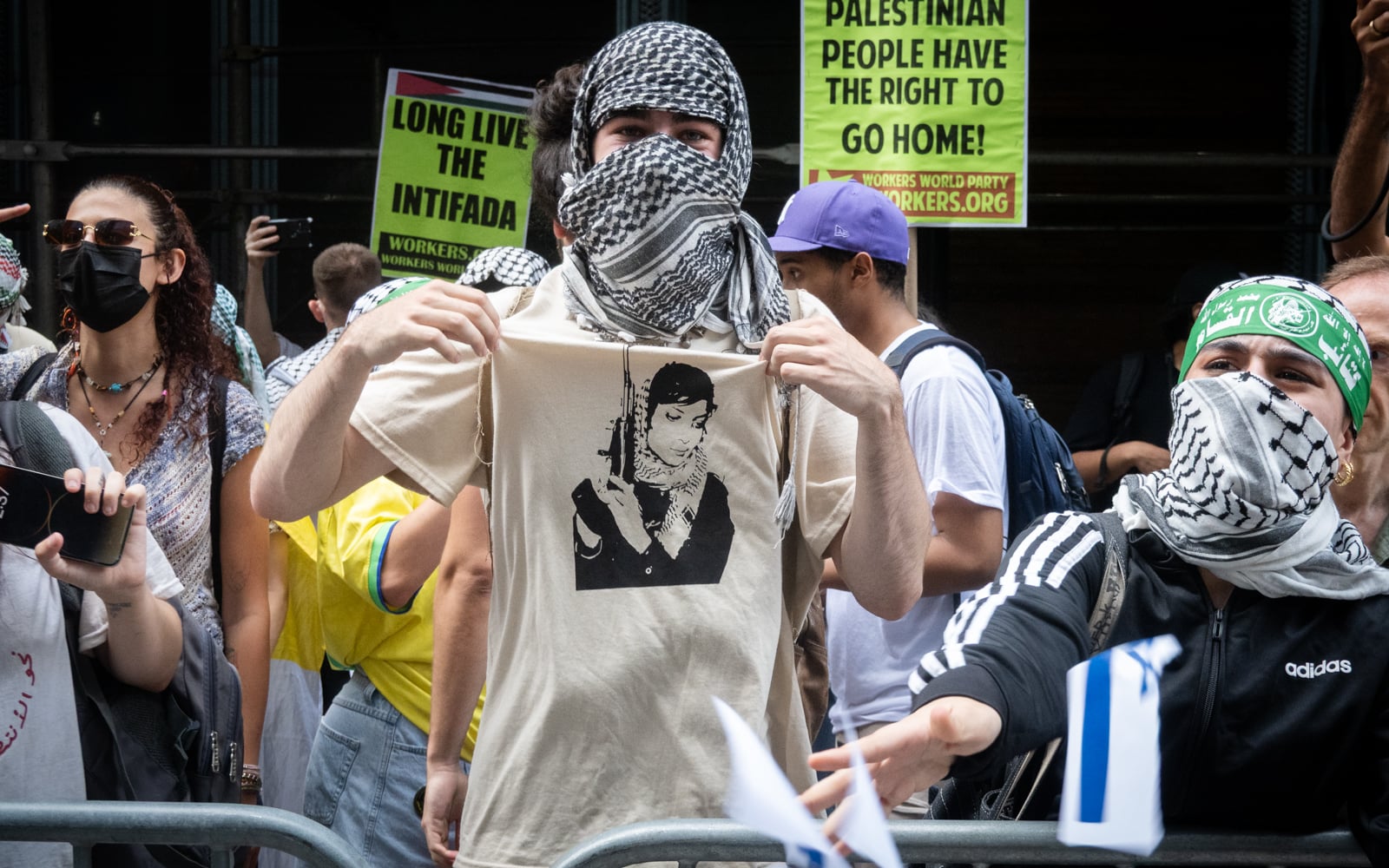
A 1979 essay by Iva E. Carruthers accused a “Jewish elite group” in the “white feminist movement” of “assaults to African familyhood” and called Jews “Aryans.” Palestinian women terrorists, like Leila Khaled, were held up as icons.
The Jewish feminist Letty Cottin Pogrebin in 1982 said that anti-Zionism had become a “politically ‘respectable’ cover for antisemitism,” and asked, “Will feminism be our movement only so long as we agree not to make our Jewishness an issue?”
Will feminism be our movement only so long as we agree not to make our Jewishness an issue?
Jewish feminists supported anti-racist initiatives until they became anti-Zionist; then, when the Jewish women dropped their support, they were called racist, Jesella writes.
“They simultaneously recast Jews into new roles most Jews found unrecognizable: not historical allies to Black and people of color, but the ultimate, paradigmatic racists; not a minority, but a supremacist majority; not the victims of Nazis, but Nazis,” she writes.
The Jewish feminist left
In the 1990s and 2000s, Jewish feminists provided the left “with new tools to righteously criticize and undermine Jews” as they urged feminists to ally with more vulnerable identity groups, rather than their own group.
These Jewish activists were inspired by the 20th-century anti-Zionist Bund, encouraged criticism of establishment Jewish institutions, disavowed Israel, questioned antisemitism and celebrated Diaspora life, favoring Yiddish over Hebrew. Denouncing Israel became a litmus test. They often used the verbal preamble, “as a Jew,” to introduce their critiques, Jesella writes.
The movement ‘created a framework for non-Jewish critiques of Judaism’
Their effort to remain part of the feminist movement, building solidarity between themselves and other groups, stoked divisions between Jews, who were pressured to break with other Jews — the opposite of what other minorities were expected to do.
The movement “created a framework for non-Jewish critiques of Judaism” and shielded others from antisemitism accusations, Jesella says.
She noted that feminist scholars founded far-left Jewish groups like Jews for Economic and Racial Justice and the anti-Zionist Jewish Voice for Peace.
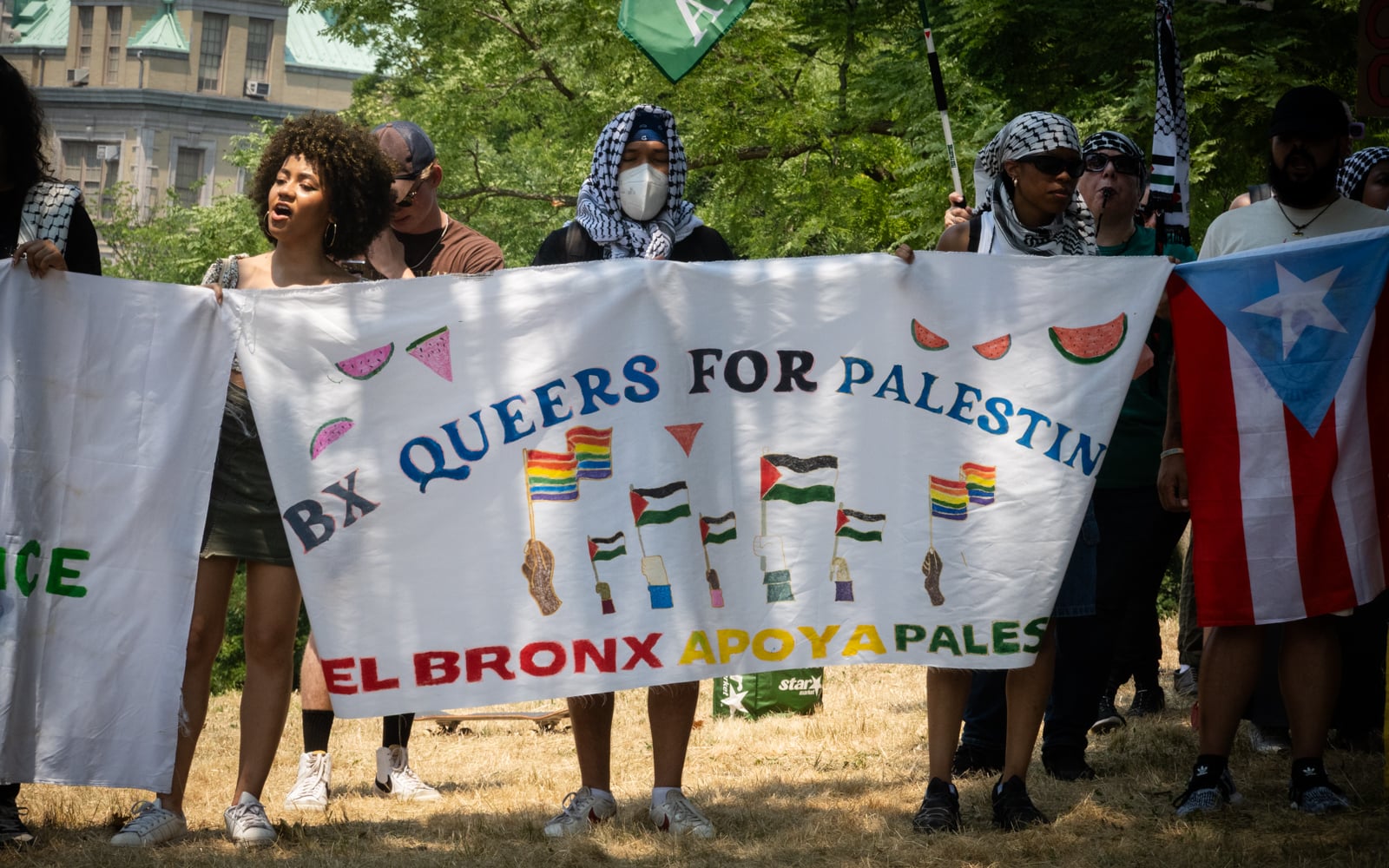
Academics in more recent years turned queer theory against Israel, spreading anti-Zionism in universities. Queer theorists popularized “pinkwashing,” the charge that Israel’s pro-LGBTQ record was a cover-up for abuse.
The theory’s celebration of “deviance” could explain why queer activists supported Israel’s enemies, despite their oppression of the LGBTQ community.
“It was quirky, unexpected and marketable to seek not just to reform but also to dismantle an entire nation and to support theocratic terrorist organizations,” Jesella writes.
Writers like Jasbir K. Puar celebrated female Palestinian suicide bombers as a “chaotic challenge to normative conventions of gender” and said it was “irrelevant” whether “Palestinian society is homophobic” because “the occupation must end.”
The prominent feminist Angela Davis drew links between police violence in the US and Israel in what she described as a “feminist process,” suggesting that Israel was responsible for American racism.
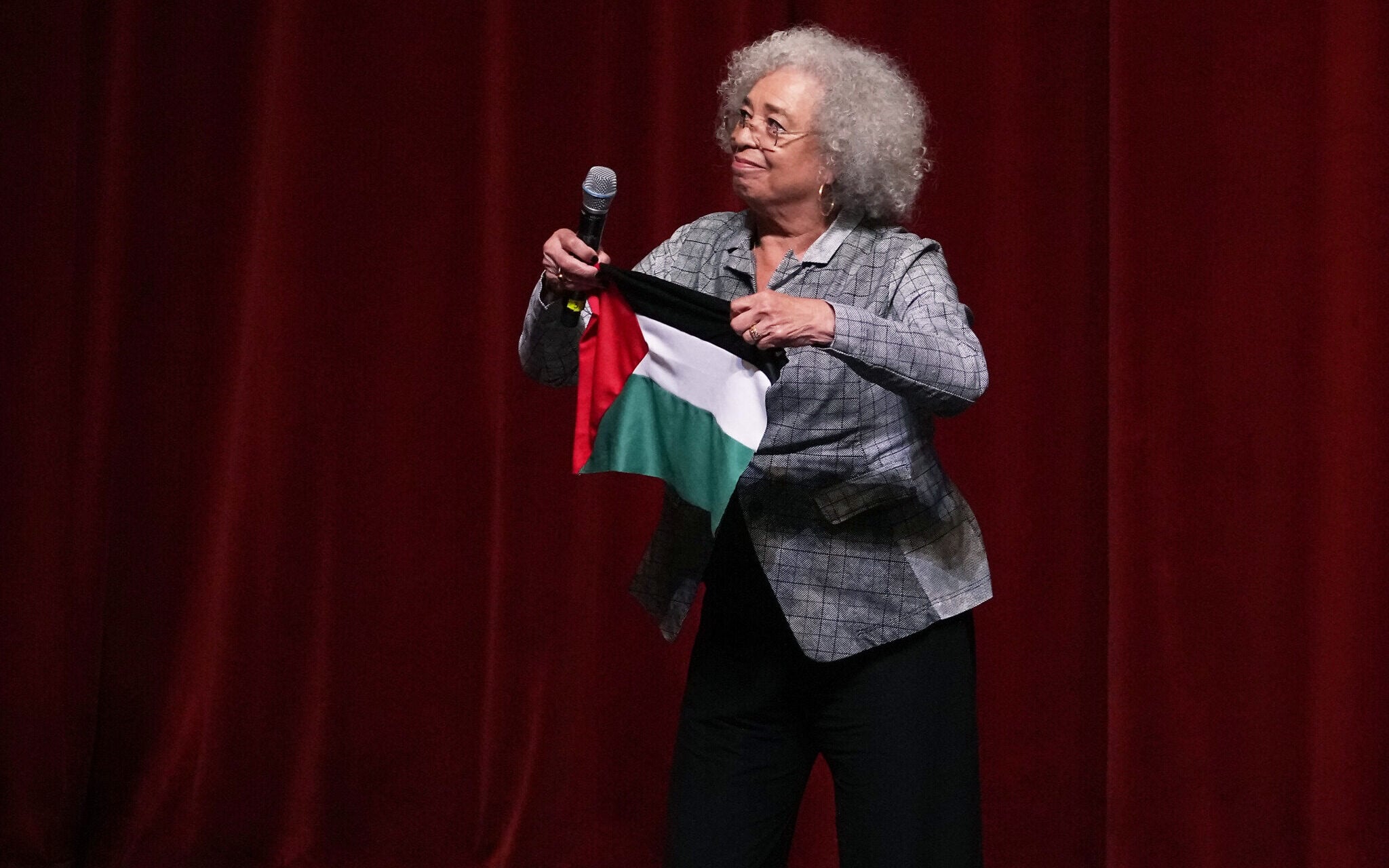
In 2017, after the Women’s March, feminist leaders, including Davis, published a letter calling for a new feminism that was co-authored by Rasmea Odeh, who was convicted of killing two Jews in a terror bombing. The Women’s March leadership was rocked by alleged antisemitism two years later.
A predictable double standard
The approach to prosecuting sexual violence shifted: Commentators argued that punishing sexual assault was “carceral feminism,” an alliance with the criminal justice system that punishes oppressed groups.
Davis said that the “same social conditions which spawn racist violence,” such as imperialism, were the “same forces which encourage sexual violence.” The approach suggested that Israel’s behavior meant that sexual assault was to be expected.
Prominent feminists endorsed antisemitism or extremism, such as Alice Walker, who labeled Israel “demonic” and called to “follow the trail” of the Talmud’s “poison,” and Judith Butler, who called Hamas and Hezbollah “social movements that are progressive.”
The women’s studies departments are pretty thoroughly anti-Zionist at this point
Under the elaborate theories, Jewish solidarity with other groups became racism, rape prosecution became persecution, the Jewish minority became oppressors, and Israel’s LGBTQ record became evidence of discrimination.
“They used feminism against these other women who they saw not as their feminist sisters but as oppressors, as they advocated for far-left goals,” Jesella writes, adding that Jews and Israel were positioned as “the enemy.”
The academic theories made their way into the public in the early 2000s through feminist blogs, Tumblr and social media, influencing magazines like Teen Vogue, she says.
“They’ve connected all these ideas about what is good with anti-Zionism,” Jesella says. “The women’s studies departments are pretty thoroughly anti-Zionist at this point.”
By October 7, the “callous double standard around rape was predictable,” Jesella writes.
After the invasion, when reports of Hamas rapes began to emerge, feminists like Butler demanded evidence, betraying feminism’s past insistence that women were to be believed.
“Queer, feminist, and antiracist theory didn’t just diminish mutilating and sexually violating women, but legitimized it — as long as it was perpetrated against the right women,” Jesella writes.
‘Queer, feminist, and antiracist theory didn’t just diminish mutilating and sexually violating women, but legitimized it — as long as it was perpetrated against the right women’
She says the October 7 responses were a “perfectly logical endpoint” for feminist intersectional theories — that some oppressed groups should be centered, that Jews were white, that white people had more power, and that they needed to be disempowered.
The London Center for the Study of Contemporary Antisemitism has shortlisted the title for its annual book prize. Since the book’s release, Jesella has joined the Z3 Project, a Jewish think tank, and is working on an anthology called “The Zionist Woman” for Wicked Son publisher.
Jesella argued that the adoption of anti-Zionism was detrimental to women’s rights by dividing the movement and rejecting dialogue with opponents, noting setbacks in recent years, such as the Supreme Court’s reversal of Roe V. Wade and the Trump Administration’s actions against USAID that stripped contraception from millions of women in developing countries.
“Women and others still want what feminism offers: more autonomy over their bodies and lives and more say in the world,” she writes. “Perhaps, as women become increasingly aware of and angered by what feminism has become, as they lose instead of gain rights, they will renew calls for sisterhood and solidarity.”
KioskNews shows a cleaned-up reading view extracted from the publisher’s page — the original always lives on their site, not ours.