‘Deserving of a main-stage season’: The first Fringe festival reviews are in
THEATRE
Mary-Agnes O’Loughlin | Glimpses of Heaven
The Motley Bauhaus, until October 4
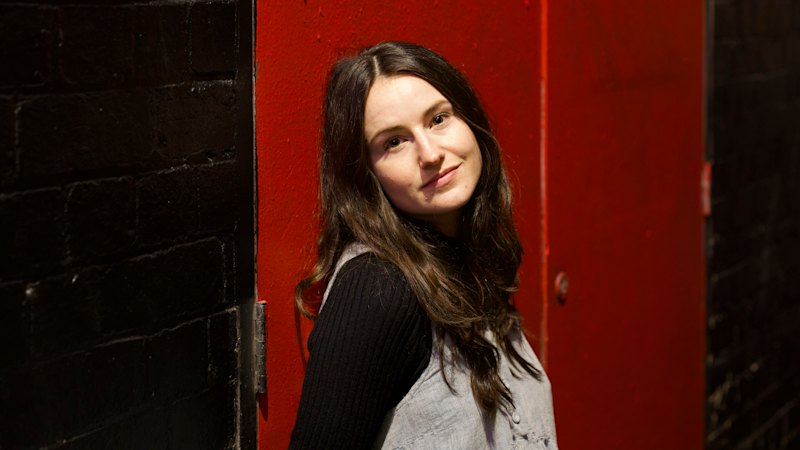
In Glimpses of Heaven Mary-Agnes O’Loughlin draws inspiration (or should that be devastation?) from the battles with alcoholism, drug dependence and mental health issues of her own mother, comedic veteran Fiona O’Loughlin. Fiona’s struggles in the past are well-documented. She’s never been one to shy away from detailing her addiction and a 2013 suicide attempt (that she credits Mary-Agnes for saving her life from).
A partly fictionalised story, the reality of Mary-Agnes’ truths about her upbringing are laid bare. She performs as Hannah, attending her mother’s apartment – an illustrious musician with chaotic habits (of which Fiona herself provides the voiceovers for) – to pack up her belongings. All of the sentimental keepsakes elicit memories from a childhood with a mother constantly in the spotlight and turning a blind-eye to the lowlights caused due to her compulsions. The show asks: is unconditional love possible when you’re watching a family member slowly killing themselves? Is any amount of fame and fortune amassed worth it if you seem destined to join The 27 Club, even if you may be a few years past the admission date?
Under the directorial eye of another Australian comedy mainstay, Damian Callinan, there’s also humour to be found throughout the morbid storytelling intertwined with well-choreographed dance and music. Glimpses of Heaven is a tender, vulnerable exploration of the struggles with the concepts of familial love, intergenerational trauma and the catharsis found in forgiveness. While it must come recommended with the caveat of a strong trigger warning for anyone with a history of domestic distress, it’s a very impressive solo debut deserving of a main-stage season in future runs to come.
★★★★
Reviewed by Tyson Wray
THEATRE
Ryan Hamilton and Georgie Wolfe | F--- Your Funding
Festival Hub: Trades Hall - Solidarity Hall, until October 4
What if, over the course of a night, you could agitate for the arts to occupy a more central place in the political agenda and redress inequitable funding models? Such concerns reach an apotheosis at the 2026 Melba Awards, a fictional annual celebration of seriously high stakes in the play F--- Your Funding. Hosted by a venerated opera singer and opened by an imagined version the Victorian arts minister, the night descends into chaos when two cultural terrorists hold them at gunpoint with a list of demands.
F--- Your Funding is at its most uproarious when it’s laying bare the arts sector’s greatest hypocrisies. A slide containing a list of morally vacuous donors? Tick. A politician lauding the cultural cachet of Melbourne while refusing to bolster the arts sector in any real, tangible way? Tick.
As the play lurches wildly from farcical hijinks to sincere proselytising about the role of art in a whiplash-inducing manner, it simultaneously lampoons itself and us while paying homage to its intended audience. Leftists too busy preaching to the converted and fighting among one another to organise. Artists making work centred on their latest diagnoses. Clowns.
★★★★
Reviewed by Sonia Nair
DANCE
Caroline Meaden | Immacolata
Chunky Move Studios, until October 3
This is a beautifully strange and melancholy solo dance vigil: a restless choreographic grisaille, delicate and disquieting. Caroline Meaden struts and frets, with crisp bird-like movements, then hesitates. Always there is hesitation in this work. Then an arm – or a hand or a leg – begins to wobble. It’s like a part of the body just turns to water.
The dimly lit stage is furnished with only a clothes rack, some biscuit crumbs and a stool, but Meaden keeps mostly to its edges. She is pulled backwards or drawn into the corners, as if kept out of the empty centre by some unseen force.
Immacolata tantalises with the mystery of its significance. What does it all mean? Is there a story behind its troubling silences? In fact, Meaden provides an accompanying essay, intended to be read after the performance, which does explain much of what we see – and gives the work’s air of sadness a touching specificity.
★★★★
Reviewed by Andrew Fuhrmann
The Booklist is a weekly newsletter for book lovers from Jason Steger. Get it delivered every Friday.
KioskNews shows a cleaned-up reading view extracted from the publisher’s page — the original always lives on their site, not ours.