10 Perfect Psychological Thrillers With the Best Plots, Ranked

Diego Pineda has been a devout storyteller his whole life. He has self-published a fantasy novel and a book of short stories, and is actively working on publishing his second novel.
A lifelong fan of watching movies and talking about them endlessly, he writes reviews and analyses on his Instagram page dedicated to cinema, and occasionally on his blog. His favorite filmmakers are Andrei Tarkovsky and Charlie Chaplin. He loves modern Mexican cinema and thinks it's tragically underappreciated.
Other interests of Diego's include reading, gaming, roller coasters, writing reviews on his Letterboxd account (username: DPP_reviews), and going down rabbit holes of whatever topic he's interested in at any given point.
Sign in to your Collider account
Psychological thrillers are different from regular thrillers in that they build suspense, tension, and excitement not so much from external factors stemming from the plot, but rather from the internal mental and emotional states of their characters. Even still, many of the greatest psychological thrillers that have been made throughout history have understood that just because their focus isn't on plot, that doesn't mean that they can't have an absolutely killer one.
Indeed, from foundational classics like Rear Window to modern gems like Parasite, it's no coincidence that several of the greatest psychological thriller movies of all time have fittingly phenomenal plots. With their airtight structure, their enjoyable pacing, and their abundance of exciting and suspenseful story beats, these movies are all absolute masterclasses in how to craft the plot of a psychological thriller.
10 'Perfect Blue' (1997)

People who think that animation is somehow a "lesser" medium, or that animated masterpiece don't deserve to be considered alongside their live-action counterparts, have clearly never watched the oeuvre of Satoshi Kon. The Japanese auteur was sadly taken from us far too soon by pancreatic cancer, but he left behind one of the greatest legacies of any anime filmmaker in history. Case in point: Perfect Blue, about a former pop idol who begins to chase a serious acting career but starts to be aggressively stalked.
It's a powerful drama and a haunting psychological thriller about parasocial relationships and the costs of artistic obsession, as well as one of the darkest animated movies ever made. Kon's plotting offers a masterclass in blurring the lines between reality and illusion, with a surreal story full of jaw-dropping twists bound to keep anyone at the edge of their seat.
9 'Rear Window' (1954)
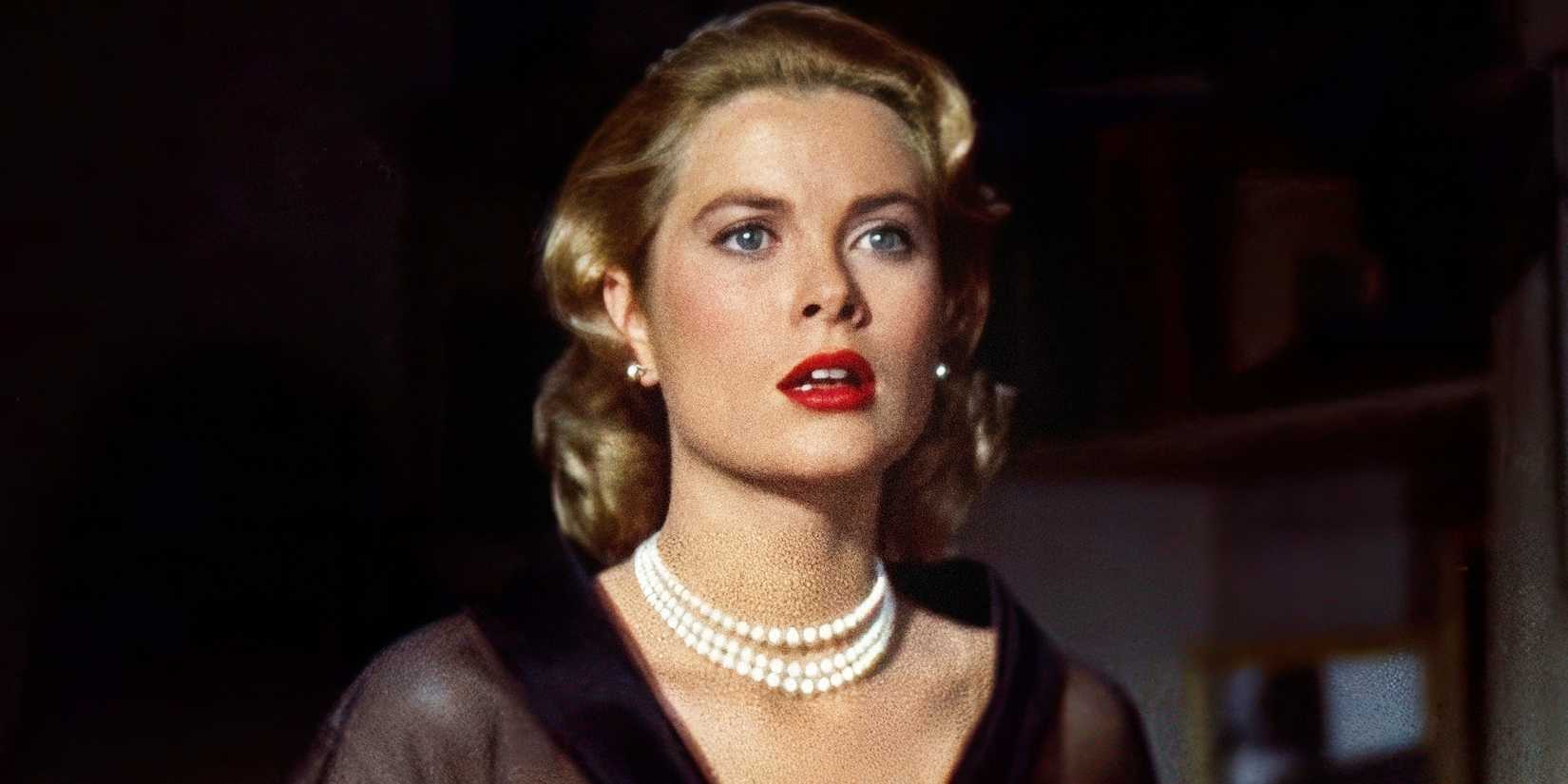
Alfred Hitchcock is widely praised as the Master of Suspense for a reason—plenty of reasons, actually, one of them being that he's generally regarded as the father of psychological thriller cinema. One could make a list of the best psychological thrillers in film history composed entirely of Hitchcock films, but as far as plotting goes, it doesn't get much better than Rear Window. In it, a wheelchair-bound photographer who likes to spy his neighbors from his apartment window becomes convinced that he has witnessed a murder.
Written by John Michael Hayes and based on Cornell Woolrich's short story It Had to Be Murder, Rear Window genuinely is one of those classic thrillers without any flaws whatsoever. Despite being constrained to a single location, Hayes' tight plotting is amazing, structured as a sort of slow-burning puzzle box that weaponizes paranoia and isolation to tell an immensely powerful story about voyeurism.
8 'Memories of Murder' (2003)

Though he's obviously best-known for Parasite, the film he made history with at the Academy Awards in 2020, Bong Joohn Ho has actually made several other exceptional movies—including Memories of Murder, one of the most perfect thriller movies of the last 50 years. It's based on the true story of the investigation of the string of rapes and murders that terrified the Korean city of Hwaseong in the late 1980s.
It's not easy to plot a murder mystery thriller based on a true story—and it must have been particularly challenging for Bong and Shim Sung-bo to plot Memories of Murder at a time when the real-life murder case was still unsolved. This makes the plot of Memories of Murder a masterful subversion of whodunnit tropes, completely dismantling the very illusion of truth with a darkly comical yet cynical tone.
7 'Se7en' (1995)

After the failure that was Alien 3, David Fincher was in serious need of a hit in order to prove that he was worthy of being given a chance in Hollywood. It would have been impossible for anyone to accurately predict, however, that his sophomore effort from the director's chair would be nothing less than one of the best American thriller movies of all time, Se7en, about two homicide detectives tracking a serial killer who's using the seven deadly sins as a motif for his ghastly murders.
While many studios were constantly pushing for Andrew Kevin Walker to make the ending of his script considerably less dark, it was precisely the film's purely evil tone that attracted David Fincher to the project. In the end, Se7en retained its purely tragic plot, which is one of the darkest and most disturbing to have ever made more than $300 million dollars at the box office worldwide.
6 'Parasite' (2019)

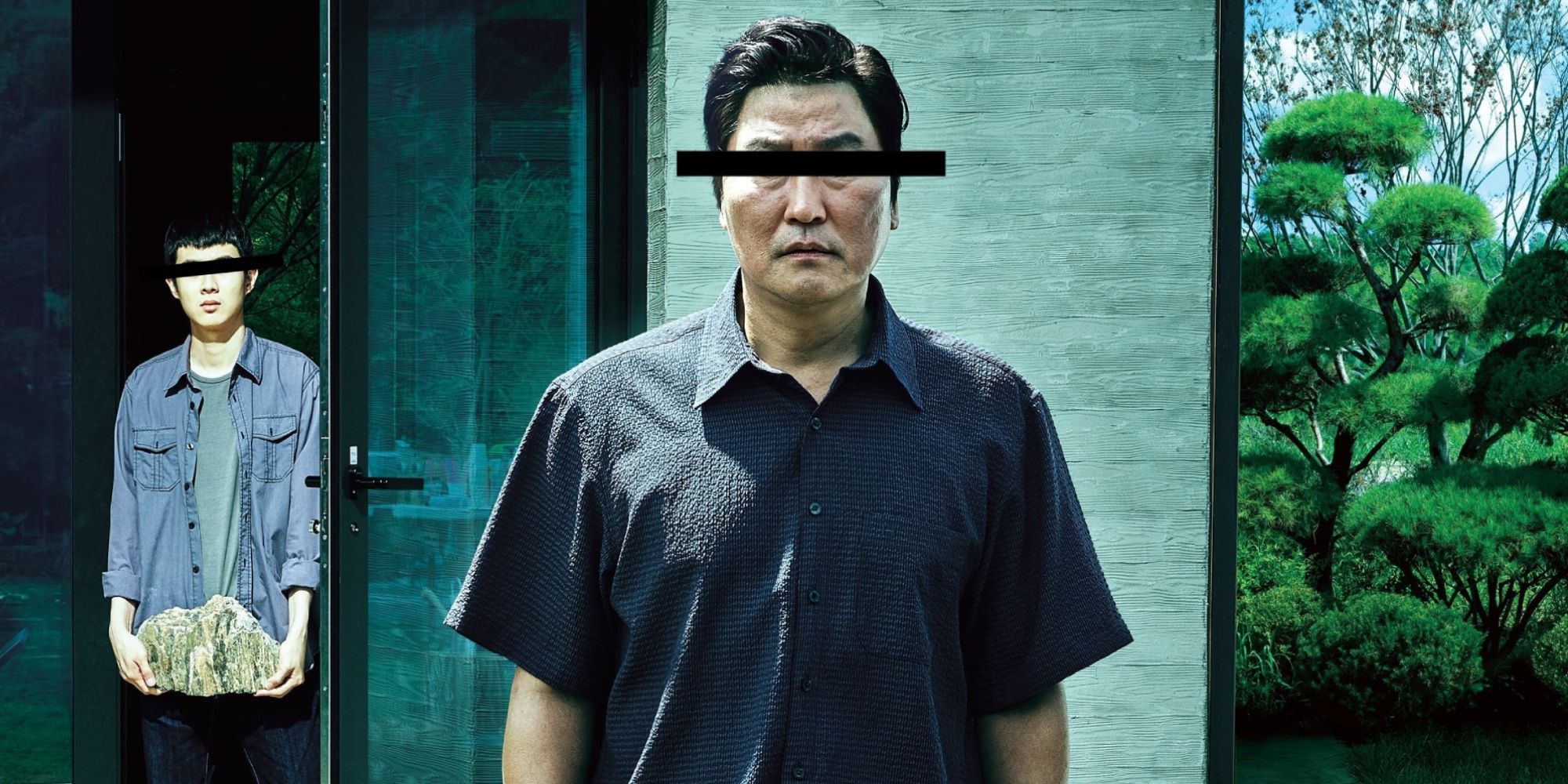
It was Bong Joon Ho's Parasite that became the first film not in the English language ever to win the Best Picture Oscar, the single most coveted ans prestigious award in the entire film industry. It was a well-deserved honor, too. After all, this psychological thriller about a destitute family scheming their way into the lives of a wealthy household is among the most universally loved movies released since 2010.
The symbolism in this story about wealth inequalities and class conflict is pretty simple, but it's the mastery of Bong's direction and his and Han Jin-won's script that really makes Parasite stand out as one of the most structurally and tonally complex and masterful films in recent memory. There's zero wasted space in this plot, where every story beat generates a domino effect that culminates in an absolutely breathtaking final act.
Collider Exclusive · Oscar Best Picture Quiz
Which Oscar Best Picture
Is Your Perfect Movie?
Parasite · Everything Everywhere · Oppenheimer · Birdman · No Country
Five Oscar Best Picture winners. Five completely different visions of what cinema can be — and what it can do to you. One of them is the film that was made for the way your mind works. Ten questions will figure out which one.
🪜Parasite
🌀Everything Everywhere
☢️Oppenheimer
🐦Birdman
🪙No Country for Old Men
01
What kind of film experience do you actually want? The best movies don't just entertain — they leave something behind.
02
Which idea grabs you most in a film? Great films are driven by a central obsession. What's yours?
03
How do you like your story told? Form is content. The way a story is shaped changes what it means.
04
What makes a truly great antagonist? The opposition defines the protagonist. What kind of opposition fascinates you?
05
What do you want from a film's ending? The final note is the one that lingers. What do you want it to sound like?
06
Which setting pulls you in most? Where a film takes place shapes everything — mood, stakes, what's even possible.
07
What cinematic craft impresses you most? Every great film has a signature — a technical or artistic element that makes it unmistakable.
08
What kind of main character do you root for? The protagonist is the lens. Who you choose to follow says something about you.
09
How do you feel about a film that takes its time? Pace is a choice. Some films sprint; others let tension accumulate slowly, deliberately.
10
What do you want to feel walking out of the cinema? The best films leave a mark. What kind of mark do you want?
The Academy Has Decided Your Perfect Film Is…
Your answers have pointed to one Oscar Best Picture winner above all others. This is the film that was made for the way your mind works.
Parasite
You are drawn to films that operate on multiple levels simultaneously — that begin in one genre and quietly, brilliantly migrate into another. Bong Joon-ho's Parasite is a film about class, desire, and the architecture of inequality that manages to be darkly funny, deeply suspenseful, and genuinely shocking across a single extraordinary running time. Your instinct is for cinema that hides its true intentions until the moment it's ready to reveal them. Parasite is exactly that — a film that rewards close attention and punishes assumptions, right up to its devastating final image.
Everything Everywhere All at Once
You want it all — and this film gives you all of it. The Daniels' Everything Everywhere All at Once is one of the most maximalist films ever made: action comedy, multiverse sci-fi, family drama, existential crisis, and a genuinely earned emotional core that sneaks up on you amid the chaos. You are someone who responds to ambition, who doesn't want cinema to choose between being entertaining and being meaningful. This film refuses that choice entirely. It is overwhelming by design, and its overwhelming nature is precisely the point — because the feeling of being crushed by infinite possibility is exactly what it's about.
Oppenheimer
You are drawn to cinema on a grand scale — films that understand history not as a backdrop but as a force, and that place their characters inside that force and watch what happens. Christopher Nolan's Oppenheimer is a film about the terrifying gap between what we can do and what we should do, told with the full weight of one of the most consequential moments in human history behind it. You want your films to feel important without feeling self-important — to earn their ambition through sheer craft and the gravity of their subject. Oppenheimer does exactly that. It is enormous, complicated, and refuses easy comfort.
Birdman
You are drawn to films that foreground their own construction — that make the how of the filmmaking part of the what it's about. Alejandro González Iñárritu's Birdman, shot to appear as a single continuous take, is cinema examining itself through the cracked mirror of a fading actor's ego. You respond to formal daring, to the feeling that a film is doing something that probably shouldn't be possible. Michael Keaton's performance and Emmanuel Lubezki's restless camera create something genuinely unlike anything else — a film that is simultaneously about creativity, relevance, self-destruction, and the impossibility of ever truly knowing if your work means anything at all.
No Country for Old Men
You are drawn to cinema that trusts silence, that refuses to explain itself, and that treats dread as a form of meaning. The Coen Brothers' No Country for Old Men is a film about the arrival of a new kind of evil — implacable, arbitrary, and utterly indifferent to the moral frameworks we use to make sense of the world. It is one of the most formally controlled films ever made, and its controlled restraint is what makes it so terrifying. You want your films to haunt you, not comfort you. You are not interested in resolution if resolution would be dishonest. No Country for Old Men is honest in a way that most cinema never dares to be.
5 'High and Low' (1963)
There are those who may go so far as to say that Akira Kurosawa was not only the best of all Japanese filmmakers in history, but perhaps even the single greatest filmmaker of all time. Regardless of superlatives applied to him, one thing is undeniable, and that's that his High and Low is among the most perfectly-written psychological thrillers in history. In it, a wealthy businessman faces a devastating moral crisis after a kidnapper mistakenly abducts his chauffeur's son instead of his own.
Based on American author Evan Hunter's King's Ransom, Kurosawa, Hideo Oguni, Eijirō Hisaita, and Ryūzō Kikushima's plot is one of the most brilliantly structured in the history of film. With the first third of the movie functioning as a very theatrical single-location thriller, the second as a more traditional police procedural, and the third as a quasi-surreal social drama, the whole thing is one of the most engrossing plots in the history of psychological thrillers.
4 'Oldboy' (2003)
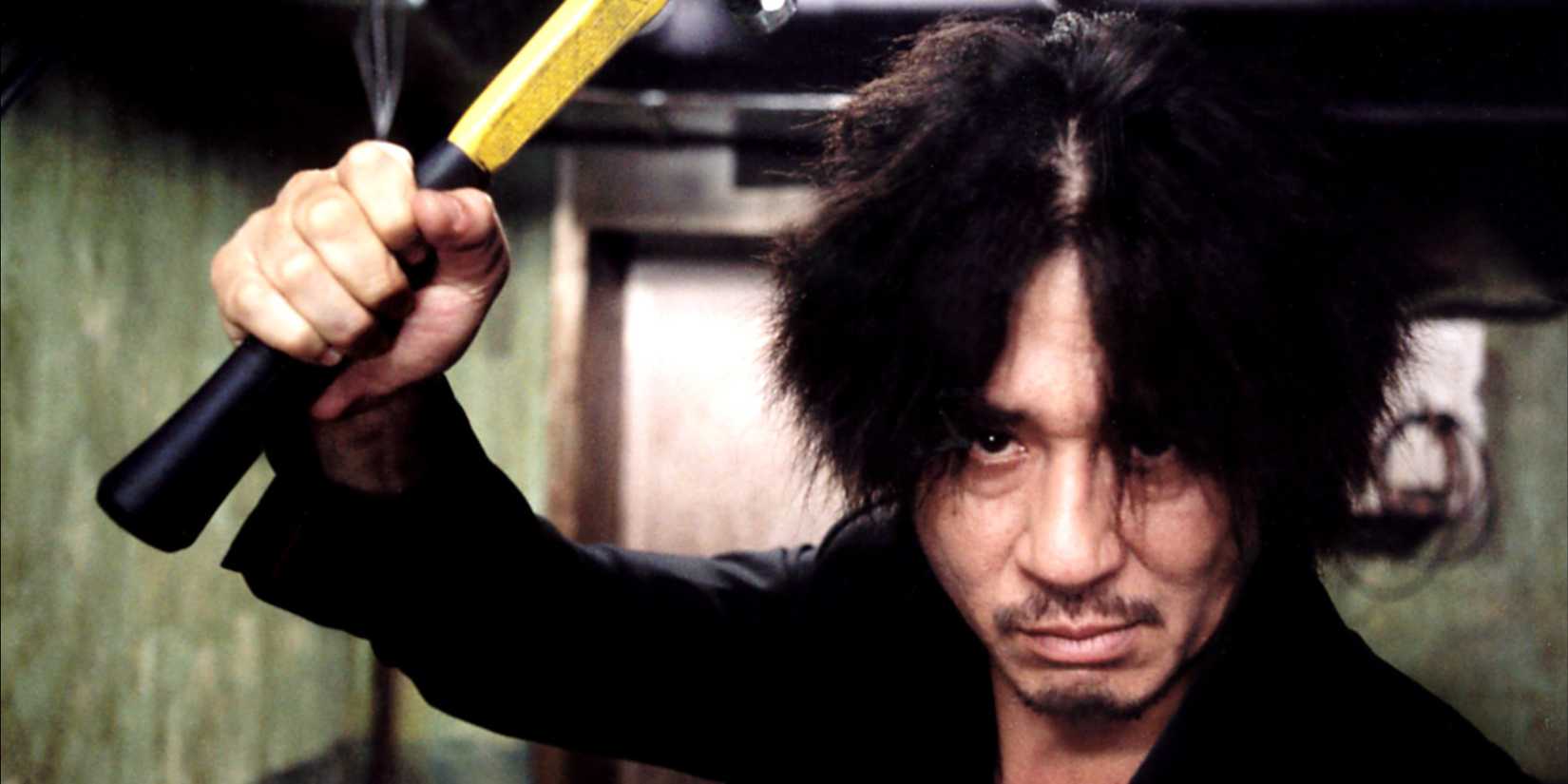
As if any more proof were needed that no one does psychological thrillers quite like history's greatest South Korean masters of filmmaking, there's also Park Chan-wook's Oldboy, loosely based on the Japanese manga Old Boy by Garon Tsuchiya and Nobuaki Minegishi. Part action flick, part ultra-violent psychological thriller, Oldboy is undoubtedly one of the greatest genre movies of the 2000s. In it, a kidnapped man is released after 15 years and given five days to find his captor.
Written by Park, Hwang Jo-yun, and Lim Jun-hyung, Oldboy is built on the foundations laid out by a plot that leaves this as one of the most disturbing non-horror movies of all time. Indeed, on top of being perfectly paced and infused with absolutely zero fluff, Oldboy's plot also has some of the most shocking and unsettling twists that any psychological thriller movie has ever seen.
3 'Memento' (2000)

By the time the 2000s were rolling in, Christopher Nolan was still just an up-and-coming indie filmmaker, nowhere near being the king of blockbuster filmmaking that he's recognized as today. However, his sophomore feature effort, Memento, greatly helped in catapulting his reputation forward. Structured in reverse chronological order, it's about an amnesiac man trying to hunt down the man that he believes murdered his wife.
One of the movies with the cleverest mysteries ever written, Memento sees Nolan at his most brilliant. The reverse chronological structure is not just a gimmick, but rather a masterful foundation for a plot that keeps the audience wondering not what will happen next, but rather what happened right before. On paper, it seems like a concept impossible to truly nail, but the way in which Nolan executed it means that many still see Memento as the crown jewel of his filmography.
2 'The Silence of the Lambs' (1991)

Based on the novel of the same name by Thomas Harris, Jonathan Demme's The Silence of the Lambs is the most recent film to have won all Big Five Academy Awards: Best Picture, Director, Actor, Actress, and Screenplay. It's a psychological thriller so oppressively dark and violent that it's also often accepted to be a horror movie—and one of the most perfect horror movies of all time, for that matter.
Based on one of the most propulsively energetic and flawlessly balanced screenplays ever written for a psychological thriller film, Silence of the Lambs is engineered in such a way that it's built on top of two equally fascinating mind games: that between Clarice Starling and Buffalo Bill, and between Starling and Hannibal Lecter. It's a dual structure that imbues the film's plot with a perfect sense of mystery, dread, and fast-paced urgency.
1 'Psycho' (1960)
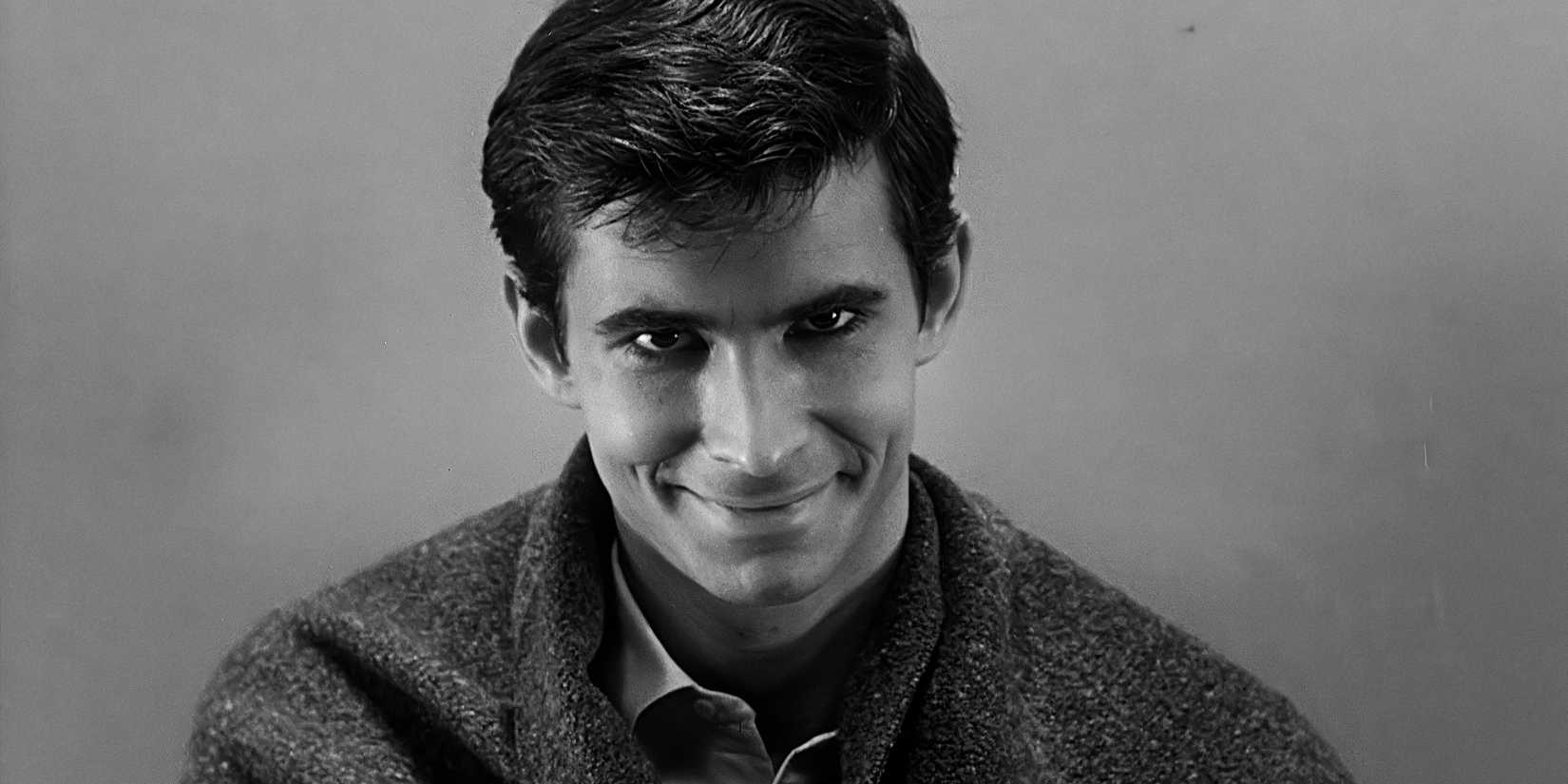
Conversations about Alfred Hitchcock's best movies could potentially be endless, but there's one particular universally-praised psychological thriller (which is also one of only two horror movies ever made by the Master of Suspense) that's often regarded as the director's best work: Psycho, about an embezzling secretary on the run from the law who checks into a motel run by a shy young man under the thumb of his overbearing mother.
It's one of the best horror movies in film history, one of the best-plotted films of Hollywood's entire Golden Age, and arguably even the single best-plotted psychological thriller in the history of cinema. With a first half that's perfectly structured and a second half whose urgency and tension is fueled by one of the most jaw-dropping plot twists in the history of cinema, Psycho is a true masterclass in how to write a psychological thriller plot that's irresistibly suspenseful and nail-biting.

Psycho
- Release Date
- June 22, 1960
- Runtime
- 109 minutes
- Director
- Alfred Hitchcock
- Writers
- Joseph Stefano
KioskNews shows a cleaned-up reading view extracted from the publisher’s page — the original always lives on their site, not ours.