Angela’s home birth could be upended by Australia’s new insurance rules. Midwives fear it will drive women to free births
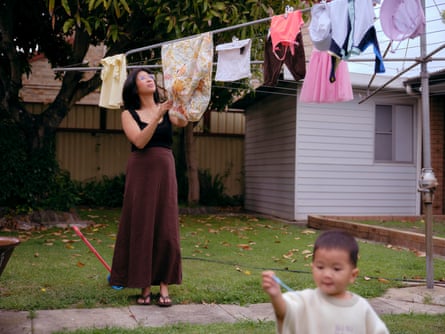
Sydney mother Angela Morata is four months’ pregnant with her third child. The 35-year-old is due in April next year and, just as she did with her other two babies, has scheduled a home birth.
“I booked my midwife the day I took the pregnancy test,” she says. “I know how amazing the experience can be at home, and I wouldn’t want it to be any different.”
But the expiry of a longstanding insurance exemption for midwives on 31 December threatens to upend her plans.
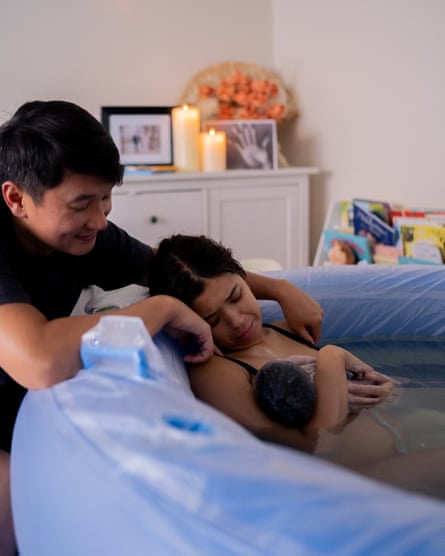
From 1 January, all privately practising midwives attending home births must be covered by a government insurance policy. The scheme will be available exclusively to “endorsed midwives”, an accreditation that requires additional study and training, including 5,000 clinical hours.
Endorsed midwives are allowed to prescribe medicines and write referrals for blood tests, ultrasounds and other tests. According to the Nursing and Midwifery Board of Australia, about 5% of almost 35,000 registered midwives are endorsed.
Health experts warn the change could collapse the private home birth sector and leave those expecting, like Morata, scrambling for alternative birthing options.
Morata says it would “break my heart” if her home birth plans fell through.
‘The burnout would be huge’
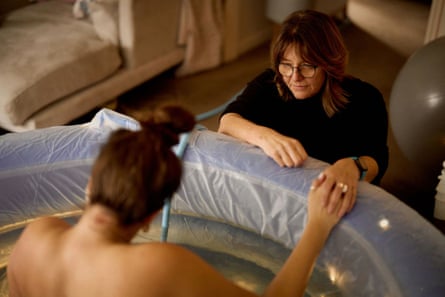
In Australia, two midwives are legally required at every home birth: a “primary” midwife, who is endorsed and leads the care, and a supporting second midwife who in many cases is not endorsed.
The Australian College of Midwives warns that up to a third of privately practising endorsed midwives, particularly those who rely on non-endorsed colleagues as second attendants, could be forced out of the system when changes take effect.
Sydney-based endorsed midwife Jo Hunter says the changes “could mean having to cease practice”.
She relies on a network of other private midwives who support each other’s businesses, all of whom could be affected because “they all rely on non-endorsed midwives as second attendants at births”.
She says relying on other endorsed midwives is an “unsustainable” business model.
“That then means you’re doing double the work because you’d have to go to each other’s births,” she says. “I take on four births a month … if I’m having to attend eight because I’m supporting my colleague and she’s supporting me, the burnout would be huge. You’d never sleep, for a start. It’s unsustainable.”
Hunter is booked out until July next year. As the deadline approaches, she says she is increasingly receiving “text messages and phone calls saying, ‘Am I going to be able to still have my home birth?’
“When that woman has been planning for her birth and paid for it to be in her home, and all of a sudden the rug is pulled out from underneath her … it’s really, really concerning,” she says.
‘Entering into the perfect storm’
Western Sydney University professor Hannah Dahlen, the director of research in the School of Nursing and Midwifery, says there is strong evidence that a mass exodus of private midwives could see freebirths skyrocket and create a “potentially very risky situation for the public”.
A freebirth is a birth outside hospital without medical assistance, often supported by family, friends, a doula or a “birth keeper”. In recent years, a number of high-profile deaths have been linked to the practice, with coronial inquests in New South Wales and Victoria examining the role of freebirths in deaths.
“We know from 20 years of research that one of the reasons women choose to freebirth is that they can’t access a midwife, or they can’t afford to pay for one. And both those issues are going to become worse, particularly in rural and regional Australia,” Dahlen says.
after newsletter promotion
She says women who choose to give birth at home “often have a particular philosophical paradigm that they want honoured and respected” and they “won’t just meekly walk into a hospital” if being supported by midwives is no longer an option.
“Our hospital system has one of the highest intervention rates. More and more women are seeking an alternative because they are not happy with what they’re being provided with in hospital,” she says.
“We are literally entering into the perfect storm here, which is restricting that access more and expanding the very thing that we’re all very worried about, which is women birthing with no health professional in attendance.”
The Royal Australian and New Zealand College of Obstetricians and Gynaecologists declined to comment when asked about whether they share this concern.
Katelyn Commerford, coordinator and NSW president of Homebirth Australia, says pregnant women tell her they feel “left between a rock and a hard place”.
“They are saying in no uncertain terms that they will continue to birth at home … they just won’t have access to their midwives at home. That opens the floodgates to a whole other public health concern.”
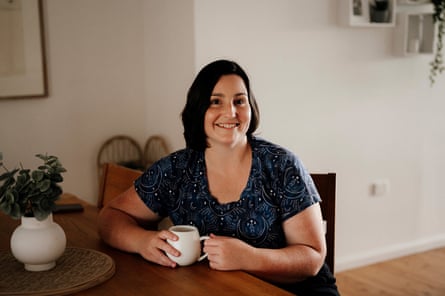
Homebirth Australia has called on the government to grant midwives another extension and find a permanent solution by the 31 December deadline.
“We’ve made it really clear to the government that we will hold them accountable for any outcomes of women feeling forced to freebirth,” Commerford says. “That will absolutely be the government’s responsibility and burden to bear.”
In a statement to Guardian Australia, the federal health department said midwives attending home births had previously been exempt because “there was not a suitable insurance product available”, and that the exemption “was never intended to be a permanent solution to address the issue of appropriate insurance”.
The department acknowledged concerns about access to home birth services, particularly in rural and regional communities, but said the policy change was not intended “to discourage women from choosing a home birth” but rather “to support safe and appropriate maternity care”.
In the meantime, Morata who is also a midwife, says she will “nervously” await developments ahead of her due date.
“As women, different things in our life are already taken control of in different ways and already treated with not as much respect as it should be. And birth and motherhood is one of those things,” she says.
“It’s really horrible that people like me may not get that chance because of something that’s misunderstood.”
KioskNews shows a cleaned-up reading view extracted from the publisher’s page — the original always lives on their site, not ours.