New York City to ban horse-drawn carriages in 2028
New York City horse-drawn carriages will be riding into the sunset in less than two years after city leaders voted Thursday to ban the practice following the death of an 18-year-old tourist who was killed during a ride in Central Park over the summer.
The City Council voted 40 to 7 with two abstentions on Romanch's Law, which would prohibit the issuance of new licenses used in the operation of horse-drawn cabs and phase out the carriages by June 1, 2028. The horses would be prohibited from being sold to slaughterhouses, under the bill.
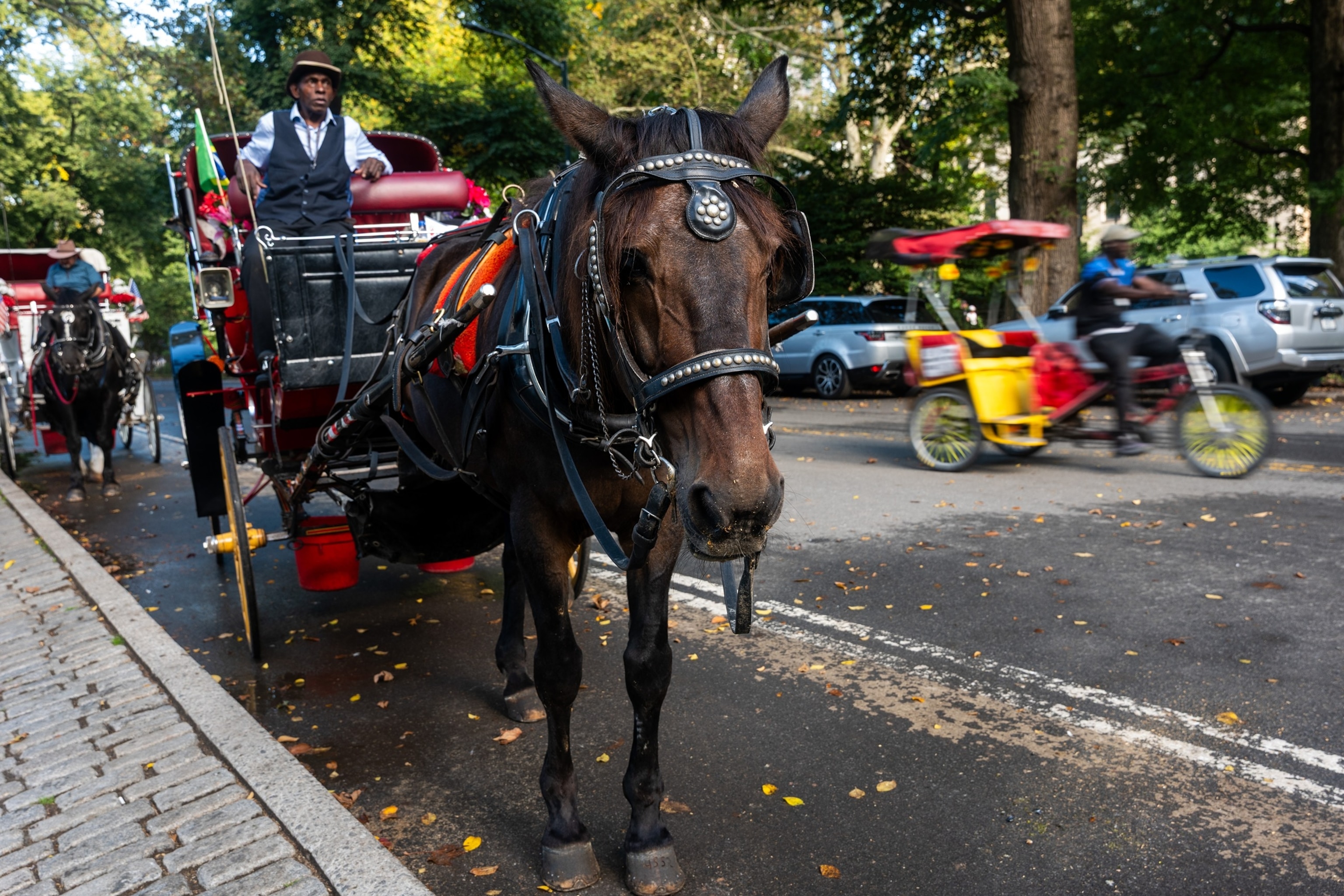
Carriage horse driver Aparicio waits for customers in Central Park, October 14, 2026 in New York City.
Spencer Platt/Getty Images
The vote, which is veto-proof, was met with praise by animal rights groups and park advocates who have long called for the ban citing several incidents where horses crashed or caused disturbances. However, the union representing horse-drawn carriage drivers have threatened legal action.
Previous New York City Mayors Bill de Blasio and Eric Adams both pushed for the ban during their tenures, however, there was not enough support in the City Council.
The discussion picked up in the summer after Romanch Mahajan, an 18-year-old Indian tourist, was killed after a horse got out of control with the carriage and the victim's family still inside.
The carriage clipped the wheel of another carriage and toppled, according to investigators.
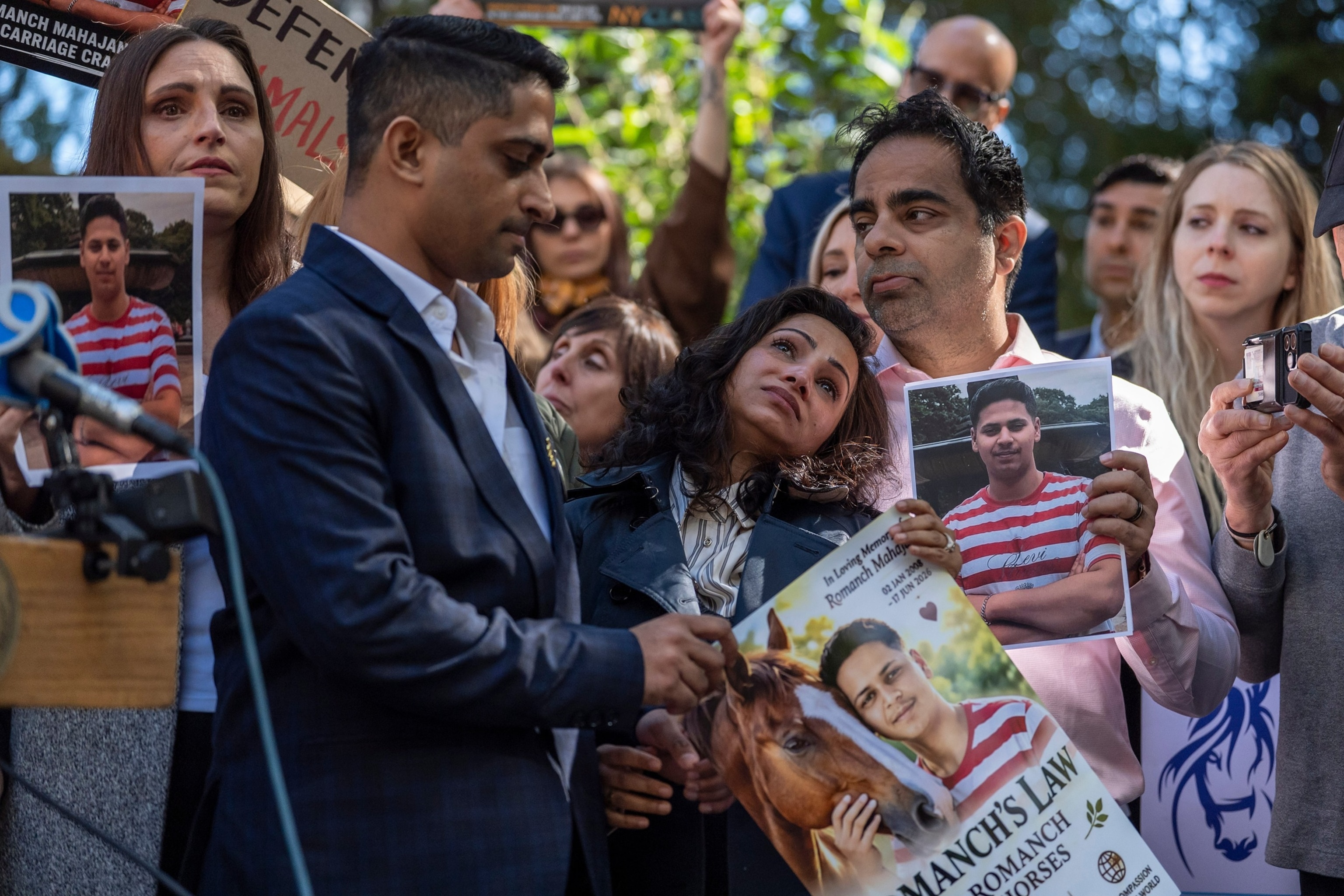
Sovia Thukral, center, aunt of Romanch Mahajan attends a press conference ahead of the vote to ban horse carriages in Central Park, Oct. 22, 2026, in New York City.
Yuki Iwamura/AP Photo
Mahajan's aunt and uncle were on hand for the vote.
In past instances, tourists and other parkgoers were injured when horses ran loose, including one instance in January where the horse crashed into cars.
City Council Speaker Julie Menin said before the vote was cast that the carriages had become a safety risk.
"They don't belong in an area that attracts 42 million people a year, pulling a 1,000-pound carriage in record heat," she said.
Under the bill, a "workforce transition program" will be set up for the horse-drawn carriage drivers, who are unionized. The program will include job placement, training, career counseling and financial compensation.
The Central Park Conservancy, which operates the park and has pushed for the ban for years, praised the decision.
Mahajan's death "was the ninth carriage-related incident in just over a year—a number we could not ignore as the stewards and caretakers of Central Park," the conservancy said in a statement.
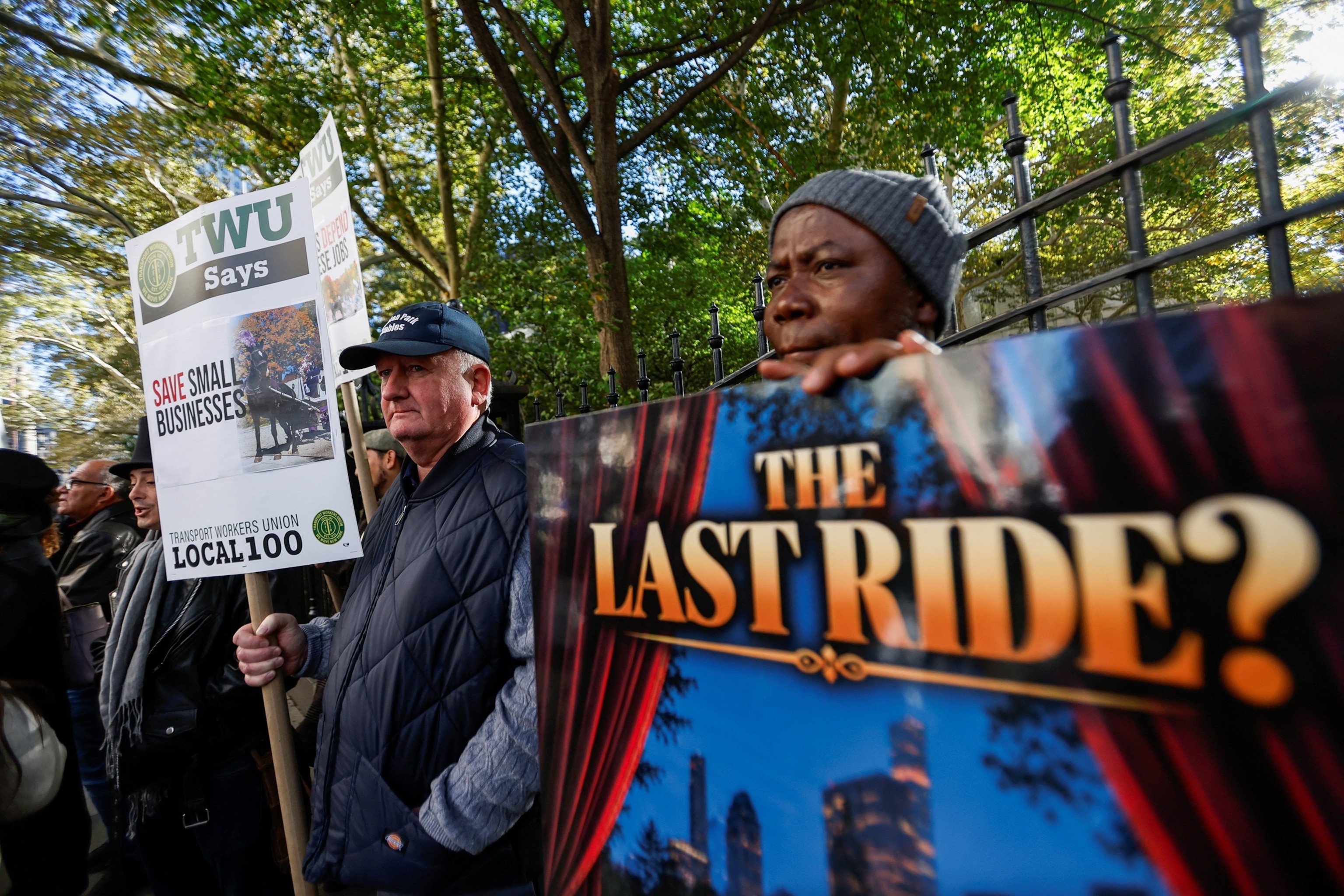
Demonstrators gather ahead of a vote on Romanch's Law, legislation that would phase out horse-drawn carriages in Central Park, outside City Hall in New York City, October 22, 2026.
Eduardo Munoz/Reuters
The Transport Workers Union, which represents the roughly 150 horse-drawn carriage drivers, protested outside City Hall Thursday and sent a letter the day before to the city's law department informing them that they will seek a temporary restraining order "the minute the ink dries."
"We will see them in court," Alexander Kemp, the administrative vice president for TWU Local 100 said in a statement after the vote. "This bill is blatantly unconstitutional, providing nothing but a plan to draft a plan. There’s nothing concrete for hundreds of workers, carriage owners and family members who face total economic devastation."
KioskNews shows a cleaned-up reading view extracted from the publisher’s page — the original always lives on their site, not ours.