A RECKONING: Biko family wants ex-apartheid spy Craig Williamson compelled to testify at reopened inquest
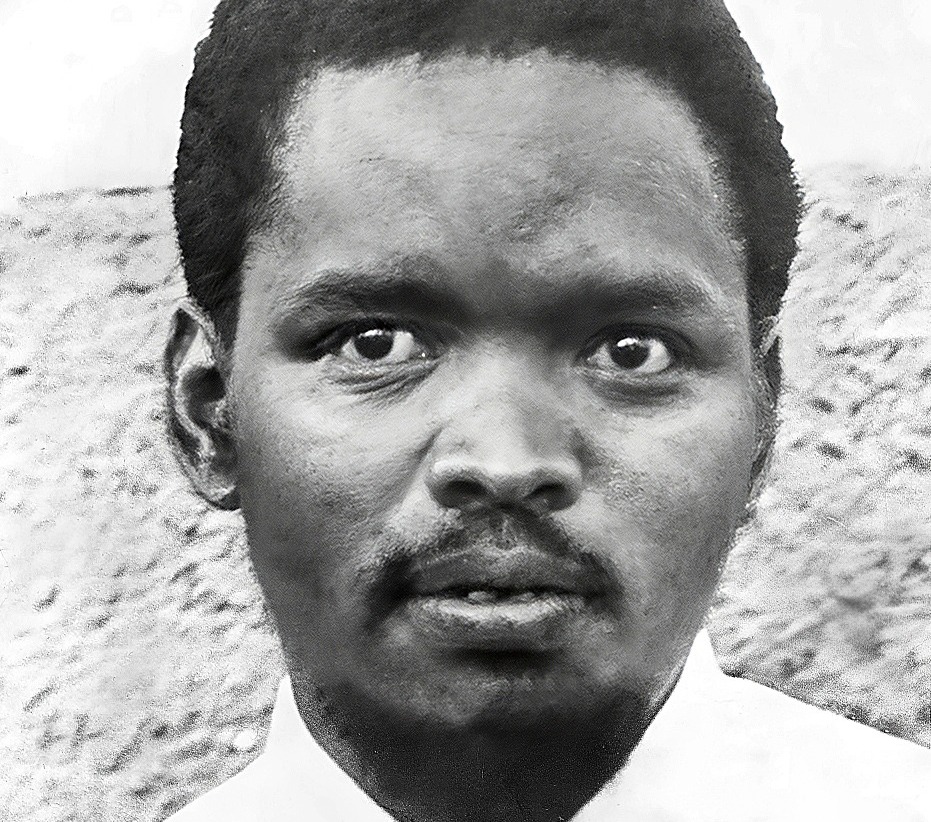
Steve Biko’s family, still seeking truth and answers nearly 49 years after he died in the custody of apartheid security forces, wants former apartheid spy Craig Williamson to appear before the reopened inquest into the anti-apartheid activist’s death.
Williamson infiltrated anti-apartheid organisations while working as a spy for the apartheid government before his cover was blown in 1980. He testified last year at the third inquest into the deaths of the Cradock Four – Fort Calata, Sicelo Mhlauli, Sparrow Mkonto and Matthew Goniwe – where he was questioned about his role in the apartheid security apparatus and his knowledge of anti-apartheid activists.
It was during those proceedings that Williamson testified that he had surveilled Biko.
It is this testimony, together with Williamson’s knowledge of the apartheid security machinery, that prompted the Biko family’s lawyer, Ngqiqo Sakhela, to ask the court on Tuesday for a subpoena compelling him to testify in the reopened inquest into Biko’s death.
/file/dailymaverick/wp-content/uploads/2025/10/DSC_2182-copy.jpg "Riaan-CradockWilliamson MAIN")
The National Prosecuting Authority last September announced that the inquest into Biko’s death had been reopened.
The proceedings were initially expected to get under way on Monday, 24 August, but were delayed due to uncertainty around the Biko family’s legal representation.
The family had applied to Legal Aid SA for funding, but its acting chief executive officer, Ntsumbedzeni Nemasisi, told the court that Biko’s widow, Nontsikelelo “Ntsiki” Biko, did not qualify because her income and the value of her assets exceeded the organisation’s means-test threshold.
Justice and Constitutional Development Minister Mmamoloko Kubayi subsequently approved state funding for the family’s legal representation.
‘Voluminous’ record
Arguing on Tuesday, 25 August for a postponement, Sakhela told the court that the family needed more time to prepare because the legal team had to work through a “voluminous” record running into thousands of pages.
Some of the documents from the original inquest, he said, were in Afrikaans and needed to be translated into English. The translation process would take weeks and cost about R100,000, said Sakhela.
Further complicating preparations, Tembeka Ngcukaitobi SC, who had represented the Biko family pro bono, was appointed as an acting judge of the Constitutional Court. In addition, other lawyers assisting the family had taken on new cases, leaving them short-staffed and needing time to rebuild a legal team for the inquest.
/file/attachments/orphans/IMG_5945copy_981935.jpg "Anti-apartheid leader Steve Biko’s son, Nkosinathi Biko (in green), with Ngqiqo Sakhela, who is representing the Biko family at the Steve Biko Inquest, currently under way in the Gqeberha High Court on 25 August 2026. (Photo: Deon Ferreira)")
But on Wednesday, 26 August, former KwaZulu-Natal deputy judge president Mjabuliseni Isaac Madondo dismissed the application for a further postponement. He questioned the timing of the application and stressed the importance of getting on with the inquest while witnesses who can still give evidence are available.
Only two of the eight witnesses to the events surrounding Biko’s death are still alive and available to testify, Madondo noted.
He warned that even if the witnesses remained alive following another postponement, their memories could “fade” by the time they eventually testified and that an inquest without witnesses would be “purposeless”, as oral evidence was central to such an inquiry.
Biko, the leader of the Black Consciousness Movement, was arrested alongside fellow activist Peter Jones at a roadblock near Makhanda on 18 August 1977. He had breached a banning order restricting his movement to Qonce (then called King William’s Town). He was taken to the Walmer police station in Gqeberha (then called Port Elizabeth) and detained by members of the Security Branch.
Two surviving former police officers – Daniel Petrus Siebert and Jacobus Johannes Oosthuysen Benecke – have been identified as persons of interest in Biko’s death.
Former Security Branch members from Gqeberha – Siebert, Benecke, Harold Snyman, Rubin Marx and Gideon Johannes Nieuwoudt – sought amnesty at the Truth and Reconciliation Commission in 1997 for their roles in Biko’s death.
Naked and shackled
Biko was allegedly tortured while in custody, shackled and held naked in a cell. Medical attention was only sought after 24 days in custody, when foam was observed around his mouth.
On 11 September 1977, Biko was loaded, unconscious and still naked and shackled, into the back of a police vehicle and transported 1,200km to Pretoria. He died in a cell at Pretoria Central Prison the following day. He was just 30.
His death was attributed to an extensive brain injury and acute kidney failure.
At the original inquest in November 1977, members of the Security Branch who had been involved in Biko’s detention and interrogation claimed that he had sustained his fatal injuries after banging his head against a wall.
Biko’s son Nkosinathi Biko has criticised the handling of the reopened inquest, saying the family was subjected to a process that failed to appreciate the significance of the case.
/file/attachments/orphans/IMG_6001copy_228053.jpg "Retired judge Mjabuliseni Isaac Madondo, who served as the deputy judge president of KwaZulu-Natal Division of the High Court, is presiding over the Steve Biko Inquest currently under way in the Gqeberha High Court. He is pictured on 25 August 2026. (Photo: Deon Ferreira)")
Speaking to the media after Madondo dismissed the family’s application for a postponement, Biko said he felt compelled to apologise to those who had spent the past two days at court.
‘Gross disrespect’
“For the past two days, you, as well as I, have been subjected to gross disrespect,” he said, pointing out that the court had managed barely four hours of productive time over the two days.
Biko said the family respected the court’s judgment, but believed it had a right to reflect on the decision.
The family had participated in a case-management meeting on Friday, at which it became apparent that the matter was not yet ready to proceed.
“We have one shot at dealing with the inquest of Steve Biko. One shot,” said Biko. “If the toss-up has to be between scheduling and rigour, our preference is that this is done correctly.
“The inquest itself is a possible basis for a prosecution. And because we are dealing with elderly people, we have a diminished chance at prosecution. So the inquest is everything. It’s everything,” he said.
He said the family’s objective was not simply to secure a postponement, but to ensure that the inquest properly examined the circumstances surrounding his father’s death.
“Biko’s right to life was taken. And what we are here to do is to defend his dignity,” he said.
He also questioned the judge’s concern that further delays could affect the memories of the surviving witnesses. Calling that logic troubling, he stressed that the inquest depended on those key witnesses to determine what happened to his father, and that Madondo was effectively creating a defence for them.
Asked whether the family would seek Madondo’s recusal, Nkosinathi said: “We are looking at all options. I can assure you that [recusal] is one of the options.”
The first witness is expected to testify on Thursday, 27 August, when proceedings resume. DM
KioskNews shows a cleaned-up reading view extracted from the publisher’s page — the original always lives on their site, not ours.