Oil prices fall for third day on hopes of limited Saudi supply disruptions
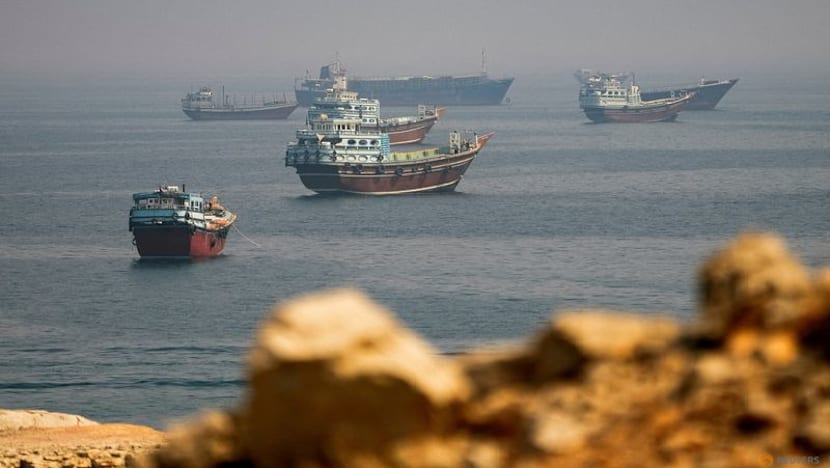
Sept 18 : Oil prices fell for a third day on Friday as easing concerns over Saudi supply disruptions outweighed anxiety about a widening the Middle East conflict amid fresh fighting between Saudi Arabia and Yemen's Houthis.
Brent crude futures fell 79 cents, or 0.75 per cent, to $104 a barrel by 0319 GMT, while US West Texas Intermediate futures fell 70 cents, or 0.69 per cent, to $101.20 a barrel. Both benchmarks closed down about 1 per cent on Thursday.
Brent prices are on track for their first weekly loss in three, down 0.5 per cent, while WTI is set to gain 1.2 per cent.
Markets largely shrugged off concerns about new threats to supplies even as Saudi Arabia and Yemen's Iran-backed Houthis exchanged fresh strikes across their border on Thursday, expanding the Middle East war front.
Earlier this week, prices climbed to close to four-month highs as sources said crude loadings at Saudi Arabia's Red Sea export hub of Yanbu had been suspended and Riyadh cancelled some deliveries to Europe after its East-West pipeline was damaged in an attack last week.
However, prices have cooled off on reports Saudi Arabia was seeking to return about half the capacity of its East-West oil pipeline within days and the nation was offering more crude cargoes to Asian refiners through ship-to-ship transfers off Oman's port of Sohar.
"Recent efforts to restore Saudi export capacity have reduced some of the immediate supply anxiety," said Priyanka Sachdeva, head of market insights at Phillip Nova.
Sources that have spoken to Reuters have given varying estimates of how long it will take to reopen the pipeline and return crude flows to normal.
Oil prices, however, are still up over $100 per barrel as the markets are waiting for evidence of a clear supply improvement, analysts said.
"The key question is whether physical flows can normalise and what could be the timeline. If we see a sustained improvement in Hormuz traffic, some of the geopolitical premium can unwind further," Sachdeva said.
However, transporting oil through the region remains risky.
Iran's Revolutionary Guards Navy said a Togo-flagged oil tanker was struck while attempting to make an "illegal passage" through the Strait of Hormuz on Thursday, Iranian state media said early on Friday.
The US and Iran have held no peace talks since an interim agreement reached in June collapsed within weeks. The war will come up for discussion at the United Nations General Assembly next week, and an Iranian delegation will be able to attend, according to the US State Department.
KioskNews shows a cleaned-up reading view extracted from the publisher’s page — the original always lives on their site, not ours.