Hong Kong urged to boost private housing supply as student demand jumps 45%
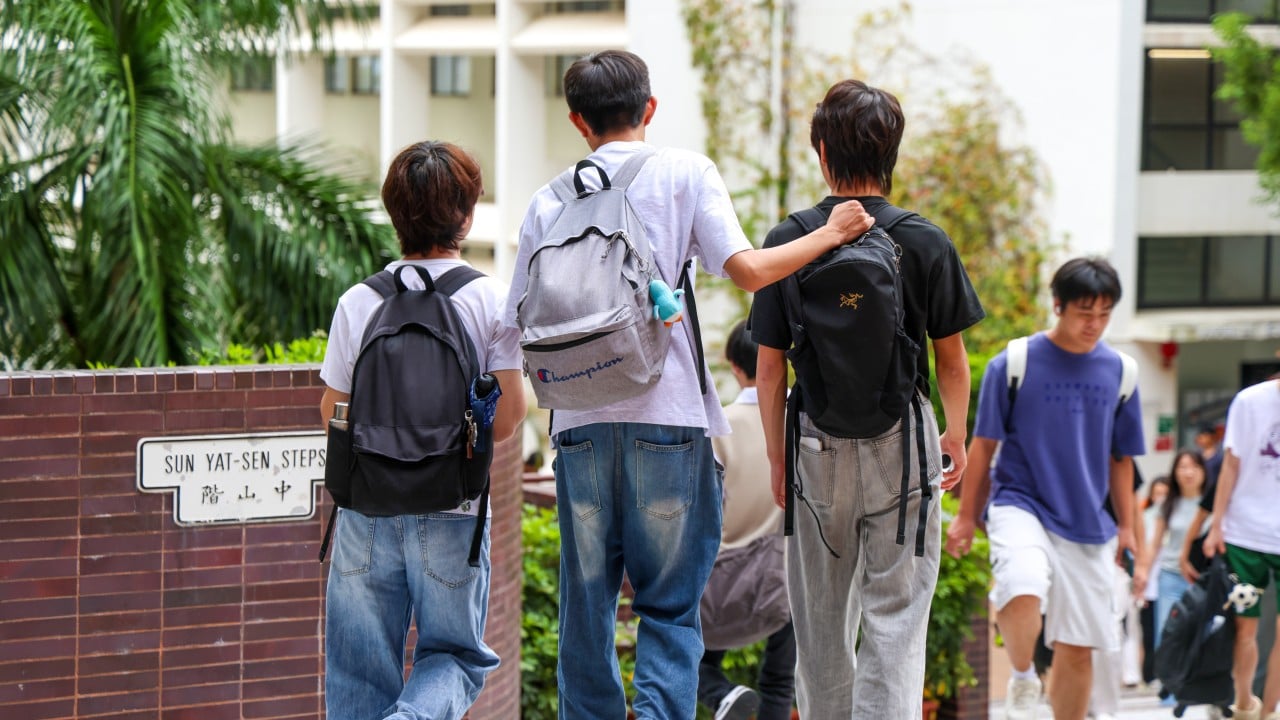
Hong Kong authorities are facing calls to increase the proportion of private housing in selected districts and work more closely with developers to expand accommodation for non-local students.
The government forecasts annual demand for non-local student housing at 2,310 flats over the next decade, 45 per cent higher than last year’s estimate, according to the latest Long-Term Housing Strategy progress report, released on Monday.
The Housing Bureau attributed the projection to an average annual increase of about 7,100 student visas between 2016-17 and 2025-26, noting that roughly 65 per cent of those students did not live in university-provided halls or hostels.
The latest projection comes as five public universities in Hong Kong rank among the top 100 in the Times Higher Education World University Rankings.
Lawmaker Scott Leung Man-kwong, also a member of the Housing Authority, said on Wednesday that the number of non-local students would inevitably rise as Hong Kong positioned itself as a premier destination for tertiary education.
“When universities cannot provide sufficient accommodation, demand will shift to the private market – the government must devise a careful plan,” he said on a radio programme.
Leung noted that districts such as Western, Sha Tin, Tai Po, Yuen Long and Tuen Mun – all near universities – were already under pressure from rising rents.

Other transport hubs with strong connectivity to those campuses, such as Olympic Station, are also popular among those students.
“As students enter the rental market in traditional residential districts, limited supply may lead to competition with local residents and drive up rents – a trend that is already under way,” Leung warned.
To avoid overwhelming certain neighbourhoods, he suggested universities partner with property agents to recommend suitable, reasonably priced flats in alternative locations with convenient transport links, thereby spreading demand across different areas.
Under the current Long-Term Housing Strategy, the overall public-to-private housing supply ratio stands at 7:3. Leung proposed raising the private proportion in selected districts.
“Some communities have relatively less public housing, such as Pak Shek Kok … I believe the government could run a pilot to increase private housing supply there, while maintaining the overall ratio for the rest of Hong Kong,” Leung said.
He said he believed that this approach could balance prioritising grass-roots housing needs with responding to private-market demand, without triggering rapid price increases.
Professor Joshua Mok Ka-ho, president of Hang Seng University of Hong Kong, said land shortage remained the biggest challenge as the city developed into an education hub, whether for accommodation or teaching facilities.
“Universities do not have the resources to build so many hostels on our own and must rely heavily on the market … The government could further relax policies to incentivise developers to participate in developing a university town, including student accommodation,” he said.
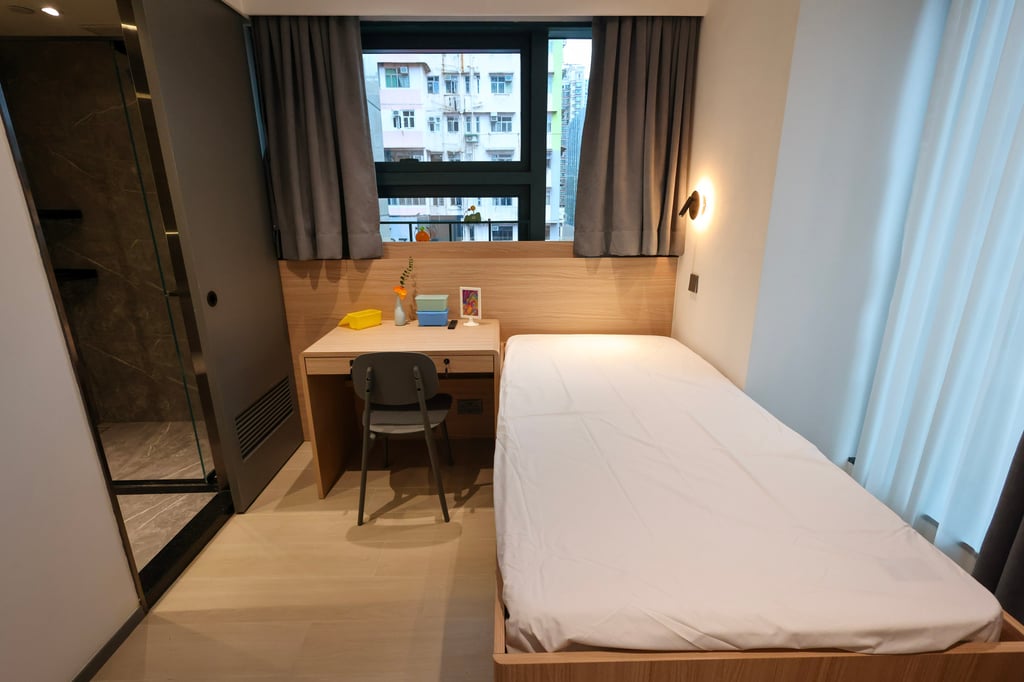
Mok added that his institution was working with a hotel group and a developer to provide extra beds at a hotel in Sha Tin and a stand-alone building in Ngau Tau Kok.
He said such accommodation also played an important role in helping non-local students adapt to life in Hong Kong.
“The overall strategic direction of ‘Study in Hong Kong’ is very beneficial for the city. However, we must proceed with caution,” he said.
“If we recruit students without adequate supporting infrastructure, including hostels, campus facilities and teaching staff, that will undermine the student experience and ultimately do more harm than good.”
Last year, the city’s leader announced a plan to raise the cap on non-local students at public universities to 50 per cent from the 2026-27 academic year, followed by measures to relax rules for converting commercial buildings and hotels into student hostels under the “Hostel in the City” scheme.
As of June, authorities had received 40 eligible applications, with the projects expected to provide 9,100 student beds.
KioskNews shows a cleaned-up reading view extracted from the publisher’s page — the original always lives on their site, not ours.