8 Best Stephen King Books to Read This October

Ryan Menezes has written and edited for Cracked.com for 12 years, has written for Mental Floss, and has edited for Listverse and Grunge.com. His longest and most in-depth articles have covered movies and TV shows, with a special focus on how they changed between conception and when they reached the screen. That includes comparing adaptations to their original works, comparing finished movies to their screenplays, and documenting various disasters that popped up during production.
Sign in to your Collider account
If you’re looking to tackle the works of Stephen King, you’ve got a great many books waiting for you. You could set yourself the modest goal of reading three of his books per year and then easily die before finishing them all. In fact, you could die before finishing even one of them, tomorrow at lunchtime, and we’ll have to bury you in a magic cemetery to resurrect you so you can read more.
With Halloween coming up, almost any King book would be a good choice to match the spirit of the holiday. Still, some fit better than others, and we’ve picked a handful that do the job especially well.
1 ‘Revival’

Not all of Revival is scary. A lot of it follows the narrator during a life largely free from supernatural occurrences, and it works as its own story — one about love, music, and drugs. Only occasionally does he cross paths with the man driving the horror part of this horror story: a mad scientist looking at the healing powers of electricity.
The relatively mundane main chunk of the story means it hits harder when we end up seeing more details of the mad scientist's results. You can probably already guess that not all goes well, but you still wouldn’t predict exactly what does happen. Let’s put it this way: We all know the story of Pet Sematary, where trying to revive dead loved ones results in something monstrous coming back. Turns out that’s a highly optimistic outcome compared to what else you might discover.
2 ‘The Dead Zone’
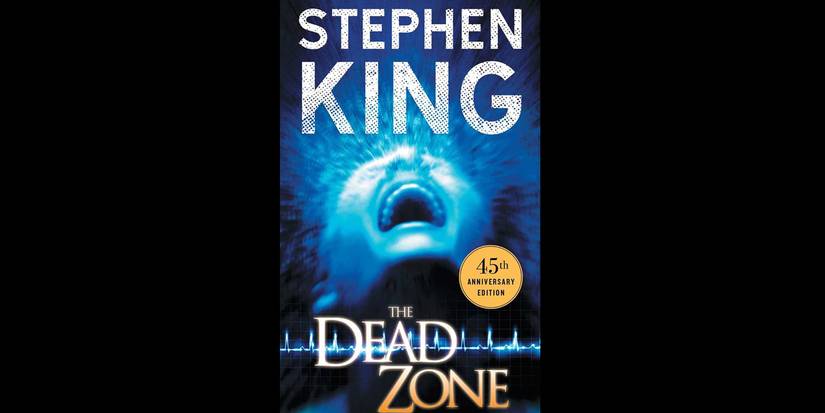
The Dead Zone feels like a relevant read right about now, both because it’s spooky season and because the book covers a most timely topic: assassination. Our man Johnny Smith receives precognitive powers, and after a series of mini-adventures, he gets a vision about a rising political star. This businessman-turned-politician is using trashy populism to win support, and Johnny foresees that if the man becomes president, disaster will ensue. So, he sets about planning how to kill the candidate with a sniper rifle.
Many people know of The Dead Zone through its multiple adaptations, but it doesn’t feel like the public exactly remembers the whole plot. No one seems to have brought it up after various recent real assassinations and attempted assassinations, nor does anyone use it to jokingly guess what Stephen King is planning when he posts angry thoughts about politicians today. Sure enough, years after The Dead Zone was first published, there arose a politician that made King feel like he was seeing the character he’d written brought to life. You know the politician we’re talking about. It was Sarah Palin.
3 ‘Doctor Sleep’

Here’s another book that feels timely now both because it’s scary and because of unusual current events. Doctor Sleep is the novel where King invented the concept of harvesting a chemical from children to fuel the energy of vampires. Since 2020, conspiracy theorists have come to believe that this process really exists, and they now cite adrenochrome as a resource being stolen from children by the elites. In a way, that makes Doctor Sleep one of the most influential works of fiction from this century.
Doctor Sleep is the sequel to The Shining, written nearly 40 years after the earlier book. It follows up on the story of Danny Torrance and The Overlook Hotel, but it also very much does introduce its own stuff, thanks to its vampire commune. We recommend reading it, assuming that you have read The Shining.
If you haven’t read The Shining, go read The Shining. It’s a very different experience from watching the movie, by the way. As fun as it to watch crazy Jack Nicholson get even crazier, it’s darker to listen to the thoughts of Jack Torrance and hear the corrupted man describe his evil plans in a wholly rational way.
Collider Exclusive · Horror Survival Quiz Which Horror Villain Do You Have the Best Chance of Surviving? Jason Voorhees · Michael Myers · Freddy Krueger · Pennywise · Chucky
Five killers. Five completely different ways to die — if you're not smart enough, fast enough, or self-aware enough to avoid it. Only one of them is the villain your particular set of instincts gives you a fighting chance against. Eight questions will figure out which one.
🏕️Jason
🔪Michael
💤Freddy
🎈Pennywise
🪆Chucky
01
Something feels wrong. You can't explain it — you just know. What do you do? First instincts are the difference between the survivor and the first act casualty.
02
Where are you most likely to find yourself when things go wrong? Setting is everything in horror. Where you are determines which rules apply.
03
What is your most reliable survival asset? Every survivor has a quality the villain didn't account for. What's yours?
04
What kind of fear is hardest for you to fight through? Knowing your weakness is the first step to not dying because of it.
05
You're with a group when things start going wrong. What's your role? Horror movies are brutally clear about who survives group situations and who doesn't.
06
What's the horror movie mistake you're most likely to make? Honest self-assessment is a survival skill. Denial is not.
07
What's your best weapon against something that can't be stopped by conventional means? Every horror villain has a weakness. The survivors are always the ones who find it.
08
It's the final scene. You're the last one standing. How did you make it? The final survivor always has a reason. What's yours?
Your Survival Odds Have Been Calculated Your Best Chance Is Against…
Your instincts, your strengths, and your particular way of thinking under pressure point to one villain you actually have a fighting chance against. Everyone else — good luck.
Jason Voorhees
Jason is relentless, but he is also predictable — and that is the gap you would exploit.
- He moves in straight lines toward his target. He doesn't strategise, doesn't adapt, doesn't outsmart. He simply pursues.
- Your ability to keep moving, use the environment, and resist the panic that freezes most victims gives you a genuine edge.
- The Crystal Lake survivors were always the ones who stopped running in circles and started thinking about terrain, water, and distance.
- You think like that. Which means Jason, for all his indestructibility, would face someone who simply refused to be where he expected.
Michael Myers
Michael watches before he moves. He is patient, methodical, and almost impossible to detect — until it's too late for anyone who isn't paying close enough attention.
- But you are paying attention. You notice the shape in the window, the car parked slightly wrong, the silence where there should be sound.
- Michael's power lies in the invisibility of ordinary suburbia — the fact that nothing ever looks wrong until it already is.
- Your spatial awareness and instinct to map every room, every exit, and every shadow before you need them is precisely the quality Laurie Strode had.
- You are not a victim waiting to happen. You are someone who already suspects something is wrong — and acts on it.
Freddy Krueger
Freddy wins by getting inside your head — using your own fears, your own memories, your own subconscious as weapons against you. That strategy requires a target who can be destabilised.
- You are harder to destabilise than most. You've faced uncomfortable truths about yourself and you haven't looked away.
- The survivors on Elm Street were always the ones who understood what was happening and chose to face it rather than flee from it.
- Freddy's greatest weakness is that his power evaporates in the presence of someone who refuses to give him the fear he feeds on.
- Your psychological resilience — the ability to stay grounded when reality itself becomes unreliable — is exactly the quality that keeps you alive here.
Pennywise
Pennywise is ancient, shapeshifting, and feeds on terror — but it has one critical vulnerability: it cannot function against someone who genuinely stops being afraid of it.
- The Losers Club didn't survive because they were braver than everyone else. They survived because they faced their fears together, and faced them honestly.
- You ask the questions others avoid. You look directly at what frightens you rather than turning away.
- That directness — the refusal to let fear fester in the dark — is Pennywise's worst nightmare.
- It chose the wrong target when it chose you. You are exactly the kind of person whose fear tastes like nothing at all.
Chucky
Chucky's greatest advantage is that nobody takes him seriously until it's already too late. He exploits the gap between how something looks and what it actually is.
- You don't have that gap. You take threats seriously regardless of how they present — and you never make the mistake of underestimating something because of its size or appearance.
- Chucky relies on surprise, on the delay between recognition and response. You close that delay faster than almost anyone.
- Your instinct to treat every unfamiliar thing with appropriate scepticism — rather than dismissing it because it seems absurd — is the exact quality that keeps you breathing.
- Against Chucky, not laughing is already winning. You are very good at not laughing.
4 ‘Bag of Bones’

Bag of Bones is a ghost story featuring an old house, and if the idea of a Stephen King haunted house story sounds clichéd, well, try naming another. You probably won’t be able to. No, haunted hotels don’t count.
Some other parts of this book’s premise might sound clichéd as well. The main character’s a writer, like in so many of King’s other books. He’s mourning his dead wife, and you’ve surely heard some stories on that subject before. And yet, Bag of Bones goes on to become one of Stephen King’s most surprising books. It’s not because of the twists (after one reveal, the narrator actually says, “No surprise there”) but just because, for much of the book, you have no idea where it’s headed. There is a mystery, which gets a satisfying answer, but for a long time, you don’t even know what the question is.
Warning, however: To enjoy the book, you need a high tolerance for extended dream sequences, which is something not everyone has.
5 ‘Needful Things’

Highly entertaining horror stories can spring from well-known archetypal plots. Consider this year’s Obsession, a spin on the old Monkey’s Paw story (a story that the screenwriter only learned about through The Simpsons).
In Needful Things, King gives us the classic idea of the creepy store that sells what you want but charges a terrible price. To turn this into a full story, he doesn’t give us just one single person who makes a bad choice and gradually learns to be careful what you wish for. He gives us an entire town of people who all make their purchases, and we watch all the various consequences intersect. It results in a whole lot of tragedy, of course, but also in a lot of comedy. Mostly, the comedy comes from all the tragedy.
6 ‘You Like It Darker’

One story from King’s recent collection, You Like It Darker, is another spin on an old folk concept. The story is “The Answer Man,” and the mysterious tradesman in the center of it extends a simple offer: He will answer any question. If you’re already composing the next part of the story in your mind, imagining someone getting information that ironically ruins his life, that’s not exactly what happens, no. The actual direction takes you to some emotional places you might be prepared for.
The real standout story in this book, though, is Danny Coughlin's Bad Dream, a novella. It starts with someone getting a vision, which brings to mind The Dead Zone. It turns into a story about cops investigating a crime. And then, toward the end, something really surprising happens. It’s surprising because no other crime stories do it, but it makes so much sense that you wonder why they don’t all follow suit.
King has been writing a lot of crime stories starring detectives this past decade or so. If you aren’t such a fan of them and wish that he’d get back to writing real horror, Danny Coughlin shows that, actually, he really can turn this well-worn genre of crime fiction into something more.
7 ‘It’

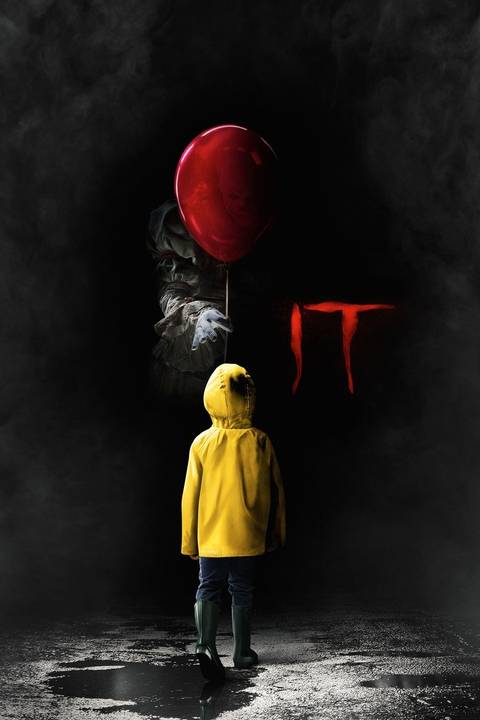
Though it’s King’s ultimate story about fear, we almost thought we had to leave It off this list. Between the hit movies and the ongoing Welcome to Derry series, it seemed like everyone’s been hearing so much about It that if they were ever going to read it, they’d have done so already. But it’s also true that maybe some people who’ve heard so much about it have been too intimidated by its thousand-plus-page length to read it. Don’t be. Worst that can happen is you’ll decide not to finish it, and the parts that you did read will function as scary short stories.
By spanning so many pages, the book obviously includes plenty of stuff that never made it into the movies. You’ll get to witness, and be thoroughly revolted by, some goings-on at Derry’s town dump, for example. The larger difference, though, is those extra pages do a better job of storytelling even when it's the same story. The real hook of the book is the continual jumping between adult and child points-of-view, which is something It: Chapter 1 never attempted. Chapter 2 did attempt it, but the rushed jumping back-and-forth turned the movie into too much of a joke, and that’s not okay. Clowns are no laughing matter.
8 ‘Danse Macabre’

Our final book is not a novel and will not be receiving a film adaptation anytime soon. Danse Macabre is a work of nonfiction and is King’s analysis of the history of the horror genre. If you’re looking to think more about what horror means, you can hear the man’s thoughts on how to categorize horror and on what various famous horror stories represent. If you’re looking for horror recommendations, the book goes a lot further than any one internet list can and covers movies and novels from wide stretches of time.
Some of his takes on horror may surprise you. You might read it to learn the man’s opinion of one 1976 book that you thought seemed very similar to Stephen King’s style. It turns out he dismisses the book as disposable trash and quickly moves on.
King wrote Danse Macabre in 1981, and most of it covers horror from the previous three decades. He has not written a sequel, impartially analyzing horror from the three decades that followed. He sadly is unable to. The following three decades of horror were mostly about, or were influenced by, the works of Stephen King.
- Release Date
- September 8, 2017
- Runtime
- 135 minutes
- Director
- Andy Muschietti
- Writers
- Cary Joji Fukunaga, Gary Dauberman, Chase Palmer
- Producers
- David Katzenberg, Roy Lee, Seth Grahame-Smith, Bárbara Muschietti, Dan Lin
KioskNews shows a cleaned-up reading view extracted from the publisher’s page — the original always lives on their site, not ours.