If young US people accept Xi’s invitation to China, what will Beijing show them?
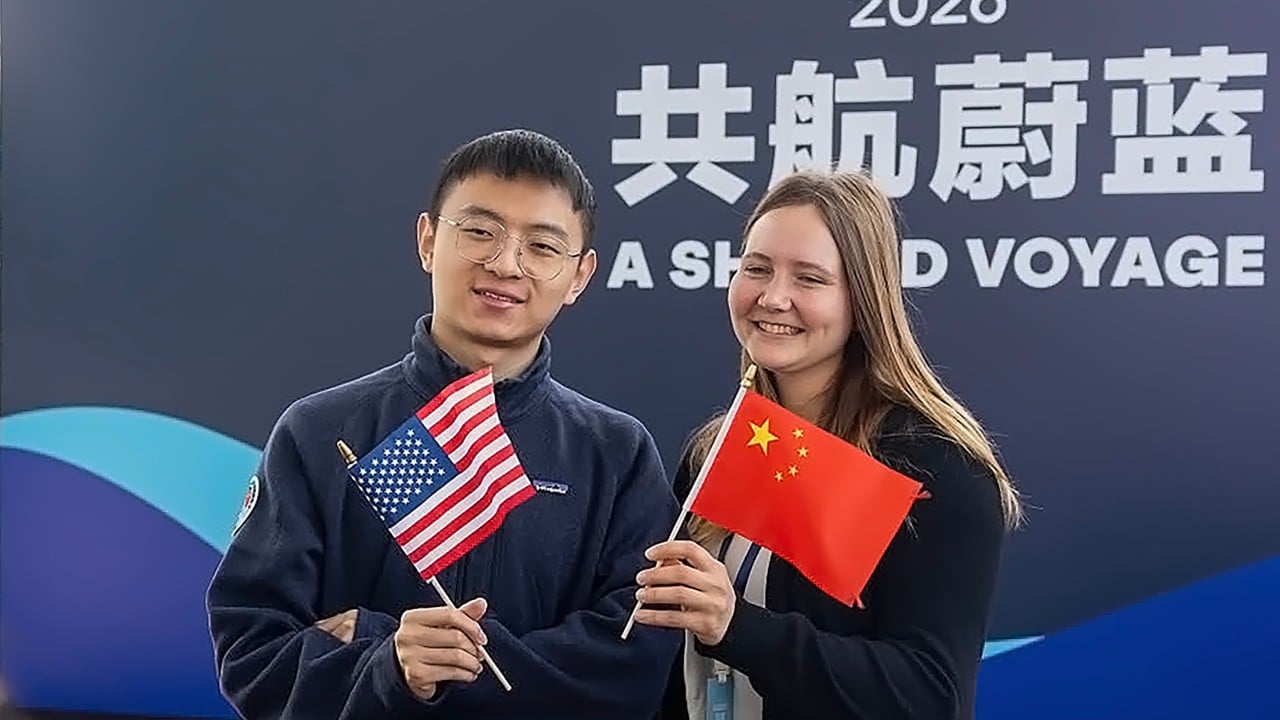
China is ramping up its efforts to bring young Americans to China, and ready to be seen as a country concerned with environmental protection, lifting people out of poverty, protecting minority cultures and building the technology of the future.
During his trip to the United States last week, Chinese President Xi Jinping said his country aimed to welcome 100,000 young Americans on exchange or study trips over the next five years.
That builds on an earlier target announced in 2023 that set the goal of bringing 50,000 US youth people to China by 2028, which the authorities said they had reached ahead of schedule.
The Young Envoys Scholarship (YES) initiative was launched to support this target. It is run by the China Education Association for International Exchange, a non-profit organisation under the Ministry of Education.
The YES initiative coordinates with Chinese institutions, mostly universities, which create itineraries and curricula, and manage the visitors on the ground. Universities set varying admissions criteria for their programmes, but in general, the YES initiative is open to non-Chinese citizens between the ages of 18 and 45.
Marine conservation
For one group of students, their China trip began at sea.
Starting in March, a group of 20 Chinese and US students spent 10 days travelling up the Chinese coast from Hong Kong to the eastern cities of Ningbo and Shanghai. The three stops are all coastal cities with links to marine research and the ocean economy.
The trip was organised by two Chinese state-linked non-profit organisations and the Ray Dalio-backed OceanX, with support from China’s Second Institute of Oceanography, the Ministry of Education and the Chinese University of Hong Kong.
The programme included marine exploration, visits to research facilities and laboratories and discussions about international cooperation in ocean science, according to the organisers.
In one activity, the students collected marine biological samples and identified species including the Calanus sinicus crustacean, which has been studied by Chinese scientists for decades.
01:46
CUHK professor apologises for ‘sexist’ campus talk as students and alumni call for suspension
“I am delighted to know that the students from both countries have embarked on an unforgettable friendship voyage aboard the China-US Youth Friendship vessel,” Xi said in a letter to the programme in May, state news agency Xinhua reported.
SCMP Plus is a new premium news platform that gives you an
all-inclusive edge to stay ahead on China news.
To access our exclusive content you’ll need to subscribe.
Already a subscriber?
LOG IN
China has emphasised marine science in recent years, with its latest five-year plan – which runs from this year through to 2030 – calling for more research, expanded deep-sea exploration and deepened international cooperation.
The US and China are the two biggest contributors to oceanographic research in the Pacific, with the US first in terms of the share of publications and China second between 1992 and 2021, according to a study published in the Ocean Sustainability journal.
The two countries have also cooperated on marine research under the broader US-China Science and Technology Agreement, first signed in 1979 and extended for another five years in 2024.
Under the agreement, a protocol on cooperation in marine and fishery science and technology provides a framework for collaboration between China and the US.
Minority culture
A programme organised by Shanghai’s Donghua University took US students into ethnic minority communities in southwestern China’s Guizhou province, with field studies focused on the intangible cultural heritage of the Bouyei, Miao, Shui and Dong peoples.
The initiative aimed to “promote the global dissemination of outstanding traditional Chinese culture and enhance the international influence of intangible cultural heritage”, according to the university.
In the city of Kaili, students attended a workshop on batik dyeing techniques and later wore traditional costumes to take part in a “village runway” event with residents.
12:41
Guizhou: The spicy heart of China and home of Lao Gan Ma
Guizhou has used its ethnic minority culture to drive tourism as part of its poverty alleviation and rural development efforts, with tourism projects helping nearly 900,000 people increase their incomes between 2017 and 2019, according to the Ministry of Culture and Tourism.
China’s rural revitalisation plan for 2024 to 2027 calls for stronger protection and use of traditional villages and intangible cultural heritage.
China’s latest five-year plan for intangible cultural heritage also seeks to promote Chinese intangible cultural heritage overseas as part of efforts to strengthen the global influence of Chinese culture and promote cultural exchanges.
Poverty alleviation
Peking University said it organised a trip through Ningxia, Sichuan and Chongqing focused on “poverty alleviation, regional development and urban renewal”.
In Ningxia, students visited Minning, a town established over two decades ago that is touted as an example of China’s east-west cooperation in poverty alleviation.
The town has developed industries including wine, goji berry cultivation and photovoltaic agriculture supported by investment and technical aid from the wealthier coastal province of Fujian.
06:54
What is a ‘kill line’ and why are Chinese netizens using it to describe living in the US?
Minning’s per capita disposable monthly income rose from about 500 yuan (US$74.50) in 1997 to 20,292 yuan last year, according to the local authorities.
The five-year plan calls for an institutionalised system of support for underdeveloped areas, including measures to consolidate poverty alleviation gains and strengthen industrial and employment support. It also calls for improving east-west cooperation and other forms of regional assistance.
In Sichuan and Chongqing, the trip’s focus shifted towards agricultural modernisation and urban development.
Cutting-edge technology
The Suzhou-Hangzhou-Shanghai itinerary, also organised by Peking University, offered a very different picture from the previous two: an image of how China is seemingly building the future.
The trip took students through three cities in the prosperous Yangtze River Delta and focused on advanced manufacturing, robotics and the digital economy.
Robots waltz on stage with humans in China’s WorldSkills competition
The group visited Unitree Robotics and carmaker Geely, two companies working in sectors that have become increasingly important to China’s push up the value chain.
This has intensified competition between China and the US, with advanced chips, artificial intelligence and other strategic technologies at the centre of the rivalry.
The five-year plan calls for the faster development of strategic, emerging and future industries while encouraging technological innovation and the upgrading of traditional manufacturing.
Lasting impression
“You cannot truly understand another country from books. You have to experience it first-hand,” said Anoushka Soni, a University of California, Berkeley student who visited China this year, according to a Peking University social media account.
The university quoted her as saying that the stories she encountered “cannot be found in textbooks and cannot be presented simply by searching the word ‘China’ online”.
Saanvi Bhatia, a Stanford University fourth-year student from Pennsylvania who took part in Tsinghua University’s summer fellowship last year, said she also made unexpected discoveries.
“I did not know how involved China was in climate stuff and how much they cared about making it non-toxic to us,” Bhatia said.
During her visit to Guizhou, Bhatia and other students were shown how waste was incinerated and treated so that only water vapour was released into the environment.
“I feel like a lot of the perspective of China and the US is seen [through] rivalry. We’re both kind of competing, and so then to be on the other person’s land and knowing what they are interested in was very cool,” Bhatia said.
KioskNews shows a cleaned-up reading view extracted from the publisher’s page — the original always lives on their site, not ours.