Hong Kong can boost regional prosperity through ‘soft connectivity’, adviser says
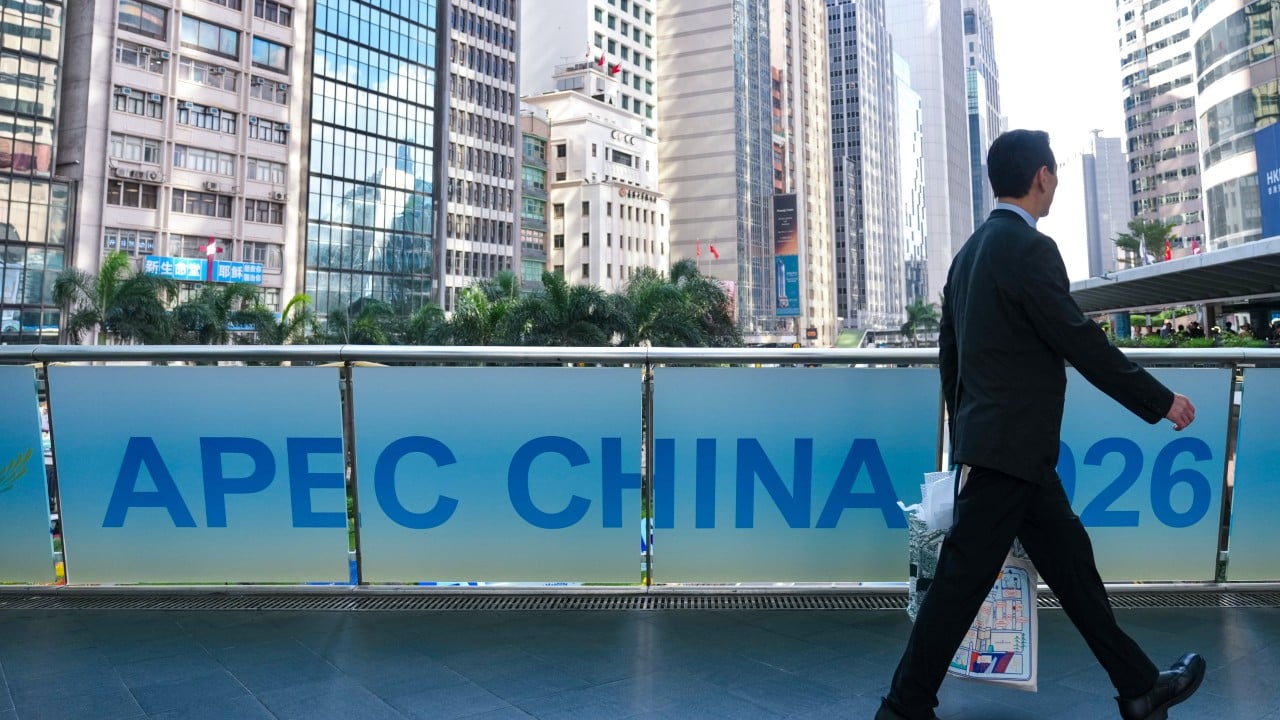
Hong Kong’s institutional advantages and close ties with mainland China and the wider world can contribute to the Asia-Pacific region’s prosperity, a key adviser to the city’s leader has told a conference.
Stephen Wong Yuen-shan, head of the Chief Executive’s Policy Unit, said on Monday that Hong Kong was transforming itself into the region’s institutional “harbour” – where trade from regional markets could converge and take advantage of the city’s “soft connectivity” advantages.
He said such “soft connectivity” could help transform Hong Kong’s unique advantages under the “one country, two systems” principle into effective regional governance by embedding Chinese standards into the process of sharing prosperity across the region.
Wong delivered a keynote address at the Asia-Pacific Think Tank Forum in neighbouring Shenzhen, stressing Hong Kong’s intention to develop regional “soft connectivity”, including digital trade agreements, carbon markets and cross-border logistics policies.

“What crosses a border today is no longer just a container. It may also be a rule, a data set, a verified figure or a certificate,” Wong told the forum.
“Under our unique institutional advantage of one country, two systems, different legal, monetary, customs, and regulatory arrangements operate within one country.
“And Hong Kong has accumulated valuable experience in connecting different systems and making cross-border exchanges work in practice.”
Wong added: “The Asia-Pacific has achieved an extraordinary expansion of physical connectivity over recent decades.
“As trade becomes more digital, services-intensive and environmentally accountable, soft connectivity may become an increasingly important part of the region’s next phase of development.
“Hong Kong’s contribution may therefore lie in helping to build that connectivity.”
Monday’s forum was convened by the Shenzhen Academy of Social Sciences and Shenzhen University to mark the mainland Chinese city’s hosting of the Apec leaders’ meeting next month.
China is the host of Apec 2026, whose theme is “Building an Asia-Pacific community to prosper together”.
“A community, in the end, is a set of mutual recognitions of each other’s contracts, certificates, data and, ultimately, each other,” Wong added.
Hong Kong will host the finance ministers’ meeting of the Asia-Pacific Economic Cooperation forum next week.
KioskNews shows a cleaned-up reading view extracted from the publisher’s page — the original always lives on their site, not ours.