A confrontation that reshaped the Election Commission
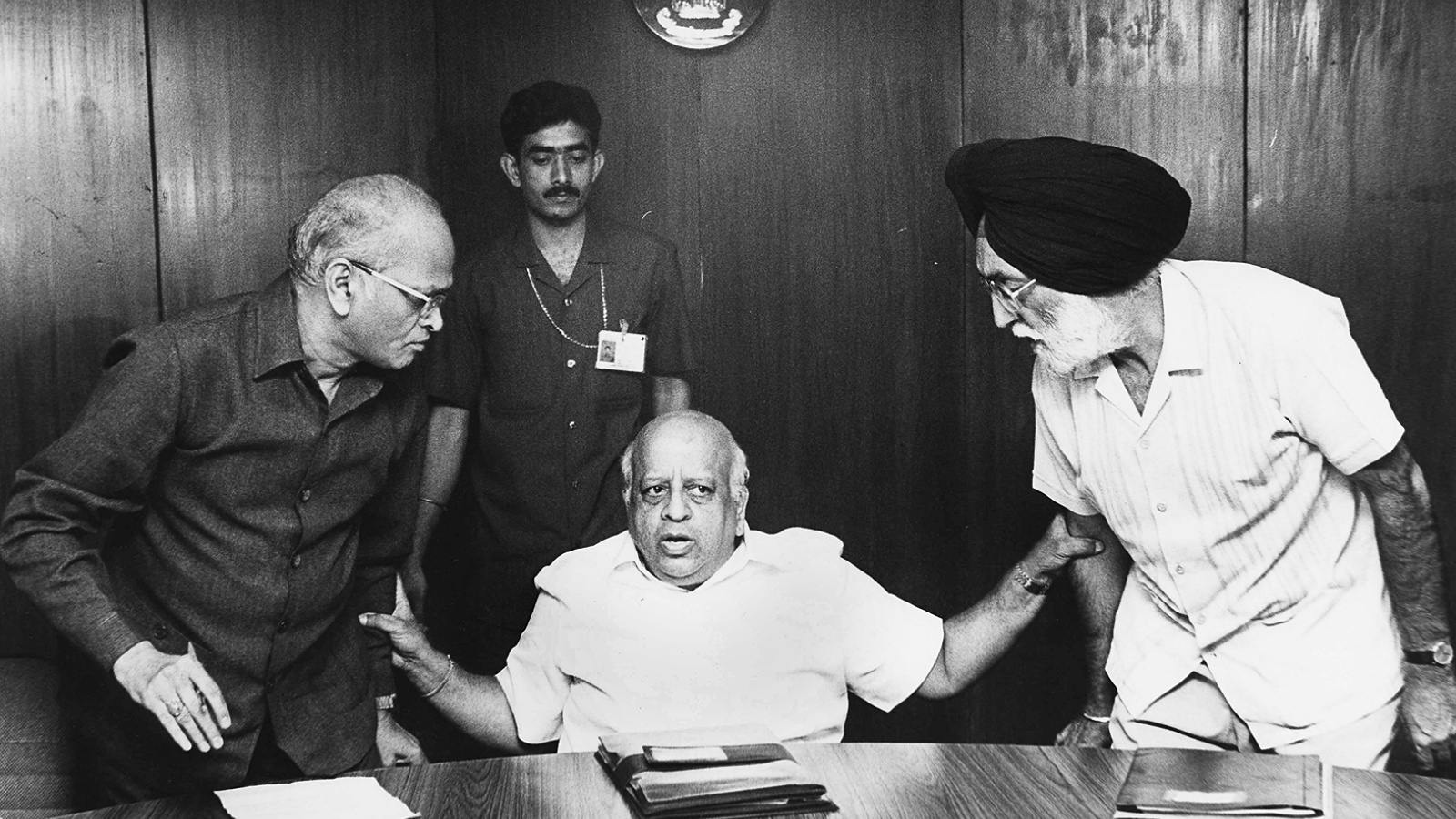
In October 1993, TN Seshan was away in Pune when Delhi altered the institution he had come to personify. A former Cabinet Secretary, TN Seshan had taken over as Chief Election Commissioner (CEC) in December 1990. The President, on October 1, appointed two Election Commissioners alongside him: MS Gill, a senior IAS officer who would later succeed Seshan as CEC, and GVG Krishnamurty. An ordinance issued the same day laid down that the business of the commission would, as far as possible, be transacted unanimously and, where its members disagreed, by majority.
Three years into office, Seshan had brought the Election Commission into public consciousness by taking on governments over the conduct of elections and forcing politicians accustomed to a relatively unobtrusive poll body to reckon with an increasingly assertive one.
The Constitution, however, had never confined the Election Commission to a single member. Article 324 provided for a Chief Election Commissioner and “such number of other Election Commissioners, if any”, as the President might from time to time fix. For much of independent India, the commission had functioned with only the CEC. But it briefly had a multi-member body, when, in October 1989, weeks before the general election, the Rajiv Gandhi government appointed SS Dhanoa and VS Seigell as Election Commissioners alongside CEC RVS Peri Sastri. After a change in government, the President, on January 1, 1990, returned the commission to its single-member form.
Dhanoa challenged the abolition of his post before the Supreme Court. The court rejected his case in 1991, holding that while the Constitution required a CEC, the appointment of more Election Commissioners was not obligatory. The judgment, however, left unresolved the question that would soon become central to Seshan’s own case: if other commissioners were appointed, what authority would they exercise in relation to the chief? The court had observed, in passing, that the chief stood in a distinctly higher position.
Two years later, the appointments of Gill and Krishnamurthy changed the way power was exercised within the Election Commission. The ordinance issued on October 1, 1993, gave both commissioners an equal voice in the commission’s decisions and provided that where unanimity was not possible, the majority would prevail. For Seshan, the institutional consequences were immediate. A CEC who had come to embody the institution in public life could now be outvoted within it.
The dispute quickly reached the Supreme Court. Journalist and political commentator Cho Ramaswamy filed the first challenge on October 13, 1993. Seshan followed with his own petition on October 26, challenging both the ordinance and the appointments of Gill and Krishnamurthy. By December, the court had concluded that the questions raised went directly to the interpretation of Article 324 and referred the matter to a Constitution Bench. While the petitions were pending, the ordinance was replaced without material change by legislation on January 4, 1994.
Seshan’s argument rested substantially on the special position Article 324 gave the CEC. The Constitution protects the CEC from removal except in the same manner and on the same grounds as a judge of the Supreme Court. Other Election Commissioners may be removed on the CEC’s recommendation. To Seshan, these distinctions suggested that the Constitution had placed the chief above the other members of the commission and that this hierarchy should extend to the commission’s decision-making as well.
A five-judge Constitution Bench led by Chief Justice AM Ahmadi rejected that proposition in July 1995. It upheld the 1993 arrangement and the appointments of Gill and Krishnamurty, holding that the CEC’s stronger protection against removal did not translate into superior decision-making authority.
The court treated the CEC’s stronger protection from removal as a safeguard for institutional independence, not as a source of greater voting power. Once a multi-member commission had been constituted, its members were to decide matters collectively. Any other reading, the court reasoned, would reduce the other Election Commissioners to little more than advisers.
In practical terms, the settlement placed the CEC in the position commonly associated with primus inter pares, or first among equals, in the commission’s decision-making. The CEC was chairperson, but where unanimity failed, the statutory rule of majority would govern.
For Seshan, this was a striking outcome. His years at Nirvachan Sadan had been defined by an effort to establish the authority of an institution often treated as administratively peripheral. Yet his own challenge compelled the Supreme Court to explain that the strength of the Election Commission could not depend entirely upon the authority of a single office-holder.
Three decades later, recent differences within the Election Commission have given that history renewed relevance. It remains instructive precisely because collegiality was never meant to eliminate disagreement, only to contain it within a constitutional framework.
That was the irony of Seshan’s legacy. He did more than perhaps any predecessor to make the CEC’s office visible and formidable. Yet the case bearing his name helped establish that the commission itself was larger than its chief.
The writer is a constitutional lawyer specialising in public law
KioskNews shows a cleaned-up reading view extracted from the publisher’s page — the original always lives on their site, not ours.