Bessent blames US Commerce Department for not restricting Nvidia chip exports to China
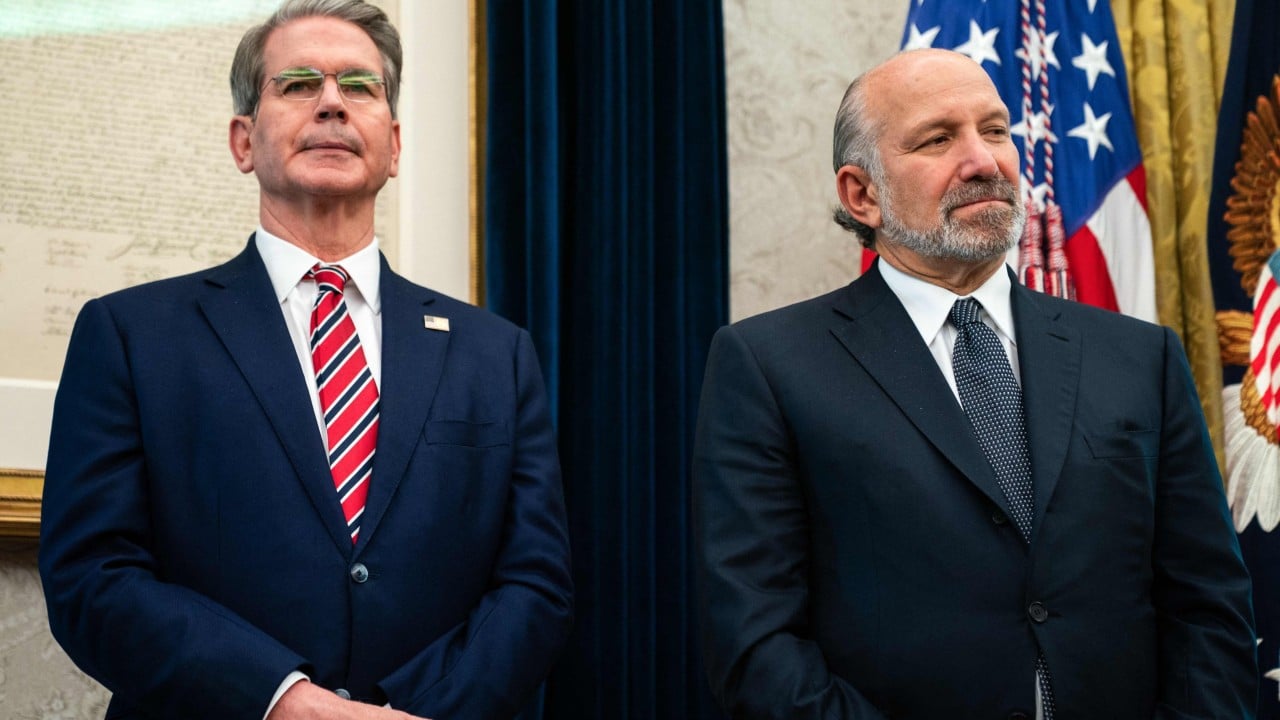
US Treasury Secretary Scott Bessent on Friday blamed the Commerce Department, led by Howard Lutnick, for delaying the blacklisting of Megaspeed, an Nvidia customer suspected of diverting advanced AI chips to China, days before US President Donald Trump and Chinese President Xi Jinping are expected to meet in Shenzhen.
Bessent spoke a day after Nvidia co-founder Jensen Huang resigned as chief executive following reports that he had an affair with Alice Huang, a former executive at Singapore-based Megaspeed.
According to US media reports, American intelligence officials suspected Alice Huang of working for Beijing. Beijing has denied the allegation, and US Attorney General Todd Blanche said on Thursday that the Justice Department had yet to reach a conclusion on the matter.
Trump rejects working with China on AI despite Xi’s recent visit
In an interview with CNBC, Bessent said Treasury, the Pentagon, the US State Department and the Office of the US Trade Representative had backed adding Megaspeed to the Commerce Department’s Entity List for months. A listing would require US licences for exports of covered items to the company.
“But Commerce has the pen,” Bessent said. “You will have to ask them about their internal processes.”
Democratic Senator Ron Wyden of Oregon and Democratic Representative Richard Neal of Massachusetts said on Thursday that they were opening an investigation into the administration’s approval of advanced Nvidia chip sales to China. They asked Lutnick to preserve records related to export licences and the department’s communications with Nvidia.
Lutnick has agreed to testify before the Senate Banking Committee, his spokeswoman told NBC News. The committee’s chairman, Republican Senator Tim Scott of South Carolina, asked both Lutnick and former Nvidia chief executive Huang to appear.
Bessent said Trump had “made it very clear that China should not receive any Nvidia chips above H100s”, referring to an older generation of the company’s AI processors.
“Any leakage is very frustrating because it hurts our great companies, and in the AI race gives the Chinese an advantage,” he said.
In January, the Commerce Department announced that it would review licence applications for exports of Nvidia’s more advanced H200 chips to China on a case-by-case basis, subject to security requirements.
Bessent also pressed Nvidia on how it vetted its customers. “The real story here should be, did Nvidia know their client, and was there a robust effort at Nvidia to make sure that there was no leakage,” he said. He questioned whether Nvidia had sold to firms he described as “pass-through shell companies”.
Asked whether the US Congress needed to act on export controls, he said: “We have all the authorities that we need. They just need to be implemented.”
Megaspeed previously said there was no evidence it had illegally shipped Nvidia chips to China. On Thursday, it said it took its US export-control obligations seriously and would cooperate with the US government.
Three House committee chairs have asked Jensen Huang to appear for a closed-door, transcribed interview on December 1 and warned they could subpoena him if he did not appear.
KioskNews shows a cleaned-up reading view extracted from the publisher’s page — the original always lives on their site, not ours.