Just Like That | Dussehra: One festival, different traditions, a shared moral message
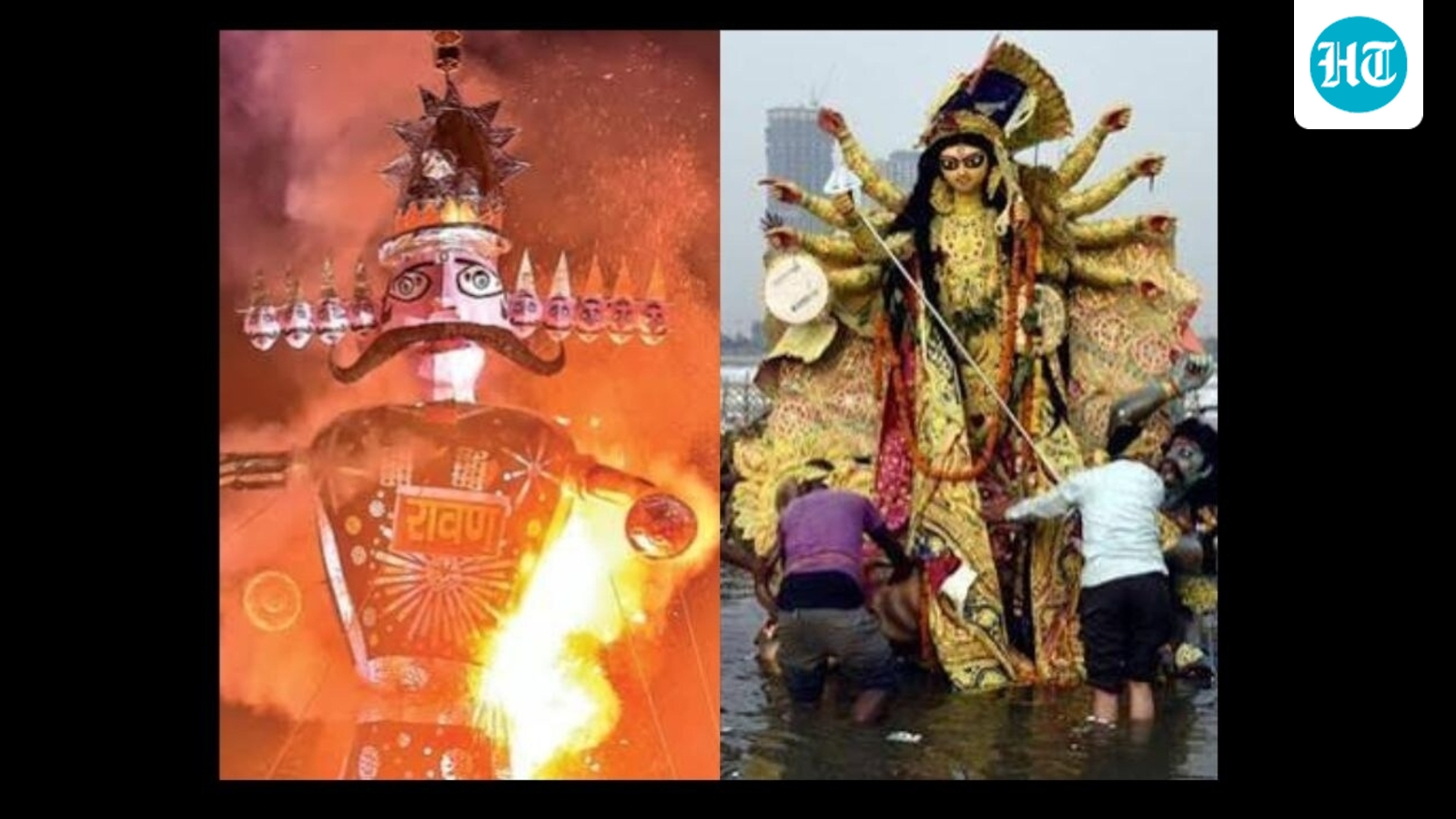
India’s civilisational inheritance reveals itself most vividly in its festivals. They are not merely occasions for ritual, merriment or communal celebration; they are repositories of memory, expressions of collective identity, and reminders of moral truths that a society must continually rediscover. Few festivals illustrate this better than Dussehra, which, under different names and through strikingly different traditions, celebrates two triumphs: the victory of Goddess Durga over Mahishasura in Bengal, and the victory of Rama over Ravana across much of northern India.
The difference is not merely one of mythology. It extends to food, fasting, worship, ritual and the very atmosphere of celebration. In Bengal, Durga Puja is an exuberant public festival in which devotion mingles with art, community and the pleasures of the table. Across much of northern India, the Navratras leading to Vijayadashmi are often observed through fasting, dietary restraint and ritual purification, culminating in the burning of Ravana’s effigy. One celebrates the Goddess with offerings that may include fish; another sees many devotees voluntarily abstaining from meat, fish, eggs and, in some households, particular vegetables. The same sacred season thus accommodates markedly different understandings of how reverence should be expressed.
In Bengal, Durga is welcomed as a daughter returning to her parental home, accompanied by her children. The city becomes a vast theatre of devotion and artistic expression. Elaborate pandals, magnificent images, the resonant beat of the dhak, the fragrance of incense and the thronging crowds transform public spaces into temporary temples of collective imagination. The Goddess is worshipped with solemnity, but the occasion is also one of social communion, aesthetic invention and shared pleasure.
There is, moreover, a larger theological significance to the Bengali celebration. Durga is Shakti: the primordial feminine energy that animates the universe and confronts the destructive forces that threaten its equilibrium. In the familiar account, the gods, unable individually to defeat the buffalo demon Mahishasura, combine their energies to create the Goddess. She accomplishes what the assembled male divinities could not.
There is something strikingly radical about this ancient narrative. The feminine is not merely a consort, an ornament or a passive beneficiary of divine protection. She is the protector herself, the embodiment of strength, resolve and righteous action. Durga does not wait to be rescued. She is the rescuer. Yet the contrast between the exalted status accorded to the Goddess and the inequalities that women continue to experience in everyday life remains one of India’s uncomfortable contradictions. A civilisation that celebrates Shakti must also ask whether it sufficiently respects the autonomy and dignity of actual women.
In much of northern India, Dussehra takes a different form. It commemorates Rama’s victory over Ravana, the culmination of the epic struggle narrated in the Ramayana. Ramlilas, staged over several days, bring the epic to life through dialogue, music, spectacle and public participation. On Vijayadashmi, towering effigies of Ravana, often accompanied by those of Meghnad and Kumbhakarna, are set alight. Fireworks punctuate the evening, and the crowd witnesses the familiar triumph of righteousness.
The ritual is dramatic, but the character of Ravana deserves more than a simplistic division between a virtuous hero and a wicked villain. He is learned, powerful, a formidable ruler and a great devotee of Shiva. His tragedy lies in the fact that extraordinary gifts do not guarantee moral wisdom. Knowledge does not save him from arrogance; power does not restrain his appetite; accomplishment does not excuse his violation of another person’s dignity and freedom.
Ravana’s downfall is therefore not simply the defeat of an external enemy. It is the consequence of an internal corruption that makes power answerable to no moral restraint. Rama, meanwhile, represents the ideal of dharma: the obligation to uphold righteousness even when personal desire or immediate advantage might suggest otherwise. The epic is morally complex, and Rama’s actions have invited debate across centuries and traditions. This capacity for continuing interpretation is one reason the Ramayana remains a living inheritance rather than a story sealed in the past.
The burning of Ravana should consequently provoke a question more demanding than the ritual itself: what, precisely, are we burning? If Ravana represents pride, greed, lust for power and contempt for the rights of others, his effigy becomes a mirror held up to the present. Evil is easily vanquished in effigy; the arrogance of the powerful, the corruption of public life and the refusal to accept accountability are much harder to overcome.
The deeper convergence lies in the moral imagination underlying both celebrations. Durga destroys Mahishasura; Rama defeats Ravana. Both narratives affirm that power, however formidable, is not invincible when confronted by a force committed to a higher purpose. Both insist that destructive impulses must be resisted rather than accommodated merely because they appear powerful.
Perhaps the true significance of Dussehra lies not in the death of Mahishasura or the burning of Ravana alone. It lies in the recognition that when the last embers of Ravana’s effigy die away, or when Durga’s image disappears beneath the waters, the annual celebrations end, but the moral challenge remains.
Pavan K Varma is an author, diplomat, and former member of Parliament (Rajya Sabha). The views expressed are persona
KioskNews shows a cleaned-up reading view extracted from the publisher’s page — the original always lives on their site, not ours.