Dismantling Fiefdoms: Inside Congress's New Strategy For Punjab
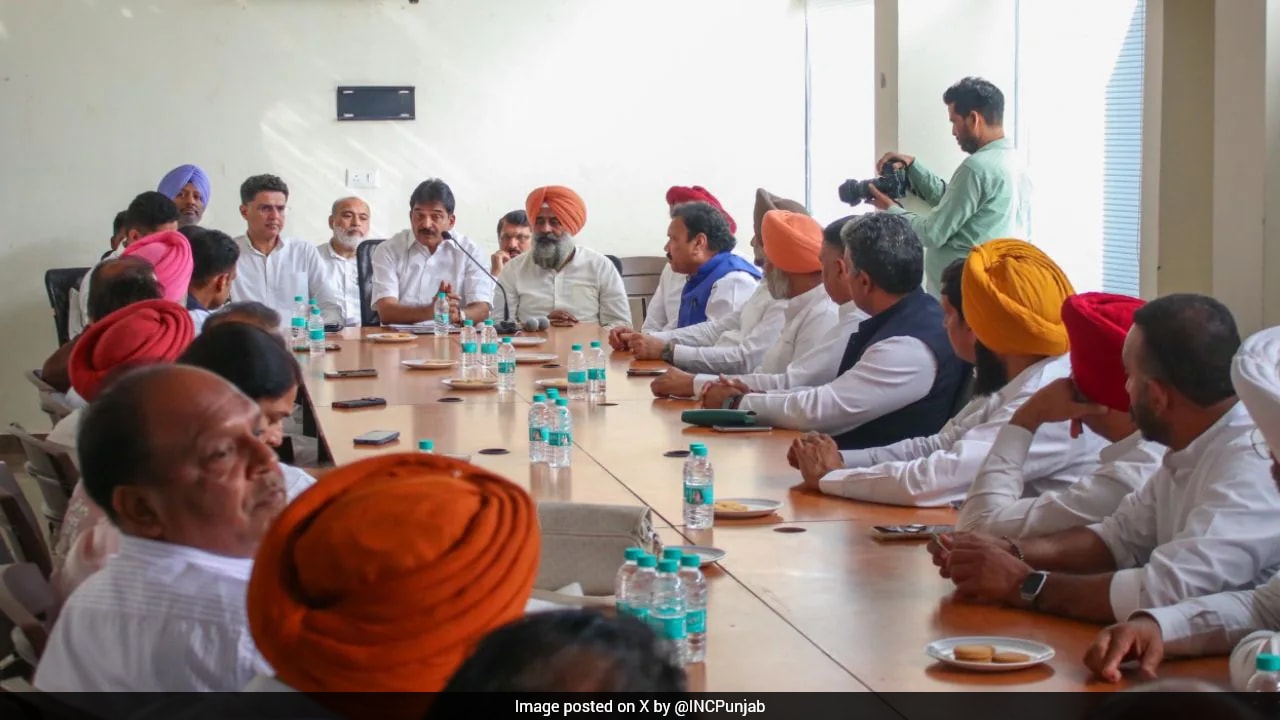
As the Congress party gears up for the 2027 Punjab assembly elections, a high-stakes battle of political management is playing out behind closed doors. Central leadership, led by General Secretary KC Venugopal and state in-charge Sachin Pilot, during recent stock-taking sessions in Chandigarh laid down a hardline rule for local heavyweights: no solo campaigns, no individual projection, and absolute adherence to collective strategy.
For a state unit historically fractured by deep-seated regional fiefdoms and competing power centres, this centralised diktat attempts an ambitious course correction. But beneath the surface optics of a unified front lie persistent questions over whether top-down decrees can genuinely suppress entrenched factionalism or if they risk driving ambitious leaders into quiet, passive resistance.
Punjab Congress has long operated on competing personal networks and high-profile regional ambitions. By explicitly banning individual-centric drives and tying future electoral roles strictly to collective performance, the high command is signalling that party machinery will supersede personal branding.
However, political analysts note that such top-down enforcement often triggers covert friction. When heavyweight aspirants are told that independent momentum is off-limits, the underlying anxiety over who ultimately controls candidate selection and organisational layout intensifies.
Dispelling High-Command Cronyism
Recognising the acute sensitivity surrounding centralised interference, Venugopal adopted a surprisingly candid approach to ease internal jitters. In a blunt psychological reassurance to local leaders, he made it clear that neither he nor Sachin Pilot was present in the state to claim local positions, stressing instead that leadership roles would organically rise from collective success.
This rare transparency highlights a tactical pivot. By directly addressing whispers of high-command imposition or external favouritism, the central leadership is attempting to disarm anti-establishment narratives before the high-octane campaign formally kicks off with Rahul Gandhi's upcoming rally in Sangrur.
Whether this blunt candour translates into lasting discipline - or merely forces factional friction underground as the race to 2027 heats up - remains the central test for the party's central architects.
The recent transition in the Punjab Congress - which saw former Olympian and clean-image legislator Pargat Singh step in to replace Amarinder Singh Raja Warring as the state unit chief - has injected a temporary sense of order into a party historically plagued by internal friction. High-profile optics, such as the collective assembly of regional heavyweights like Charanjit Singh Channi, Sukhjinder Singh Randhawa, and Partap Singh Bajwa alongside central leaders like Sachin Pilot during the leadership takeover, were meticulously choreographed to project a united front ahead of the upcoming assembly elections. However, a deeper look beneath this surface harmony reveals that the party remains an archipelago of competing regional power centres and ego-driven fiefdoms.
While the high command's decisive intervention has successfully compelled leaders to mask their open warfare to avoid projecting vulnerability to the electorate, deep-seated ambitions and personal mistrust continue to simmer. Pargat Singh's non-controversial, sports background provides an acceptable middle ground for a fractured organisation, yet veteran factions are already eyeing upcoming candidate allocations and structural control with intense suspicion. Ultimately, this fragile truce functions less as a genuine reconciliation and more as an uneasy ceasefire - with rival camps keeping their friction underground until the political stakes reach a boiling point.
History of Self-Sabotage and Internal Wars
For decades, the Punjab Congress's biggest enemy hasn't been its political rivals, but itself. A deeply entrenched culture of factionalism and unchecked personal ambition has repeatedly pushed the party into self-destruction. The catastrophic collapse of 2022 - where a bitter, public civil war between top leaders reduced a ruling majority to a mere 18 seats - is the ultimate proof of this cost. By letting ego dictate strategy, the party completely shattered voter trust and handed a historic landslide victory to its opponents. Today, the internal battlefield remains active, proving that Congress's worst wounds are almost always self-inflicted.
Driven by the public civil war between Captain Amarinder Singh and Navjot Singh Sidhu, the Congress party's vote share plummeted from 38.5% in 2017 down to just 22.98% in 2022. This steep 15.5 percentage point drop directly slashed their assembly presence from 77 seats to a mere 18.
The erosion of the party's base is equally apparent in general elections. During the 2019 Lok Sabha elections, a relatively stable state unit secured 8 parliamentary seats with a strong 40.12% vote share. However, following years of relentless internal leadership squabbles, their vote share collapsed to 26.3% in the 2024 general elections - marking a staggering 13.8 percentage point drop in their parliamentary voter base.
The constant friction didn't just turn off voters; it splintered the cadre. The public infighting created open ground for the Aam Aadmi Party (AAP) to capture the disillusioned electorate, with AAP swinging its own assembly vote share up by more than 18 percentage points to capture power in 2022.
KioskNews shows a cleaned-up reading view extracted from the publisher’s page — the original always lives on their site, not ours.