Fire tops business risks as traders indicate willingness to pay GH¢25 weekly for insurance
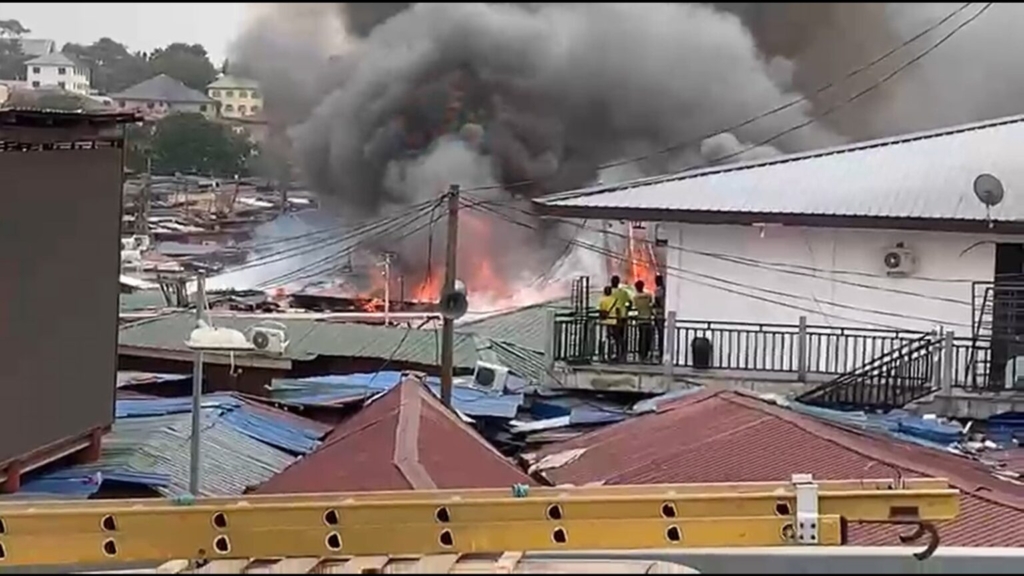
Fire is the most commonly cited threat to informal businesses in Ghana, according to a National Insurance Commission (NIC) survey, which also found that market traders were willing to spend a median of GH¢25 a week on insurance.
The NIC-YEA Insurance Awareness and Risk Perception Report identified opportunities for insurers to reach informal-sector workers with policies suited to their incomes and business risks.
Of the respondents surveyed, 10,850, representing 41%, identified fire as a business risk. Theft and robbery were cited by 36%, followed by illness at 34%.
These threats can wipe out goods, interrupt trading and deprive business owners of their livelihoods, underscoring the need for accessible financial protection.
The study examined 26,493 complete responses gathered across 10 regions between January and March 2026. Fieldwork was conducted by 218 Youth Employment Agency graduates, while the assessment of willingness to pay drew on 22,972 valid numerical responses.
Drivers indicated the highest median amount they were prepared to pay for insurance, at GH¢30 weekly. Market traders followed at GH¢25, while artisans recorded GH¢20. Store owners and youth entrepreneurs each indicated GH¢15.
Across the sample, the median was GH¢20 a week, with the middle half of responses falling between GH¢10 and GH¢50.
The report proposed three premium bands: weekly payments of GH¢10–15 for basic protection, GH¢20–30 for standard policies and GH¢40–60 for comprehensive cover.
Payment preferences also varied by region. Ashanti, Greater Accra and Bono recorded median amounts of GH¢30 a week, compared with GH¢10 in the Northern and Volta regions.
The findings suggest that insurers seeking to expand into the informal sector must consider both the threats businesses face and the amounts their owners are prepared to commit to protection.
To improve access, the report recommended weekly premium payments through mobile money, simpler claims processes and the digital issuance of policies.
However, respondents’ stated willingness to pay does not guarantee that they will purchase insurance. Converting that interest into lasting participation will depend on affordable products, understandable policy conditions and dependable claims payments.
DISCLAIMER: The Views, Comments, Opinions, Contributions and Statements made by Readers and Contributors on this platform do not necessarily represent the views or policy of Multimedia Group Limited.
Tags:
DISCLAIMER: The Views, Comments, Opinions, Contributions and Statements made by Readers and Contributors on this platform do not necessarily represent the views or policy of Multimedia Group Limited.
KioskNews shows a cleaned-up reading view extracted from the publisher’s page — the original always lives on their site, not ours.