The 6 Best Sci-Fi Books Released Since 1990, Ranked

Sign in to your Collider account
The science-fiction books I push hardest are usually the ones that leave behind a new problem in your head. Maybe consciousness can emerge somewhere completely unlike us. Maybe civilization would happily sacrifice children if the alternative were inconvenience. Maybe first contact is less exciting once you remember that intelligent species have no reason to arrive with our interests in mind. A great sci-fi novel gives you an impossible situation. A truly great one makes normal reality feel slightly different after you close it.
That is the standard here. These books contain spaceships, virtual worlds, clones, alien ecosystems, impossible engineering, and humanity staring into places it probably should have left alone. Yet none survives on the idea alone. There is always somebody inside the thought experiment who has to live with what it means.
6 'Project Hail Mary' (2021)
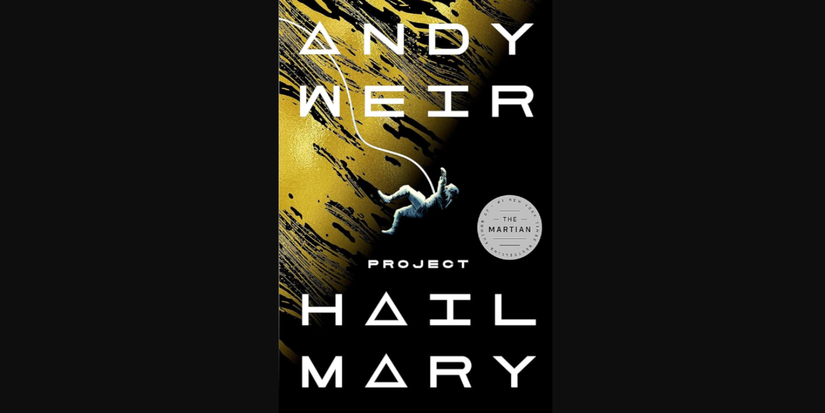
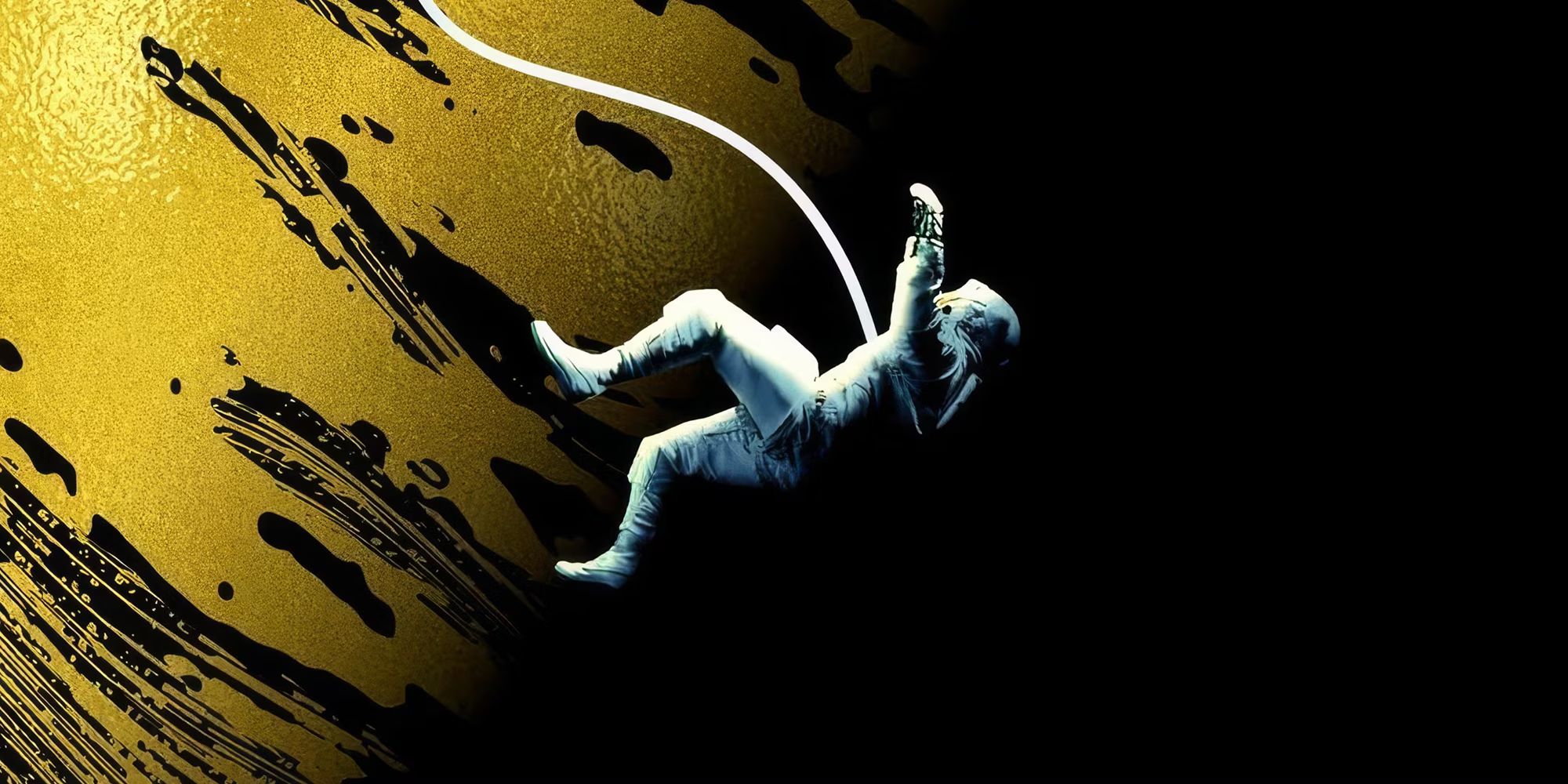
Project Hail Mary follows Ryland Grace, a man who wakes alone aboard a spacecraft with two dead crewmates, almost no memory of who he is, and the gradual realization that he has been sent to another star system because something is draining energy from the Sun and threatening life on Earth. Andy Weir wrote the novel, and if The Martian proved he could make engineering exciting, this book lets him apply the same instinct to biology, astrophysics, language, and first contact.
The moment Rocky enters the story, the whole book levels up. Grace encounters an alien facing a version of the same extinction problem, and neither has the slightest idea how to communicate with the other. So they begin with sound, numbers, objects, atmosphere, and patient trial and error. Watching an actual friendship grow out of scientific problem-solving is ridiculously satisfying. The danger gets bigger, yet the emotional question eventually becomes wonderfully simple: once Grace finally has a realistic path home, what does he owe the friend who helped make that possible?
5 'Snow Crash' (1992)

Snow Crash follows Hiro Protagonist, a hacker and sword fighter who delivers pizza in a privatized future America until he encounters Snow Crash, a strange drug that can infect both computers and the minds of people capable of processing its underlying information. Neal Stephenson wrote it, and thirty-plus years later the book still reads like somebody got access to several decades of internet culture early and responded by turning the dial past reasonable.
The Metaverse is the famous part, understandably. People enter a persistent virtual world through avatars, buy digital property, socialize, conduct business, and treat online status as a genuine extension of identity. That vocabulary aged almost suspiciously well. Yet the book is much weirder than its reputation as “the novel that predicted the Metaverse.” Ancient Sumerian language, religious systems, computer viruses, corporate states, skateboard couriers, and information theory all become pieces of the same conspiracy. Stephenson sometimes seems one paragraph away from losing control of it. That danger is part of the fun.
4 'The Martian' (2011)
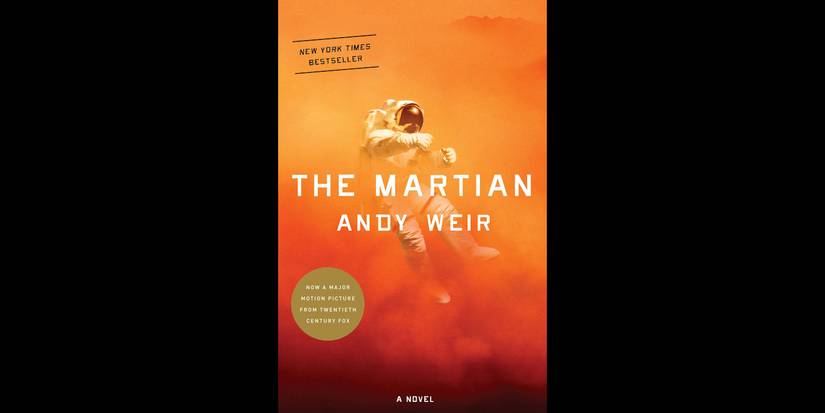
The Martian follows astronaut Mark Watney after a Mars mission is aborted during a storm, his crew mistakenly leaves him behind believing he has died, and he must keep himself alive long enough for Earth to discover he survived and somehow devise a rescue. Andy Weir wrote the book, and its great trick is making survival feel less like destiny than a very long list of calculations somebody has to get right.
Watney grows potatoes because calories suddenly matter more than heroism. He burns hydrazine to manufacture water and nearly kills himself because chemistry punishes confidence instantly. He digs up Pathfinder because a decades-old probe may be his only route back to NASA. Each success buys him another problem. That rhythm makes pages about rover range and oxygen production feel genuinely tense. Ridley Scott’s 2015 film with Matt Damon became the more famous version for plenty of people, and it is excellent. The novel still has one advantage I love and it’s that you spend far more time trapped inside Watney’s stubborn, funny, relentlessly practical brain.
3 'Never Let Me Go' (2005)

Never Let Me Go follows Kathy H., who looks back on her childhood at the English boarding school Hailsham and gradually reveals that she and her friends Ruth and Tommy were created as clones whose organs will eventually be harvested for other people. Kazuo Ishiguro wrote it, and he refuses almost every obvious way another science-fiction writer might approach that premise.
There is no rebellion plot waiting around the corner. No secret army. No genius plan to expose society. Kathy remembers cassette tapes, school gossip, arguments, friendships, jealousy, and the possibility that art might somehow prove the students have souls. That ordinariness is exactly what makes the truth so awful. These children grow up knowing just enough about their future to normalize it. Ishiguro barely raises his voice, even when Tommy and Kathy finally seek a rumored way to postpone their donations. The 2010 film adaptation is moving, but the book hurts differently because Kathy’s calm narration lets you hear how thoroughly an atrocity can become somebody’s idea of an ordinary life.
2 'Children of Time' (2015)

Children of Time follows the last remnants of humanity as they search for a new home while, on a terraformed planet intended for human colonists, an evolutionary experiment accidentally accelerates the development of intelligent spiders into a civilization of their own. Adrian Tchaikovsky wrote it, and the outrageous achievement is that eventually the spiders stop feeling like the strange half of the book.
You watch generations of Portias, Biancas, and Fabians develop hunting strategies, religion, communication, medicine, social structures, and eventually technology. Because their minds and biology are different from ours, their civilization does not simply become humanity with eight legs. Meanwhile, the humans aboard the Gilgamesh deteriorate under scarcity, hierarchy, and repeated cycles of sleep and crisis. Somewhere along the way, your sympathies may shift without you noticing. That is what floored me. The book begins by asking whether spiders can become people. It eventually leaves you wondering whether humanity has remembered how.
1 'The Three-Body Problem' (2008)
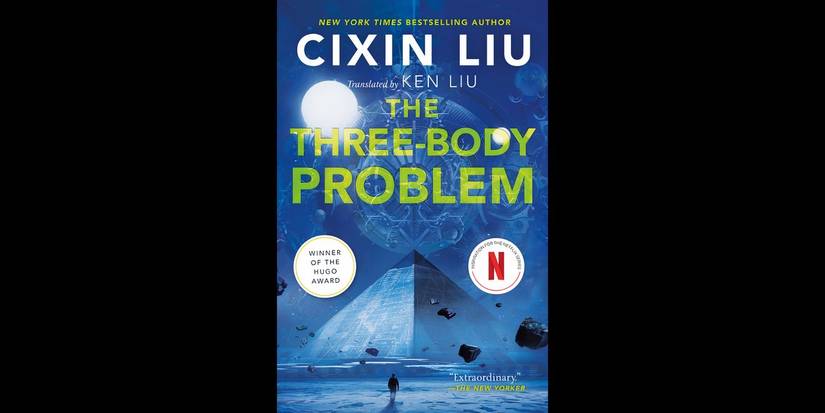
Netflix’s 3 Body Problem brought the story to a massive new audience, but the novel remains colder, stranger, and more intellectually unsettling. The Three-Body Problem follows scientist Wang Miao as a series of disturbing events among researchers leads him toward a mysterious virtual-reality game, a secret history stretching back to China’s Cultural Revolution, and the discovery that humanity has made contact with an alien civilization living in the unstable Trisolaris system. Liu Cixin wrote the novel, with Ken Liu later translating it into English, and the deeper Wang investigates, the more the familiar world starts feeling like the surface of something much larger.
The book has ideas that genuinely made me put it down for a minute. The chaotic three-star system. The countdown appearing in Wang’s vision. Scientists losing faith in fundamental physics. Sophons turning subatomic particles into tools capable of sabotaging scientific progress across an entire planet. And behind all of it sits Ye Wenjie, whose experience during the Cultural Revolution helps explain why first contact does not inspire hope in her. First contact is usually sold as humanity discovering we are not alone. Liu asks the much less comforting question: what if somebody already answered?
Collider Exclusive · Sci-Fi Survival Quiz Which Sci-Fi World Would You Survive? The Matrix · Mad Max · Blade Runner · Dune · Star Wars
Five universes. Five completely different ways the future went wrong — or sideways, or up in flames. Only one of them is the world your instincts were built for. Eight questions will figure out which dystopia, galaxy, or desert wasteland you'd actually make it out of alive.
💊The Matrix
🔥Mad Max
🌧️Blade Runner
🏜️Dune
🚀Star Wars
01
You sense something is deeply wrong with the world around you. What do you do? The first instinct is often the truest one.
02
In a world of scarcity, what resource do you guard most fiercely? What we protect reveals what we believe survival actually requires.
03
What kind of threat keeps you up at night? Fear is useful data — if you're honest about what you're actually afraid of.
04
How do you deal with authority you don't trust? Every dystopia has a power structure. Your approach to it determines everything.
05
Which environment could you actually endure long-term? Survival isn't just tactical — it's physical, psychological, and very much about where you are.
06
Who do you want in your corner when things fall apart? The company you keep is the clearest signal of who you actually are.
07
Where do you draw the line — if you draw one at all? Every survivor eventually faces a moment that tests what they're actually made of.
08
What would actually make survival worth it? Staying alive is one thing. Having a reason to is another.
Your Fate Has Been Calculated You'd Survive In…
Your answers point to the world your instincts were built for. This is the universe your temperament, your survival instincts, and your particular brand of stubbornness were made for.
The Matrix
You took the red pill a long time ago — probably before anyone offered it to you. You're a systems thinker who can't help but notice the seams in things.
- You're drawn to understanding how the system works before figuring out how to break it.
- You'd find the Resistance, or it would find you — your instinct for spotting constructed realities is the machines' worst nightmare.
- You function best when you have access to information and the freedom to act on it.
- The Matrix built an airtight prison. You'd be the one probing the walls for the door.
Mad Max
The wasteland doesn't reward the clever or the well-connected — it rewards those who are hard to kill and harder to break. That's you.
- You don't need comfort, community, or a cause larger than the next horizon.
- You need a vehicle, a clear threat, and enough fuel to outrun it — and you're good at all three.
- You are unsentimental enough to survive that world, and decent enough — just barely — to be something more than another raider.
- In the wasteland, that distinction is everything.
Blade Runner
You'd survive here because you know how to exist in moral grey areas without losing yourself completely.
- You read people accurately, keep your circle small, and ask the questions others prefer not to answer.
- In a city where humanity is a legal designation rather than a feeling, you hold onto something that keeps you functional.
- You're not a hero. But you're not lost, either.
- In Blade Runner's world, that distinction is everything.
Dune
Arrakis is the most hostile environment in the known universe — and you are precisely the kind of person it rewards.
- Patience, discipline, and political awareness are your core strengths — and on Arrakis, they're survival tools.
- You understand that the long game matters more than any single victory.
- Others come to Dune and are consumed by it. You'd learn its logic and earn its respect.
- In time, you wouldn't just survive Arrakis — you'd begin to reshape it.
Star Wars
The galaxy far, far away is vast, loud, and in a constant state of violent political upheaval — and you wouldn't have it any other way.
- You find meaning in being part of something larger than yourself — a cause, a crew, a rebellion.
- You'd gravitate toward the Rebellion, or the fringes, or whatever pocket of the galaxy still believes the Empire's grip can be broken.
- You fight — not because you have to, but because standing aside isn't something you're capable of.
- In Star Wars, that willingness is what makes all the difference.
KioskNews shows a cleaned-up reading view extracted from the publisher’s page — the original always lives on their site, not ours.