Under scanner, how Karnataka jobs body landed in rows under BJP, Congress governments
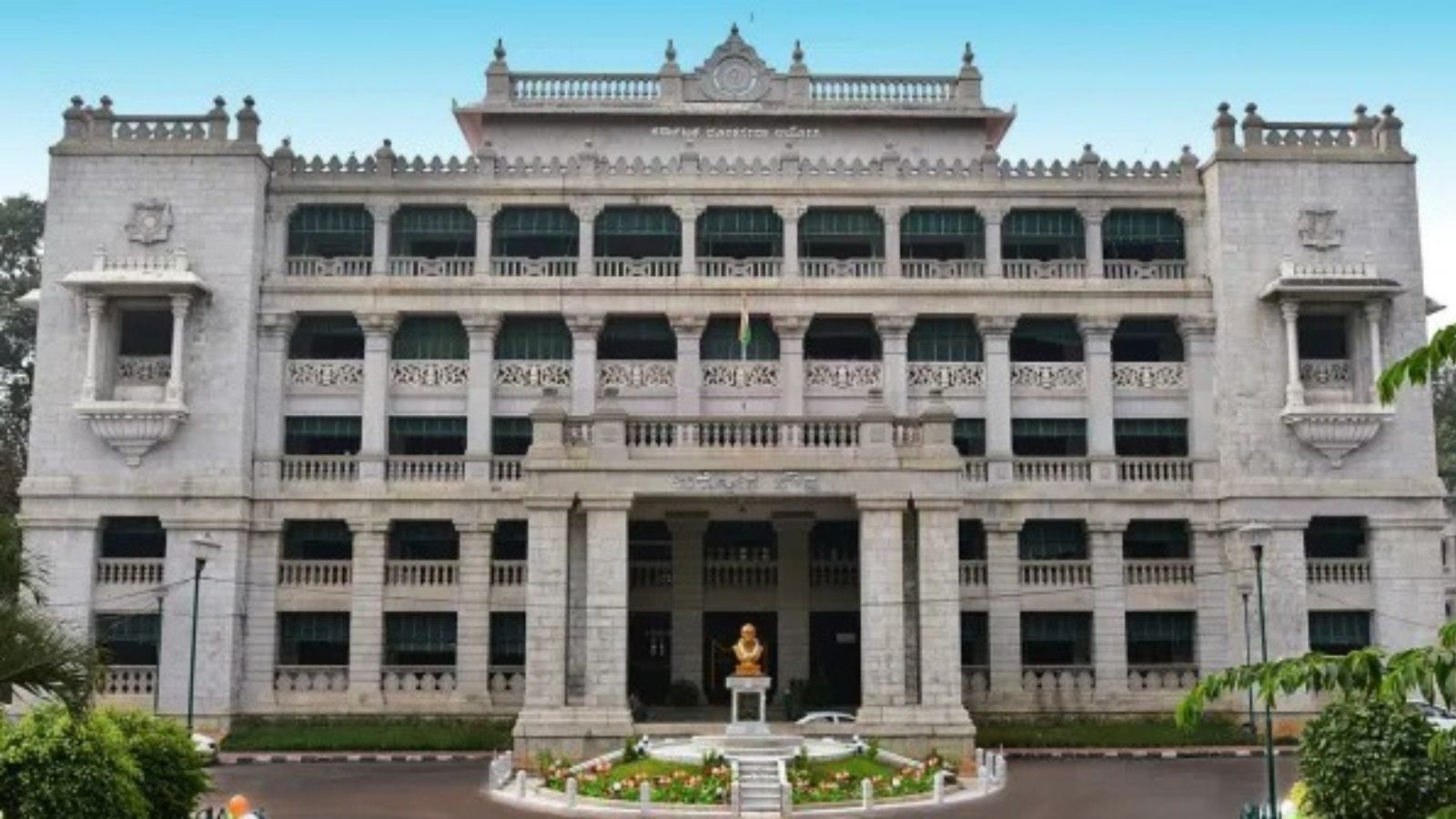
In a significant ruling last week, the Supreme Court quashed the 2022 Karnataka recruitment law brought by the then BJP-led government for protecting 362 candidates from losing their Karnataka Administrative Service (KAS) jobs as assistant commissioners, tahsildars and deputy superintendents of police, who were selected through a tainted Karnataka Public Service Commission (KPSC) process in 2011.
The apex court’s October 29 decision to declare the 2022 Act as “unconstitutional” has come as an oblique vindication of a Karnataka police investigation of corruption in the 2011 KAS recruitment besides being an indictment of the KPSC’s politicisation.
Despite a chargesheet filed in the 2011 KPSC recruitment fraud by the CID in 2014 – where the then KPSC’s chairman Gonal Bhimappa and its member Mangala Sridhar allegedly received bribes to pick candidates – the successive BJP and Congress governments did not give the mandatory sanction to prosecute the tainted KPSC officials, which caused the unravelling of cases in courts.
The failure to prosecute the accused also led to the state government bringing the 2022 “validation” law in a bid to regularise the tainted 2011 KPSC recruitments.
SC verdict
In its judgment, the top court said, “Quite interestingly, after more than a decade from the stage of recruitment, when obviously the political currents kept on changing, the Karnataka Civil Services (Validation of Selection and Appointment of 2011 Batch Gazetted Probationers) Act, 2022 (the Act of 2022) was brought out.”
The SC criticised “the shifting stances of the State, depending on the hues and colours in the changing times,” in a reference to the way the state government acted depending on whether the BJP or the Congress was in power.
While the BJP was ruling Karnataka under B S Yediyurappa’s chief ministership during the 2011 KPSC scandal, the succeeding Siddaramaiah-led Congress government initially scrapped it in 2014, but later withheld sanction for prosecution of the accused KPSC members. This led to the collapse of the case, paving the way for the then Basavaraj Bommai-led BJP government to pass the “validation” law.
Striking down the 2022 Act, the top court said the state government attempted through this law to cover up nepotism and corruption in the 2011 KPSC recruitments despite the Karnataka high court and the SC finding it to be tainted.
“The lofty ideal stated in the legislation of providing justice to the 2011 Batch Gazetted Probationers falls flat for reason of the recruitment itself having been found tainted with corruption and nepotism by the High Court, which decision was upheld by this Court in a Civil Appeal,” the SC Bench of Justices J B Pardiwala and K Vinod Chandran said.
The Bench said that “nothing remains to be looked into to sustain the recruitment of 2011 which has been set aside not merely on defect or irregularity noticed in the process, but on rampant corruption and blatant nepotism having vitiated the entire selection.”
It also stated that “Gross manipulations of the recruitment process, including rampant corruption and instances of blatant nepotism of officials of the KPSC were revealed in the inquiry, based on which the entire recruitment was cancelled”.
2011 KPSC scandal
During the 2008-2013 tenure of the Yediyurappa government, the KPSC issued a notification on November 3, 2011 for recruitment to 362 posts of Group “A” and “B” officers. The KPSC then comprised chairman Gonal Bhimappa, appointed in 2007 by the then JD(S)-BJP government, and several members close to BJP leaders.
While about 1.38 lakh aspirants applied for the 362 KAS posts, 6,211 took the main exams and 1,090 were called for interviews.
The selection process ran aground in early 2013 after a candidate who topped the KPSC main exam in the ST category filed a police complaint of being pushed down the rank list during the interview stage. The candidate alleged that a KPSC member Mangala Sridhar sought a Rs 80 lakh bribe to facilitate recruitment at the interview level, but lowered her interview score after she rejected the bribe deal.
In 2013, when the Congress government led by CM Siddaramaiah took charge, it initially heeded the Advocate General’s advice and withheld the publication of the final 2011 KAS selection while handing the probe into the corruption case to the CID.
The Siddaramaiah government cancelled the 2011 KPSC process on March 21, 2014 on the basis of the CID’s findings of irregularities and corruption in the recruitments. The government’s decision was upheld by the high court and the SC.
‘Failings’ of govts
The prosecution of a key 2011 case accused, Mangala Sridhar, collapsed in 2017 during the Siddaramaiah government’s tenure after the high court quashed criminal proceedings against her on April 25, 2017 on account of an “invalid” prosecution sanction from the government.
The CID was then directed by the trial court on June 14, 2017 to file the chargesheet afresh after obtaining the necessary government sanction.
When the state police agency sought sanction from the Yediyurappa-led BJP government in 2021, the latter found fault with the probe, deciding on June 12, 2021 that the agency should rather seek sanction directly from the Governor.
The BJP government also decided in 2021 to grant appointment letters to 362 KAS candidates selected through the murky 2011 process.
In 2022, during the Basavaraj Bommai-led BJP regime, a campaign was launched involving JD(S) leader H D Kumaraswamy, BJP leaders and prominent seers from the powerful Lingayat community for regularisation of the 2011 KPSC recruitment despite the CID’s findings of corruption, leading to the passage of the controversial 2022 Act.
In 2023, when the Congress returned to power with Siddaramaiah as the CM, the CID again approached the government for sanction of prosecution in the 2011 case, but the Congress government turned it down, citing the decision of the previous BJP Cabinet.
The CID then again wrote directly to the Governor for sanction, but the latter did not grant it since the state Cabinet had rejected it.
Current graft cloud
The SC’s verdict setting aside the 2011 KPSC recruitments has come as a shot in the arm for the Karnataka police’s Special Investigation Team (SIT), which was constituted on Monday to probe the 2026 KPSC veterinary officer recruitment fraud case allegedly involving KPSC’s suspended chairman Shivashankarappa Sahukar, its member B V Geetha and IAS officer and exam controller Gyanendra Kumar Gangwar.
The KPSC is currently under the scanner for alleged corruption over leaks of questions and answers for the January 9, 2026 exam for recruitment of 400 veterinary doctors.
There have also been allegations of large-scale graft in the 2024 KAS recruitments, where the results were recently withheld by the government. Over two lakh aspirants wrote the preliminary exams for the 384 KAS posts and 1,152 aspirants were called for the interview in May this year.
In this matter, KPSC member Shantha Hosamani and a selected KAS candidate are under investigation after the All Karnataka State Students Association president Kantharaju filed a complaint with the Bengaluru police, alleging that the KAS selection was “compromised” through corruption.
Senior police officials have been wary of taking up probes into the KPSC recruitments because of its “politicisation” and the reluctance of the governments cutting across party lines to grant sanctions to prosecute officials even in the face of strong evidence, sources said.
A day after the SC quashed the 2022 law, the displaced KAS officers met CM D K Shivakumar to seek his intervention to resolve their job crisis.
The SC has asked the state to conduct a fresh recruitment for KAS officers to fill the gaps from the scrapped 2011 exercise. It has asked the untainted successful candidates, who have been employed for five years, to go through the selection process again, directing the state to also ensure age relaxations for those who had moved the courts.
KioskNews shows a cleaned-up reading view extracted from the publisher’s page — the original always lives on their site, not ours.