Narooma payphone heritage-listed for connecting people when mobiles failed during black summer bushfires

During the black summer bushfires of 2019-20, mobile phone networks were knocked out in Narooma, as a raging blaze bore down on the New South Wales hamlet.
Under furious orange skies and amid thick smoke, locals and tourists lined up at Narooma’s public payphones to let family and friends know they were OK, or to check-in on neighbours.
Some stood in the booths to tell loved ones they’d lost everything in the catastrophic bushfires that razed much of the state’s far south coast.
Historian Naomi Parry Duncan was holidaying in Narooma on New Year’s Day in 2020 when she had to seek shelter at an evacuation centre.
It was a “bewildering and frightening” time with no mobile reception, internet or power. Nevertheless, people waited patiently at the three public phones in town, Parry Duncan recalls.
“At all of the payphones, there were queues of people politely waiting,” she says. “It was quite an intimate space in the queue.”
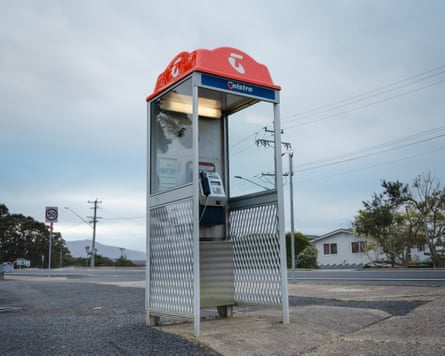
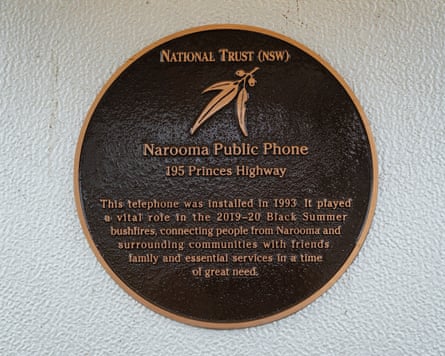
The payphone outside Narooma Plaza on the Princes Highway has been heritage listed for its cultural and social role in the black summer fires, with almost 1,000 calls made over two months during and after the disaster.
Parry Duncan led the nomination to the National Trust of Australia NSW register.
The payphone is now marked with the trust’s bronze plaque, emblazoned with gum leaves, to denote its significance.
The quiet empathy displayed by people waiting for the phones as they carried shared trauma was a particularly moving sight, Parry Duncan says.
“The instinctive thing to help each other was really quite amazing.”
The landmark status was being sought for other phones, including one in remote Queensland and another in Melbourne.
Telstra is mandated to maintain Australia’s 14,000 pay phones, with all local and national calls to standard fixed lines and mobiles free since mid-2021.
Within the last year, 25m calls have been made from payphones, including 300,000 to triple zero and crisis support lines.
“Where we’ve got vulnerable people in the community out there who need crisis support and to stay connected, they’re showing us these payphones are absolutely critical,” Telstra’s regional general manager, Chris Taylor, says.

Telstra has been working to ensure better resilience during disasters, such as power back-ups to help restore connectivity more quickly, Taylor say.
Parry Duncan says public phones have a long history in Australian culture, playing a particularly important part in women’s lives.
The phones were used to help women find employment and leave abusive relationships throughout the past century, as well as keeping Indigenous communities connected, she says.
“They are so important for keeping us together, especially when you’ve got a country that is spread over such vast distances as Australia.”
KioskNews shows a cleaned-up reading view extracted from the publisher’s page — the original always lives on their site, not ours.