Italy expresses concern to Ukraine over Libya ship attacks – Europe live
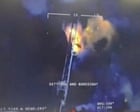
Ukraine has confirmed it deployed naval drones in strikes on two Russian vessels off Libya over the weekend, including one that sank one of Russia’s newest vessels, the corvette Merkury.
The strikes drew strong condemnation including from Libya’s foreign ministry, which said the country would not accept being drawn into the Russia-Ukraine war, as it stressed that its soverignity and territorial integrity were non-negotiable.
Now, Italy’s foreign minister Antonio Tajani has added to the criticism, expressing concern about the strikes – near Benghazi – to his Ukrainian counterpart Andriy Sybiha earlier today.
“The minister emphasised to his Ukrainian counterpart how crucial it is for Italy to keep working to prevent the conflict with Russia from spreading into the Mediterranean as well,” the Italian foreign ministry said, adding that Tajani stressed that “for Italy, respecting Libya’s sovereignty is necessary”.
Sybiha has justified the strikes by saying in a Telegram post that they were aimed at “countering Russian armed aggression” and were taken in self-defence. He claimed Russia was the one endangering third countries by using their civilian infrastructure for its military purposes.
Key events
Swedish parliament to vote on keeping centre-right Kristersson as PM
Poland summons Russian ambassador over recent airspace violations
Ukraine will need €115bn in external financial support in 2027, with €25bn yet to be found
Estonia goes ahead with plans to close border crossings with Russia from 1 December
Libyan government denies link with Ukraine attack on Russian ships
Russia summons Latvian charge d'affairs in Moscow
UK warns defence companies against increase sabotage threat from Russia
Italy expresses concern to Ukraine over Libya ship attacks
Leftwing coalition leader calls for rental revolution as Spain heads for snap election
Zelenskyy confirms Ukraine hit Russian cargo ship in Gulf of Finland
Nato's Rutte to meet US president Trump on Wednesday
'Situation with power supply is difficult,' Zelenskyy says as Russian strikes continue
Sweden remains stuck in government talks as 'no conditions' to from centre-left administration
Hungary's Magyar to meet Zelenskyy, visit Ukraine border region inhabited by ethnic Hungarians
US delaying delivery of much-needed Patriot air defence missiles - media report
Morning opening: Poland investigating (another) brief airspace violation by Russian drone
We also have an update from Sweden, where the parliament’s speaker, Andreas Norlén, has confirmed that lawmakers will have a third go on confirming the post-election prime minister next week.
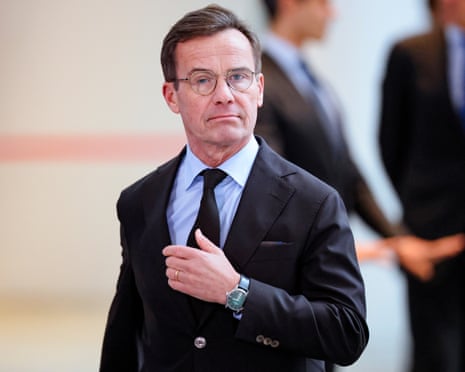
The Swedish parliament will vote on keeping the centre-right Moderates leader and outgoing prime minister, Ulf Kristersson, in the post, after two opposition leaders failed in previous votes – and a deadlock on the left continuing 72 days on from the election. (10:42).
Kristersson’s right-wing bloc lost its majority in the election but he is the parliament’s third choice now.
The Swedish system, unusually, does not require a majority for, a but a lack of majority against, creating some grey space for political deals with other parties.
The vote will take place at 1pm on Monday, with Kristersson hoping to secure the support of not just his three coalition parties – the Moderates, the Christian Democrats and the Liberals – but also the centrist Centre party, which holds the balance of power in parliament.
If Kristersson also fails, parliament will move to a fourth and final attempt to appoint the next prime minister.
A fourth failed vote would automatically trigger a snap election, and polls suggest Kristersson’s centre-right bloc would return with a majority in the next parliament as voters grow increasingly frustrated with the current stalemate.
Poland has summoned the Russian ambassador in Warsaw Georgy Mikhno over the recent violations of Polish airspace, Polish Press Agency reported.
Last Friday, three Russian cruise missiles crashed in Poland during Russian air attacks on Ukraine that took place amid major western military exercises by allied countries.
Mikhno reported to the Polish MFA headquarters this afternoon and left after just nine minutes, Polish media reported.
By my count, it’s Mikhno’s fourth summon to the MFA since his appointment to the post in, erm, May.
Ukraine will need €115bn in external financial support in 2027, president Volodymyr Zelenskyy said on Tuesday, as reported by Reuters.
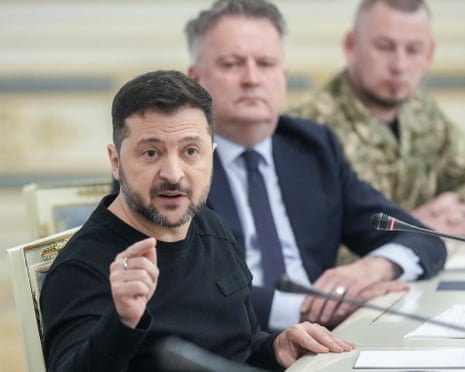
Zelenskyy told his top regional officials that the government had already secured about €90bn in commitments from the European Union for the next year and was holding talks on where to find the remaining €25bn.
The EU is now Ukraine’s main financial supporter and last week it announced a plan to borrow another €45 billion to support Ukraine’s economy and war effort.
Another €45 billion was part of €90 billion in financing approved in December last year and planned for this year and next.
“The European Commission has already presented a way to secure this funding, and we are now working to ensure that the European Union supports it,” Zelenskyy said.
Estonia is moving ahead with plans to close its border crossings with Russia from 1 December for an “indefinite” period, with the decision set to be reviewed in six months, the prime minister, Kristen Michal, has told local media.
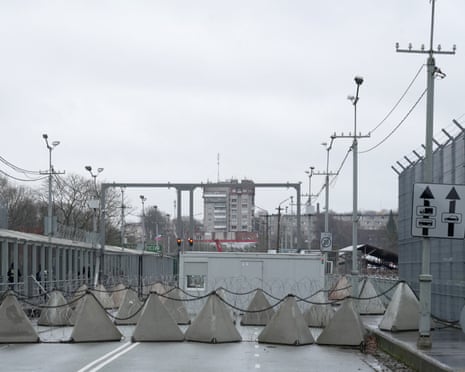
The border will close from 7am on 1 December, despite concern in recent days over the impact it will have on local communities.
Speaking on Estonia’s Vikerraadio, Michal said the decision came after 12 security incidents that Estonian authorities have attributed to Russia, including two recent attempted arson attacks on defence companies exporting goods to Ukraine.
The prime minister said previous border measures, including reduced opening hours and tighter customs controls, were meant to serve as a warning to Russia that “if you do not act sensibly, eventually we will reach a point where you can no longer cross the border.”
The closure will be reviewed in six months’ time by the next Estonian government, after parliamentary elections in March.
“I personally do not believe that the threat from Russia will be decreased in any way after six months, so the border will remain closed unless the [new] government decides otherwise,” he was quoted as saying.
No decision has been made on railway crossing used for freight transport.
Michal also repeatedly denied Russia’s recent accusations claiming – without any evidence – that Estonia had allowed Ukraine to launch drone strikes from its territory (Europe Live, yesterday).
Libya’s internationally recognised government, which is based in Tripoli, on Tuesday said it had not condoned Ukraine’s attack on two Russian ships near the eastern city of Benghazi, AFP reported.
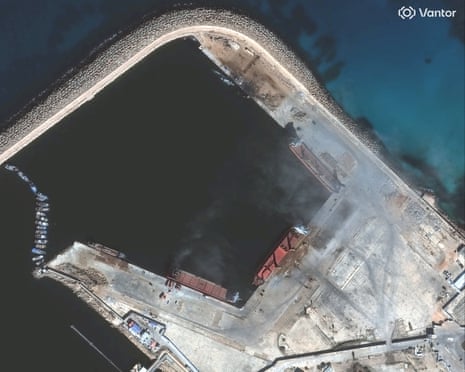
“The foreign media department confirms that allegations regarding the existence of any understandings with the Ukrainian side in connection with these events are unfounded,” the foreign ministry said.
Libya for years has been divided between a UN-recognised government in the west and a rival administration in the east backed by military commander and Russia ally Khalifa Haftar.
The attacks on Sunday, claimed by Kyiv, come as Ukraine steps up strikes against Russia far from the frontlines of their war.
Russia has summoned the Latvian charge d’affaires in Moscow over what it said was a dispute about locally hired employees of the Russian consulate in Riga.
The move comes a day after Latvia summoned the top Russian diplomat in Riga to protests against Russia’s actions in Ukraine and its violations of Polish airspace and alleged Russian-backed attempted assassination in Denmark.
Britain’s defence ministry and domestic spy agency MI5 issued a warning to companies providing direct support to Ukraine’s military that they faced an increased sabotage threat from Russia.
In the highly unusual public announcement, the Ministry of Defence and the National Protective Security Authority, which is part of MI5, warned companies to take action to improve their security in the face of what they said was the risk posed by operatives acting for Russia, Reuters reported.
“In recent months Russia has increased attempts to conduct sabotage against European defence-related facilities,” the warning said.
The warning comes after recent suspected sabotage attacks on Estonian defence companies, and similar warnings from Denmark and Norway.
Ukraine has confirmed it deployed naval drones in strikes on two Russian vessels off Libya over the weekend, including one that sank one of Russia’s newest vessels, the corvette Merkury.
The strikes drew strong condemnation including from Libya’s foreign ministry, which said the country would not accept being drawn into the Russia-Ukraine war, as it stressed that its soverignity and territorial integrity were non-negotiable.
Now, Italy’s foreign minister Antonio Tajani has added to the criticism, expressing concern about the strikes – near Benghazi – to his Ukrainian counterpart Andriy Sybiha earlier today.
“The minister emphasised to his Ukrainian counterpart how crucial it is for Italy to keep working to prevent the conflict with Russia from spreading into the Mediterranean as well,” the Italian foreign ministry said, adding that Tajani stressed that “for Italy, respecting Libya’s sovereignty is necessary”.
Sybiha has justified the strikes by saying in a Telegram post that they were aimed at “countering Russian armed aggression” and were taken in self-defence. He claimed Russia was the one endangering third countries by using their civilian infrastructure for its military purposes.
The leader of Spain’s leftwing Broad Front coalition has called for a drastic rethink of the country’s entire housing rental system, and described the eviction of an 87-year-old woman – the spark for nationwide protests that in turn triggered Sunday’s snap general election – as “the last straw” for desperate tenants.
“We’re not interested in small changes,” Ada Colau, the former Barcelona mayor, told the Guardian in an interview. “We want to reform the entire rental sector.”
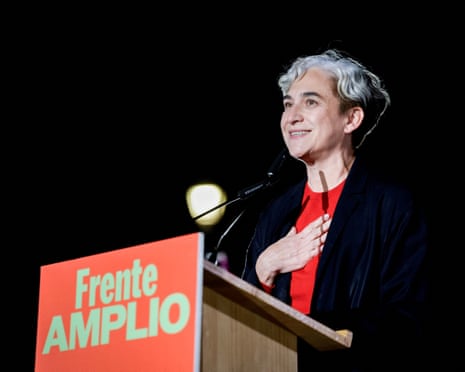
Public outrage over the eviction of Maricarmen Abascal from her Madrid apartment in September prompted the government, led by Pedro Sánchez’s Spanish Socialist Workers’ party (PSOE), to propose a series of changes to Spain’s housing laws.
After the proposals were voted down by a combination of rightwing parties and Catalan nationalists, Sánchez called an election. You can read more here:
The Slovakian parliament has approved contentious legislation to scrap postal voting for Slovaks living abroad – except for at Slovak embassies.
The bill passed by 79 votes to 71 in the 150-seat National Council, with lawmakers backing the ruling three-party coalition voting in favour of the legislation. The opposition is expected to challenge the measure in the country’s Constiutional Court if/when it is signed into law by Slovakia’s president, Peter Pellegrini.
The prime minister, Robert Fico, has claimed the legislation was intended to “prevent fraud and manipulations”, without providing evidence.
Rejecting this justification, the opposition argue the measure targets pro-western voters and would unfairly prevent tens of thousands of Slovaks from exercising their democratic right to vote.
“They are afraid that voters will give them a bill in the (parliamentary) September elections, so they have preventively prevented a large part of voters from expressing their opinion,” Michal Šimečka, leader of the major opposition Progressive Slovakia party, was quoted as having said.
Ukraine’s president Volodymyr Zelenskyy has confirmed that Ukraine was responsible for Saturday’s drone strike on a Russian cargo ship in the Gulf of Finland, Bloomberg News reported.
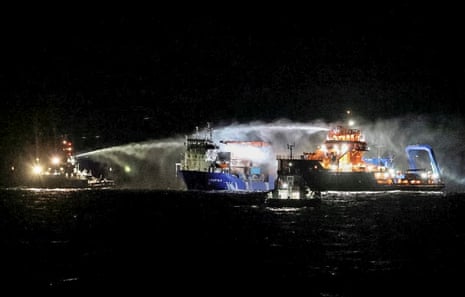
Zelenskyy told Bloomberg in an interview that the vessel, Sparta II, had been a legitimate target for his military as it was carrying weapons.
“Every vessel with a Russian flag, everything that carries weapons or any sanctioned cargo that can carry God knows what, it is a legitimate target for us in Russian territorial or neutral waters.”
The vessel, operated by the Russian defence logistics firm Oboronlogistika, was hit in international waters in the Gulf of Finland. One crew member was injured.
Bloomberg noted that it could not independently verify Zelenskyy’s claims that the ship was carrying weapons.
Meanwhile, Nato’s secretary general Mark Rutte will travel to Florida to meet the US president, Donald Trump, at Mar-a-Lago on Wednesday, the alliance said.
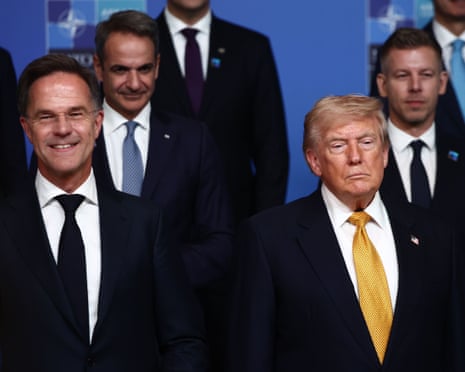
Rutte “will also meet with senior administration officials,” Nato said.
The pair last met in July at Nato’s summit in Ankara.
Norway’s defence minister Tore Sandvik told reporters there is an ongoing dialogue with Ukraine regarding “a need for stability in our near areas”.
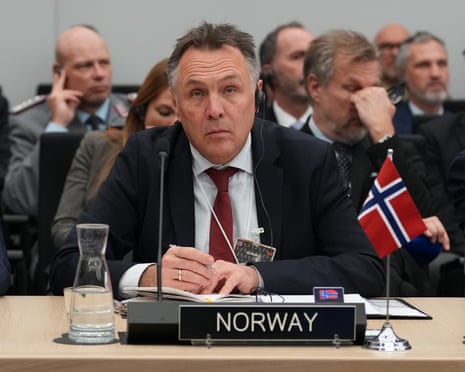
Finland’s military on Saturday said that a drone strike on a Russian cargo ship in the Baltic Sea was likely carried out by Ukraine.
“All attacks would stop immediately if Russia stopped this war. Once that is said, we are focused on the fact that Ukraine must do this inside the rules of international law. So we take this up with them,” Sandvik told a press conference.
“We are also focused on the fact that they must respect our need for stability in our near area and we have a good dialogue with the Ukrainians on that now.”
Back to Ukraine, the country’s president Volodymyr Zelenskyy has warned that “the situation with power supply is difficult” amid continuing Russian strikes against Ukraine’s energy infrastructure.
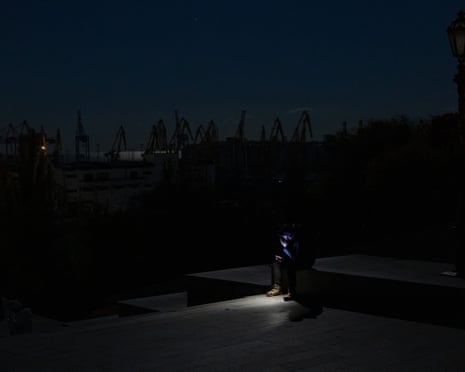
He stressed, however, that “the necessary personnel and resources have been mobilized for restoration.” “It is important to speed up the work.”
Zelenskyy also held talks with energy minister “on the implementation of the steps we agreed upon to increase electricity generation and accelerate the restoration of energy facilities following Russian strikes,” and with defence minister “on the use of our long-range weapons and the preparation of new support packages from our partners,” he said.
Over in Sweden, election winner Magdalena Andersson has repeated that there are still “no conditions” for her to form a new centre-left government, SVT reported.
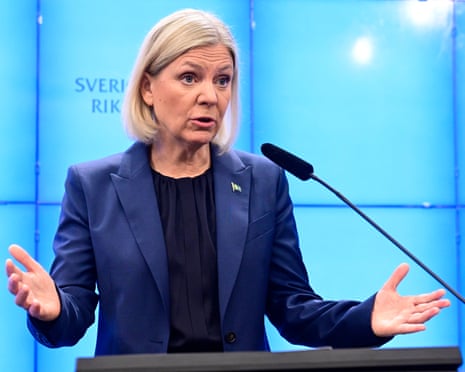
72 days on from the election, Sweden is still unable to confirm a new government, with the speaker, Andreas Norlén, increasingly running out of patience.
The four centre-left parties remain deadlocked as the Left party and the Centre party keep making conflicting demands on the government’s composition.
The Centre party, which previously favoured discussions with Andersson, has now resumed talks with the centre-right bloc, led by the incumbent prime minister, Ulf Kristersson, about teaming up to form the next government.
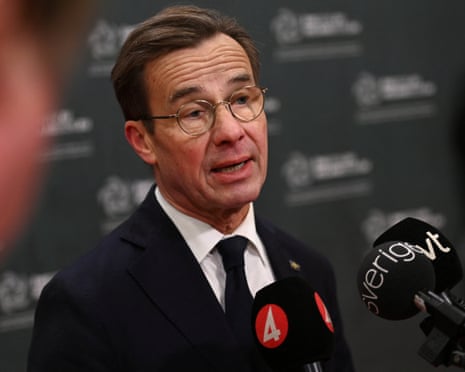
The task of exploring potential majorities now rests with Kristersson, after two failed attempts by Andersson (Europe Live, 15 October) and the Centre party’s leader, Elisabeth Thand Ringqvist (3 November) with a third vote – on Kristersson - expected in the coming days.
Norlén said last week that he wanted to exhaust the process – with four votes – before Christmas, either getting a new government in place or calling a snap election to break the standoff (Europe Live, last week).
After the 2018 election, it took 134 days to form a government, so the current process is still some way off that record.
Meanwhile, Hungary’s prime minister Péter Magyar announced a visit to the border region of Transcarpathia for talks with Ukraine’s Volodymyr Zelenskyy.
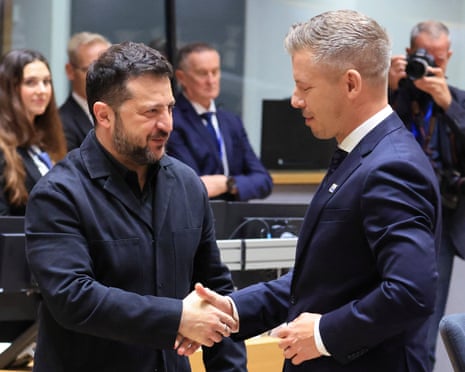
Announcing the visit on Facebook, Magyar said:
“Together with [foreign] minister Anita Orbán, we will visit several Hungarian institutions. This is the first visit by a Hungarian prime minister to Ukraine since 2015.”
The region, inhabited by some 60,000 ethnic Hungarians, has been one of the flashpoints in relations between Hungary and Ukraine under the previous government of Viktor Orbán.
But the visit comes just days after Hungary dropped its opposition to opening of the remaining “clusters” in Ukraine’s talks on accession to the EU, as reported by Euronews, with Magyar seeking a more constructive relationship with Ukraine.
I will keep an eye on this for you.
Meanwhile, the Financial Times is reporting this morning that the Pentagon is delaying the delivery of about 60 much-needed Patriot air defence interceptors to Ukraine.
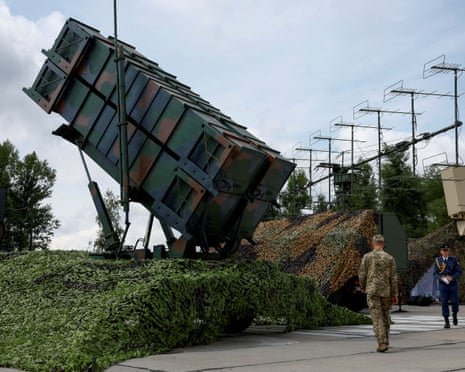
The interceptors, paid for by Ukraine’s western allies, are reportedly being held up by the US defence secretary, Pete Hegseth, who needs to sign off on their re-export, three people told the newspaper.
Ukraine’s president, Volodymyr Zelenskyy, has repeatedly warned of the urgent need for more air defence missiles to protect the skies above Ukraine as the country braces for a difficult winter, with Russia continuing its strikes on critical civilian infrastructure.
A suspected Russian drone briefly entered Polish airspace during strikes on western Ukraine on Monday night in what authorities have described as “intentional activity” by Moscow – just days after three cruise missiles fell in Poland during a major attack on Ukraine.
The drone, believed to be carrying surveillance equipment, remained in Polish airspace for eight minutes before flying back to Ukraine.
Poland’s deputy defence minister, Paweł Zalewski, told RMF24 that the military decided against shooting it down because of risks to civilian properties in the area.
The incident took place just hours after Nato held emergency talks over last week’s airspace breach, authorising the deployment of a Nato Airborne Warning and Control System, AWACS, aircraft to Poland.
It also comes amid growing tensions between Russia and countries on the eastern flank of Nato, with Moscow making unsubstantiated accusations against Estonia warning that it’s acting “on verge of unleashing open war,” and a growing diplomatic spat with Finland.
Overnight, at least two people were killed and 40 injured in Russian attacks on the Ukrainian city of Zaporizhzhia, with further attacks reported in the Sumy region.
I will keep an eye on this for you.
It’s Tuesday, 24 November 2026, it’s Jakub Krupa here, and this is Europe Live.
KioskNews shows a cleaned-up reading view extracted from the publisher’s page — the original always lives on their site, not ours.