Seeing Sea Country: how Traditional Owners are leading the way in caring for our oceans
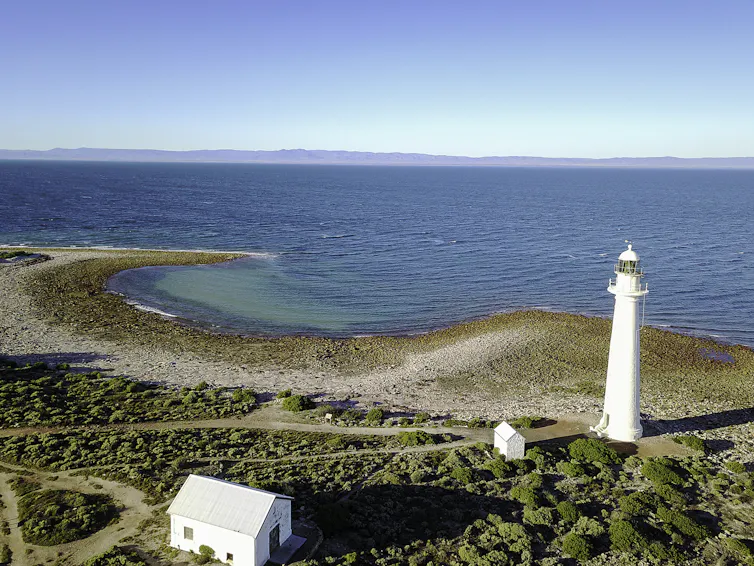
Every winter, giant Australian cuttlefish (Sepia apama) congregate in the cold shallows off Point Lowly near Whyalla in South Australia.
It’s the only mass gathering of cuttlefish on Earth. In a good year, more than 100,000 gather along eight kilometres of rocky reef to breed. Males flash blue, green, purple and gold as they compete for mates.
But this year, few of these technicolour giants made the trip. Scientists link low cuttlefish numbers to South Australia’s recent toxic algal bloom, fuelled by a marine heatwave.
Point Lowly sits on the traditional lands of the Barngarla people. The waters that surround it have been Sea Country for thousands of years.
For Aboriginal and Torres Strait Islander peoples, oceans and coastlines are not just places to visit or resources to exploit. They are “Sea Country”: living, kin-based territory that First Nations communities have cared for over millennia.
The disappearance of the cuttlefish is just one sign Sea Country is under threat. But our new study reveals not all hope is lost – if we embed First Nations knowledge into marine conservation.
What is Sea Country?
Like Country on land, Sea Country is tied to First Nations culture, law and identity. Under Indigenous law, people are kin to the creatures, places and ancestral beings of the sea. Caring for Sea Country is like caring for a relative, and Sea Country cares for people in return. According to Mayala Elder Mitchell Tigan, Sea Country is something you come to know by listening and feeling, not by simply reading a book.
However, Sea Country remains a little-known concept. Our 2024 study found that virtually none of the South Australian students we surveyed were familiar with the term Sea Country.
Just as terra nullius provided the legal fiction that no one owned the land, colonial law treated the seas around Australia as empty space that belonged to no one, a concept known as “mare nullius”. Land rights have had decades of public attention, but only in 2008 did the High Court recognise the exclusive rights of Yolŋu clans over the tidal waters surrounding Blue Mud Bay in the Northern Territory. Before this, courts had recognised native title over the sea around Croker Island in 2001, but only as a shared right to fish and travel. Blue Mud Bay was the first time Traditional Owners won the right to decide who enters their Sea Country.
Read more: We’re not protecting our oceans as well as we think: new research
What we studied
Our new study compares three Traditional Owner-led projects that we ran between 2021 and 2025, each vastly different from the next. Each began as a response to a practical problem: low public awareness of marine parks, plastic washing up on Yolŋu beaches and the question of how to count cultural values in carbon accounts.
In South Australia, we worked with the South Australian First Nations Sea Country Research Alliance to run a Sea Country-focused school program. We introduced students to the concept of Sea Country through five iconic species – the Australian sea lion, giant cuttlefish, white-bellied sea eagle, great white shark and southern right whale. Students also learnt how First Nations peoples have cared for the ocean over millennia and how marine parks, places where fishing and other destructive activities are restricted, are one modern way of continuing that care.
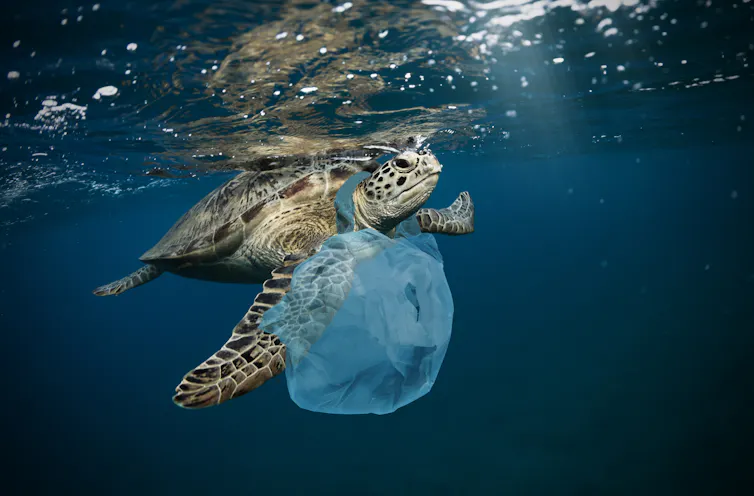
In the Northern Territory, alongside Dhimurru and Yirralka Rangers, our Toys for Turtles initiative tackled the growing problem of ocean plastic. We ran beach clean-ups, community education programs and three recycling hubs where collected plastic is turned into new products, including earrings that carry traditional “Gaynbu” fish trap patterns.
In Queensland, in partnership with the Mandingalbay Yidinji Aboriginal Corporation, we assessed coastal restoration efforts through a Sea Country lens. We focused on the East Trinity site near Cairns, once a wildlife rich floodplain that became an acid wasteland after being drained for sugar cane farming in the 1970s. Through workshops, interviews, site visits and 3D mapping of cultural sites, we unpacked what the reserve means to the Mandingalbay Yidinji people: a place of heritage, food, art and ceremony, and of passing knowledge to the next generation. We also recorded the care they give back to it. This allowed the site’s worth to be recorded in a way that reflects culture and identity, not just carbon stored or dollars saved.
Read more: How Indigenous Protected Areas became a vital way to protect nature in Australia
What we found
As we analysed these projects, the same lesson kept surfacing: marine conservation works better and runs deeper when Traditional Owners lead the way.
This is because Traditional Owners:
cared for place as kin, not simply as stock or resources to be used
had the ultimate say in decisions, allowing them to change the direction of entire projects if needed
were able to build long-term, trusted partnerships with other organisations that outlasted any single grant.
Read more: ‘A river is our life force’: why Indigenous cultural values must be visible in conservation
Lessons worth sharing
These three projects reveal the power of putting care and stewardship, not use, at the centre of marine conservation. And their approaches travel well.
Any school or marine park program can adapt their content to highlight the importance of Sea Country. Any restoration or blue carbon project can count cultural value alongside carbon and dollars.
Importantly, governments and conservation groups must provide long-term funding for Indigenous ranger groups and Sea Country Indigenous Protected Areas. They should also make Sea Country more prominent in marine park plans and signage.
Our oceans will only need more help as the world rapidly warms. By seeing Sea Country through First Nations eyes, we can both protect our seas and continue a tradition of stewardship that has stood the test of time.
This research was carried out with and by Traditional Owners, including the Yolŋu Peoples of Arnhem Land, the Mandingalbay Yidinji People and the Mirning, Wirangu, Nauo, Barngarla, Nukunu, Narungga, Kaurna, Peramangk, Ramindjeri, Ngarrindjeri and Buandig Peoples of South Australia’s Sea Country. We acknowledge their continuing custodianship of these lands and waters. We also acknowledge all other researchers, especially Nina Wootton, Shane Holland, Dale and Dewayne Mundraby, Rhiannon van Eck, Cristina Enjuto-Crespo, Celeste Hill and Bronwyn Gillanders.
KioskNews shows a cleaned-up reading view extracted from the publisher’s page — the original always lives on their site, not ours.