Oxford Museum Returns 39 Colonial-Era Human Remains To Naga People In India
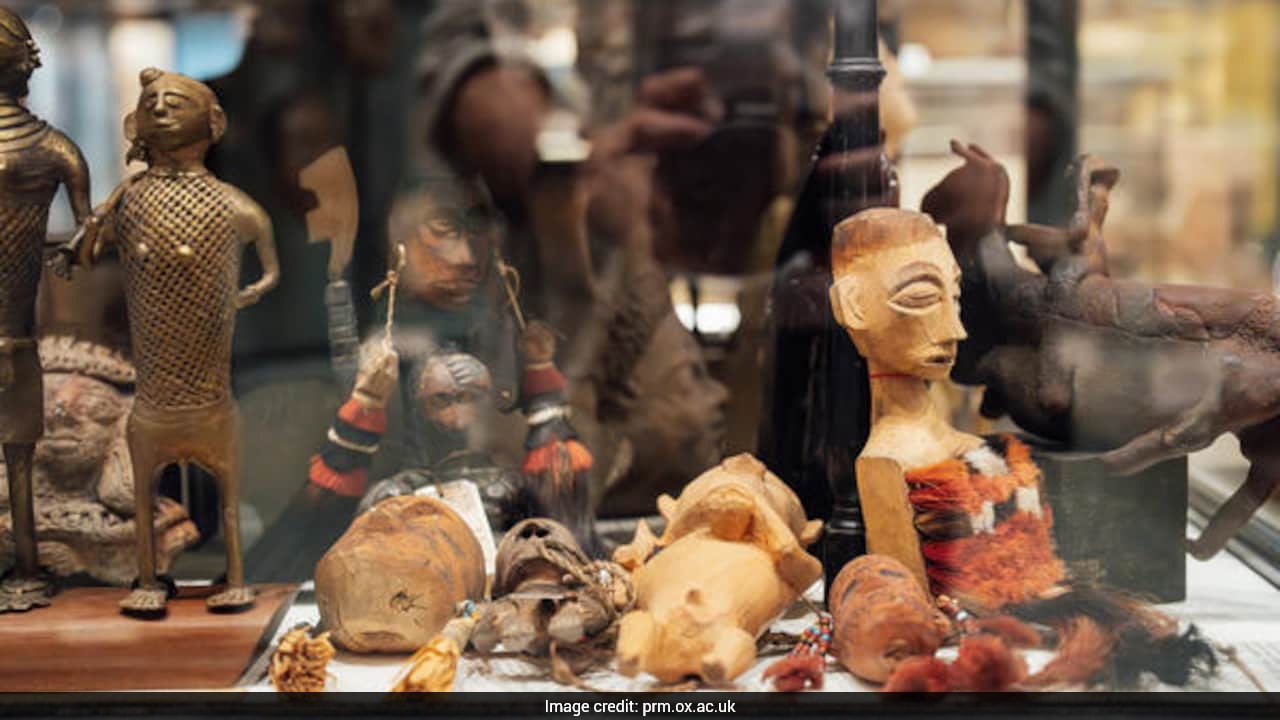
An Oxford University museum on Monday returned the remains of 39 people taken during Britain's colonial rule in India to members of its Naga community.
Almost 30 people from the community based in northeastern Nagaland, a mountainous state bordering Myanmar, travelled to Britain for the ceremony, which the museum's director, Laura Van Broekhoven, called a "historic moment".
The handover at the Pitt Rivers Museum came as part of a broader trend among Western museums reassessing how they acquired exhibits from other cultures, particularly human remains, and in some cases returning them.
The Pitt Rivers, an ethnographic museum founded in the 19th century, has already handed back human remains to Indigenous communities in Australia, New Zealand and the United States.
The Oxford museum has more than 6,000 objects representing Naga culture, the largest collection in the world, and is giving back "ancestral human remains", mainly skulls, to the Naga people.
Van Broekhoven hailed it as "a historic moment that will be part of stories told to next generations" in a speech as both sides signed a formal agreement on the handover.
The remains were already "on their way to Heathrow" airport, the museum director said, after overcoming "so much red tape everywhere".
The museum only removed all human remains from display in 2020, much later than most museums, and still has around 2,700 remains in storage, she told AFP.
These "were collected in times that had different ethics, different thinking, which was not unproblematic when we look at it with the eyes of today", she said.
'Respectful rest'
Housed in a Victorian Gothic building, the museum is a dark atmospheric space with glass cases crammed with objects, many with handwritten labels.
Naga tribal leaders united for the handover and planned to bury the remains together under a joint memorial in a park.
"We shall put them to respectful rest," one of the tribal leaders, Thejao Vihienuo, told AFP.
The 73-year-old, draped in a traditional shawl, also visited with other Nagas last year as part of the lengthy process.
"It's been six years of working alongside each other on a very delicate matter," the museum director said.
The Naga remains were brought to Oxford between 1910 and 1940. Most were collected by two colonial administrators who were anthropologists.
The museum says on its website that items collected during this era were "frequently confiscated during punitive military expeditions, rather than freely given".
While in Oxford, the delegation met descendants of one of the anthropologists.
"The manner in which these human remains were taken away from our land leaves much for us to speculate," said Vihienuo.
"I suspect that nobody would have given the skull of his father or his grandfather as a gift to another person."
The Naga people once practiced headhunting, severing heads of enemies as trophies, but also kept heads of their own chiefs "at the centre of the villages" and one of the remains is a chief's head, said anthropologist Dolly Kikon, a member of Nagaland's Lotha-Naga community.
(Except for the headline, this story has not been edited by NDTV staff and is published from a syndicated feed.)
KioskNews shows a cleaned-up reading view extracted from the publisher’s page — the original always lives on their site, not ours.