No lockdown but security tight for BARMM Parliament's inaugural session
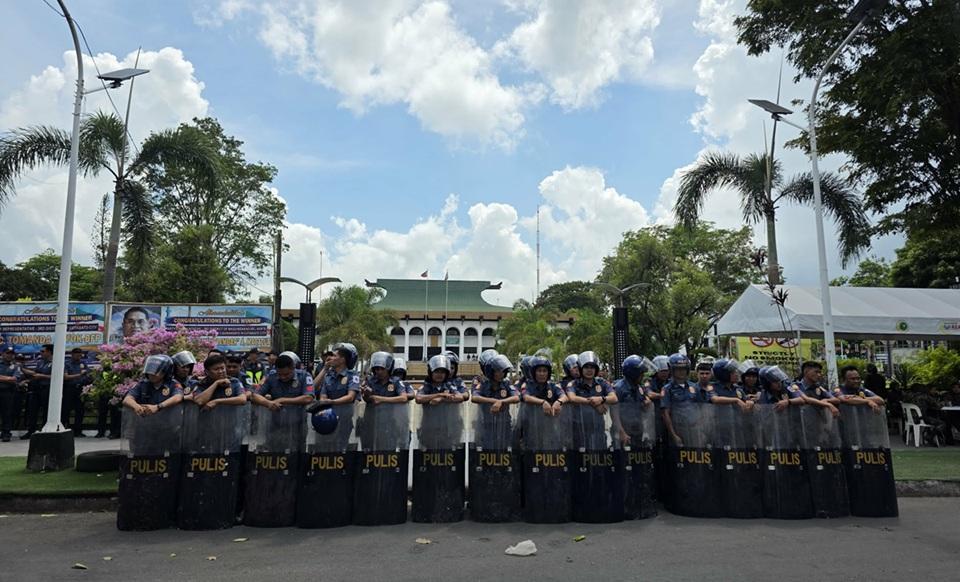
COTABATO CITY — There is no lockdown in Cotabato City, but heightened security measures are actively in place—particularly at entry and border points—in preparation for the historic inaugural session of the Bangsamoro Parliament, authorities here said Thursday.
Law enforcement officials emphasized the importance of rigorous monitoring as the region prepares for the landmark event, which includes the election and installation of the new Chief Minister from among the newly elected parliament members.
The local police force has rolled out multi-phased security measures. City Police Director Police Colonel Jibin Bongcayao confirmed that additional police troops have been deployed to various strategic locations across the city to secure the high-profile event.
"We received concerning reports that is why we personally visited the areas and security points. We don’t want a repeat of the same chaotic scenario we’ve seen during the last election," Brigadier General Edgar Catu following a personal inspection of facilities and security checkpoints.
Mayor Matabalao slams disinformation
Amid rising public anxiety fueled by unverified rumors, Cotabato City Mayor Bruce Ali Matabalao issued a strong appeal to the public and rumor-mongers, urging individuals to halt the spread of disinformation claiming a "Marawi Siege-like scenario" would hit the city.
"Enough of spreading lies and disinformation; it’s not helping the image of the Bangsamoro. Let’s rather unite to move forward," he said.
The mayor urged citizens to remain calm, choose peace, and refuse to be swayed by manufactured fears intended to tarnish the image and development of the Bangsamoro Autonomous Region in Muslim Mindanao (BARMM). Both local government and police leadership continue to urge the public to cooperate, stay calm, and report any suspicious activities immediately.
Meanwhile, incoming Members of Parliament constituting the majority of the first regular Bangsamoro Parliament held a meeting led by Chief Minister Abdulraof "Sammy Gambar" Macacua. Discussions centered on the successful execution of tomorrow's plenary vote and ensuring a peaceful, orderly historic event.
Members of the police anti-disturbance team are deployed at the front of the Bangsamoro Government Center in Cotabato City Oct. 29, 2026. Photo: Ferdinandh Cabrera
Economic impact and local frustration
However, what was supposed to be a period of celebration and normalcy has instead cast a shadow over local commerce and community morale, as heavy security deployments across parts of the city drew sharp criticism from business owners, legal professionals, and regional lawmakers alike.
The heightened security measures, characterized by observers as resembling a "war zone scenario," have severely disrupted daily economic activity, leaving local vendors and small-scale entrepreneurs counting their losses during what should have been peak business hours.
Lamenting the sudden clampdown on public movement, local lawyer and businessman Ronald Torres-Dimacisil voiced deep frustration over the economic standstill.
"It could have been just an ordinary day that small business owners could sell their products in that street. But because of the tightened security measures, no business. Is this a gain we can be proud of?" he asked.
For many micro-entrepreneurs and street-level vendors relying on daily wage earnings in the nearby, the barricades and restricted access meant an immediate loss of livelihood.
Business owners report that heavy-handed checkpoints and blocked thoroughfares effectively deterred foot traffic, keeping regular customers away and forcing shops to close early.
Outgoing Bangsamoro Transition Authority (BTA) Member of Parliament Sittie Fahanie Uy-Oyod expressed sadness over the psychological toll the visible show of force has taken on ordinary citizens, stating, "I cannot help but feel sad na imbes mapanatag ang loob ng mga tao [that instead of the residents being calm and at peace], they are wary instead."
Her remarks highlighted how security protocols intended to protect the public have instead created an atmosphere of anxiety and mistrust.
Meanwhile, community observers and residents raised questions about the timing and optics of the heavy deployments, pointing out the stark contrast between official security objectives and the public mood.
Puzzled local observers asked, “Aren't we supposed to be rejoicing and celebrating, but why is there tension?" capturing the widespread bewilderment of residents who feel intimidated rather than secured by the increased presence of armed personnel.
A high-level milestone for BARMM
Tomorrow’s inauguration and parliamentary milestone is expected to draw a high-level delegation, including President Ferdinand "Bongbong" Marcos Jr., Cabinet members, peace process officials, BARMM provincial governors, local mayors, district congressmen, civil society and NGO representatives, international observers, and foreign diplomats. Their presence underscores that this political transition is the hard-won culmination of the landmark peace agreement between the government and the Moro Islamic Liberation Front (MILF).
This momentous session caps years of foundational institution-building that began with the ratification of Republic Act No. 11054, or the Bangsamoro Organic Law.
Following the successful regular parliamentary elections held last September 14, the unelected Bangsamoro Transition Authority—which steered the region through vital legislative groundwork, including the passage of codes on education, local governance, and elections—has been officially dissolved.
With the swearing-in of the 80 regular Members of Parliament representing diverse geographic districts, political parties, and marginalized sectors, executive and legislative powers have been formally transferred from the interim body to the newly elected representatives.
The Wali, serving as the ceremonial head of the Bangsamoro Government, formally administers the oath of office to the Chief Minister. While the Wali holds no voting power in leadership selection, they carry the constitutional duty of opening parliamentary sessions, swearing in officials, and acting as the moral figurehead of the autonomous region.
The political transition moved swiftly from legislative voting to executive formation, with the interim parliament concluding its final sittings to hand over administrative apparatuses, paving the way for the 80 regular Members of Parliament to convene, debate, and officially operationalize the new regional government. — BM, GMA News
KioskNews shows a cleaned-up reading view extracted from the publisher’s page — the original always lives on their site, not ours.