A Chinese rocket deorbited over Minnesota and left this in a farmer's cornfield

Under international law, the country that launched an object into space is liable for any damage it causes on the ground.
What makes the debris in Minnesota unusual is its size—it’s larger than most objects that survive reentry—and the fact that it likely originated from a rocket that fell from space the same day it launched. The upper stage of the Zhuque-2E rocket has a diameter of 11 feet, or 3.35 meters, perfectly matching the size of the object found in Minnesota.
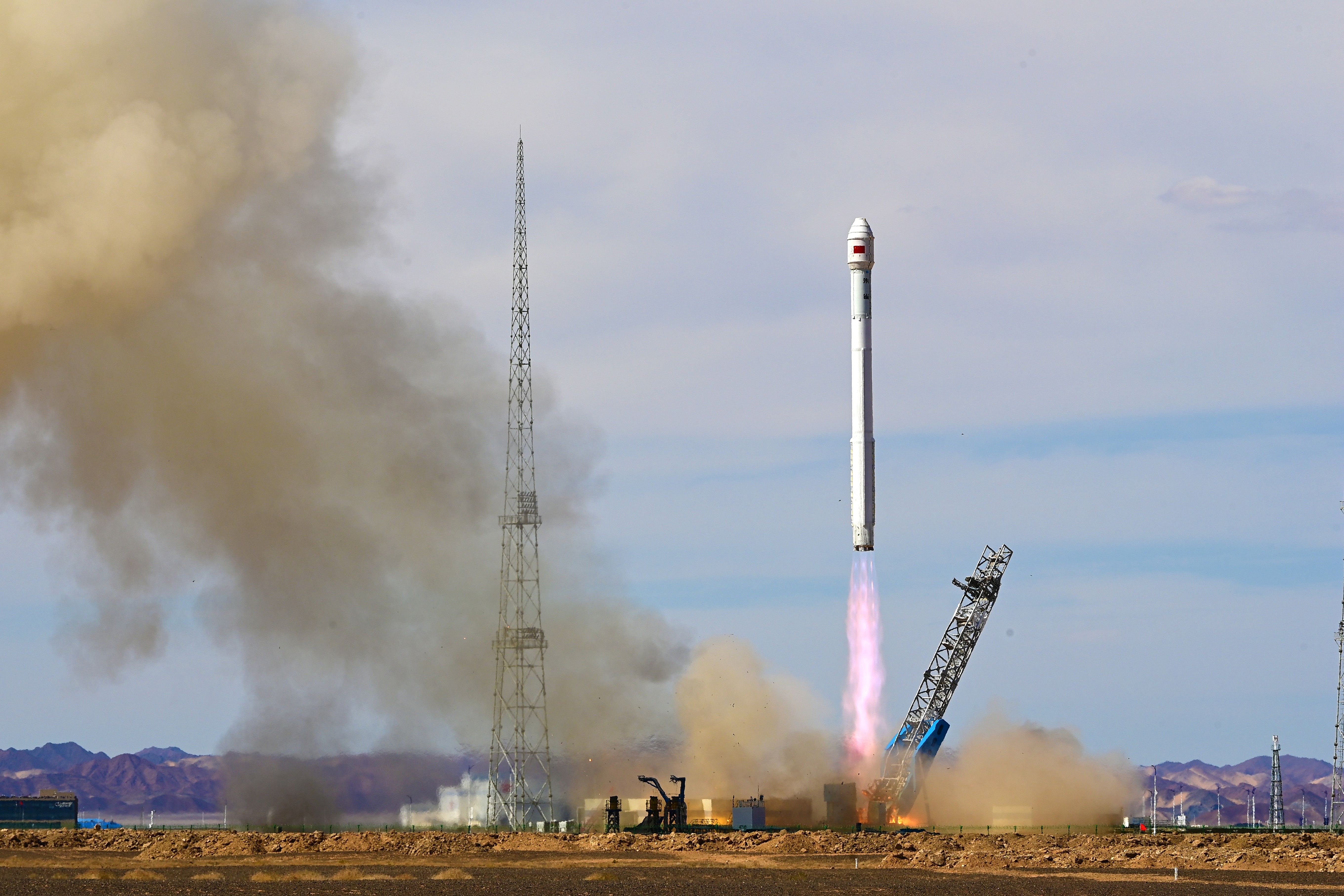
A Zhuque-2E rocket carrying 10 networking satellites blasts off from the Dongfeng commercial space innovation pilot zone in northwest China on September 15, 2026.
Credit: Wang Jiangbo/Xinhua via Getty Images
A Zhuque-2E rocket carrying 10 networking satellites blasts off from the Dongfeng commercial space innovation pilot zone in northwest China on September 15, 2026. Credit: Wang Jiangbo/Xinhua via Getty Images
The Zhuque-2E rocket that launched from China on September 15 deployed 10 satellites for the Qianfan, or Thousand Sails, communications network, a Chinese counterpart to SpaceX’s Starlink constellation. China has launched 258 Qianfan satellites over a series of missions since 2024, on the way to completing an initial constellation of 1,296 satellites, with longer-term ambitions of more than 15,000.
The methane-fueled rocket released the 10 Qianfan satellites into a circular polar orbit at an altitude of roughly 560 miles (900 kilometers) around a half-hour after liftoff. The rocket flew south from China, over Antarctica, then north over the Americas. After deploying its payloads, Zhuque’s upper stage performed a burn to slow its velocity and drop out of orbit.
Normally, deorbiting a spent rocket stage after the end of its mission is a good thing, a responsible practice aimed at limiting the creation of new space debris. Chinese rockets have been a problem in this area before, with unguided reentries and in-orbit breakups in low-Earth orbit. US rockets on low-Earth orbit missions usually reserve enough propellant for guided disposal.
The upper stage from the Zhuque-2E rocket’s previous flight in June broke apart after completing its mission, leaving dozens of pieces of debris in a heavily trafficked part of low-Earth orbit that’s home to the International Space Station and a significant portion of SpaceX’s Starlink broadband network. The good news is the rocket’s altitude was low enough to ensure most of the debris would reenter the atmosphere within a few months.
LandSpace, the company that owns the Zhuque rocket family, has not publicly acknowledged the debris fall over Minnesota. The usual practice for rocket disposals is to steer them toward reentry over the ocean, suggesting the incident on September 15 was perhaps the result of a botched deorbit burn.
KioskNews shows a cleaned-up reading view extracted from the publisher’s page — the original always lives on their site, not ours.