‘Whenever you saw her, it made you happy’: a community grapples with the death of missing woman Yvonne Whear

For nearly eight months, Yvonne Whear’s family have feared the worst.
The 73-year-old, who had lived a quiet life in New South Wales’ northern rivers, vanished in February. Police drones and helicopters, boats, sonar equipment, trail bikes, and officers on foot and in vehicles searched but found no trace of Whear. Her disappearance remained a mystery, absolute anguish for her family until, in September, her car was found. It was in a river, not far from her home.
Then on Tuesday, police confirmed a decomposing body found a week earlier, in a stockyard dip in Terragon near Murwillumbah, was Whear. Her death is now being treated as a homicide.
This discovery unleashed an outpouring of grief and shock on social media from a small community that is bewildered and alarmed that a 73-year-old woman could vanish from her own home. “It has touched the whole community,” says local Cynthia McGrath.
“I knew and spoke to her on many occasions,” says one local, who asked not to be named. “She was always happy and positive, with warm, smiling eyes. Whenever you saw her, it made you happy inside.”
Sandra Guthrie, who used to own a printing business, agrees. “I did a lot of typing for her, we had coffee together. She was always a happy person, a kind person, loved her family. I told her my terrible life story, she always gave me a hug when she came in. She cared about everyone,” Guthrie says. The past eight months, she says, have been “terrible”.
“Every time I saw her on TV or Facebook, it breaks my heart. I am sure others who don’t even know her feel the same. Why was she murdered?”
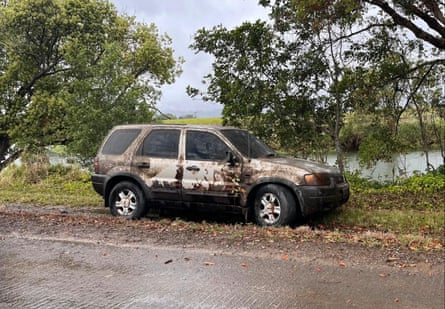
This is a community that has pulled each other through devastating floods and cyclones. They are resilient people. But it is a small community and emotions are running high.
There has been a lot of speculation, some of it wild. Everyone has a theory.
Barb Tyler is getting security cameras. She is concerned about other single women living in rural places. She says what is at the front of many locals’ minds. “There is a murderer living in our community,” she fears. She often drove past Whear’s property. “I knew of her animal welfare work.”
Another local, Shirley Smith, says: “Our whole community have held the family in their hearts as we’ve driven the roads of the Tweed looking for her car and hoping for a miracle.”
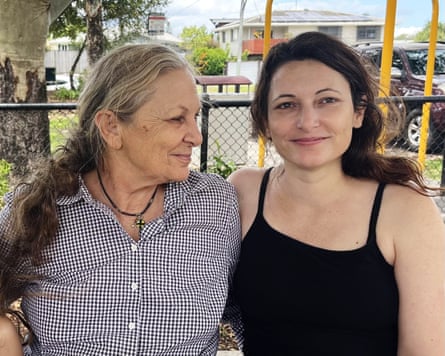
Whear’s daughter, Gillian Hallac, was never in any doubt her mother had been taken. The family had never stopped searching for her. But finding her remains doesn’t make the situation easier, she says.
“Not only has she been robbed of her life, her children and grandchildren now all face the horrific trauma of this callous inhumane act,” she says. No suspects have been identified by police and no one has been arrested or charged over her disappearance. “Whoever is responsible is still out there.”
On Tuesday, as police conduct forensic searches at Whear’s home, jacarandas unfurl, horses and cattle graze and roosters crow. A flock of her ducks waddle across her yard. It is, usually, a tranquil place.
For 23 years, Whear lived in the hamlet of Dungay. She had come to this part of the world in 2000 from Humpty Doo in the Northern Territory, where the family ran mango farms. She moved to be closer to her children and brought the animals “she loved to keep as a hobby”, Hallac says. She kept ducks, chickens, dogs, rabbits and cats and, although she was sociable, she preferred to “be close to her animals and live alone”, Hallac says.
Whear was due to appear in the NSW civil and administrative tribunal over a property dispute a week after she vanished.
after newsletter promotion
There is no suggestion her disappearance is related to the proceedings and no one involved is accused of wrongdoing.
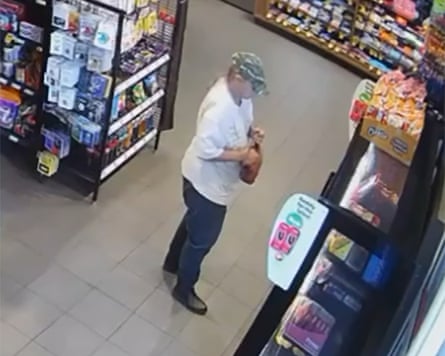
On 19 February, Whear spent the day at her art course at Murwillumbah Tafe. “It was something she always wanted to do,” Hallac says.
CCTV captured her buying orange juice and putting credit on her phone at the Shell service station in Murwillumbah before she drove the short distance through cane fields to her home.
Then she disappeared.
Hallac knew something was wrong when she couldn’t contact her mother – the pair spoke every day, and Whear would never leave her animals alone for more than a night.
At her home, Hallac found signs that her mother had been anticipating the next day. “Everything about her life and everything she did were the actions of a person who’s planning on continuing their life,” Hallac says. There was food in the slow cooker, her clothes folded neatly on the bed for the next day. Her boots and hat she was wearing in the CCTV footage were in the house. But the farm gate had not been closed in the methodical way she always used.
When, last week, a badly decomposed body was discovered by trail bike riders in a stockyard dip on a fire trail 300 metres from Kyogle Road, it prompted an anxious few days for Whear’s family. The remains could have belonged to any of several missing women in the region.
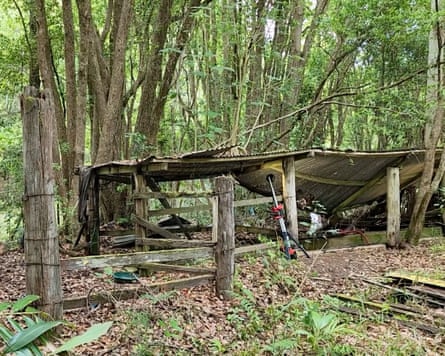
The remains were found in a remote place, not far from a swimming hole known among locals. “It’s a fire trail,” says Acting Supt Matt Zimmer of the location. “It’s slightly overgrown. It’s not unusual for trail bike riders or people swimming in the area to go down there. So we’re very interested to hear from people who may have frequented that location in the last eight months.”
While he says there is no “threat to the community”, he adds that police are exploring the possibility that “more than one person” may have been involved.
In appealing for people who might have seen something, or has any information, however small, Hallac asks potential witnesses to put themselves in her family’s shoes, facing a future with “unimaginable grief”. “You would want answers too.”
KioskNews shows a cleaned-up reading view extracted from the publisher’s page — the original always lives on their site, not ours.