Why Saudi Arabia's $83 Billion Military Is Struggling Against Houthis
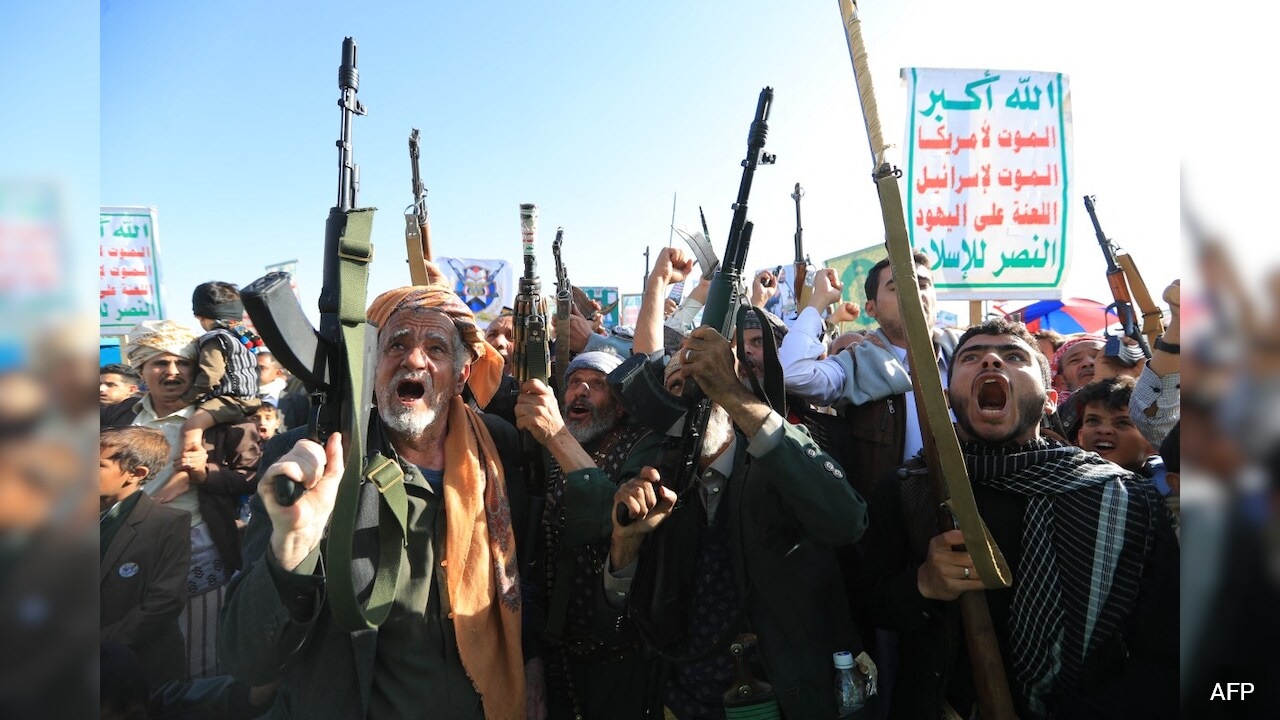
Saudi Arabia has come under multiple "targeted" attacks claimed by Iran-backed Houthi rebels over the weekend, including a spate of deadly attacks on King Khalid International Airport in Riyadh. The deadliest attack on the oil-rich kingdom in more than a decade struck the country's main airport on Saturday, killing 12 people and wounding more than 300, and forcing diplomatic missions to warn their citizens to avoid the facility.
The escalation comes after a truce agreed between Iran-backed Houthi rebels --who control around one-third of Yemen's territory, where about 70 to 80 per cent of the country's population live -- and the Saudi-backed Yemeni government unravelled earlier this year, with Saudi Arabia stepping up its military involvement in Yemen.
The kingdom launched strikes against the Houthis and is backing a government counteroffensive after the Houthis seized strategic territory along the Red Sea coast last month. Houthis have retaliated by targeting critical oil and tourism infrastructure of the kingdom.
But the Houthis' mounting counter-strikes on the kingdom have exposed vulnerabilities in Saudi's billion-dollar defence capabilities.
The oil-rich kingdom's reputation for stability and security has also been damaged by the repeated missile and drone strikes. Saudi Arabia's de facto leader, Crown Prince Mohammed bin Salman, has spent billions of dollars to establish the kingdom as the region's safest destination for investment and business, as it works to diversify its economy and reduce its dependence on oil.
Saudi vs Houthi Military Capabilities
Saudi Arabia possesses one of the best-equipped militaries in the world. Riyadh spent about 6.5 per cent of its gross domestic product (GDP), worth about $83 billion, on its defence spending in 2025, constituting the world's eighth-largest military spending.
The kingdom, which has recently signed a defence pact with Turkey and Pakistan, has limited military-industrial capacity and has therefore spent heavily on imported cutting-edge weaponry. Major weapons purchases from Western manufacturers -- including American, British and French companies -- have become a defining feature of Saudi defence policy and a diplomatic strategy to curry favour with allies. It has flashy military hardware, such as F-15 fighter jets, Eurofighter Typhoons, Patriot and THAAD missile systems, among other state-of-the-art gear.
Riyadh's advanced warplanes have pounded Houthi positions across Yemen in the past week, seeking to roll back the Iran-backed group's recent advances against the Yemeni government army.
However, the Iran-backed group has significantly improved its arsenal since the rebels took control of the capital Sanaa from the government in 2014. Houthis have demonstrated that their drones and missiles can reach as far as Israel, some 2,000 km from Yemen, and can hit specific targets such as Saudi airports and oil facilities.
The group has been using weapons in concert, mixing drones and missiles of varying speeds to confound air defences. Among its most advanced options are medium-range ballistic missiles such as the Palestine-2, a two-stage solid fuel missile with hypersonic capabilities, and Toufan, which appears to be a rebranded Iranian Ghadr missile.
The rebels also have several short-range missiles, such as their Burkan and Badr series, which are believed to be of Iranian origin, according to a report by Al Jazeera.
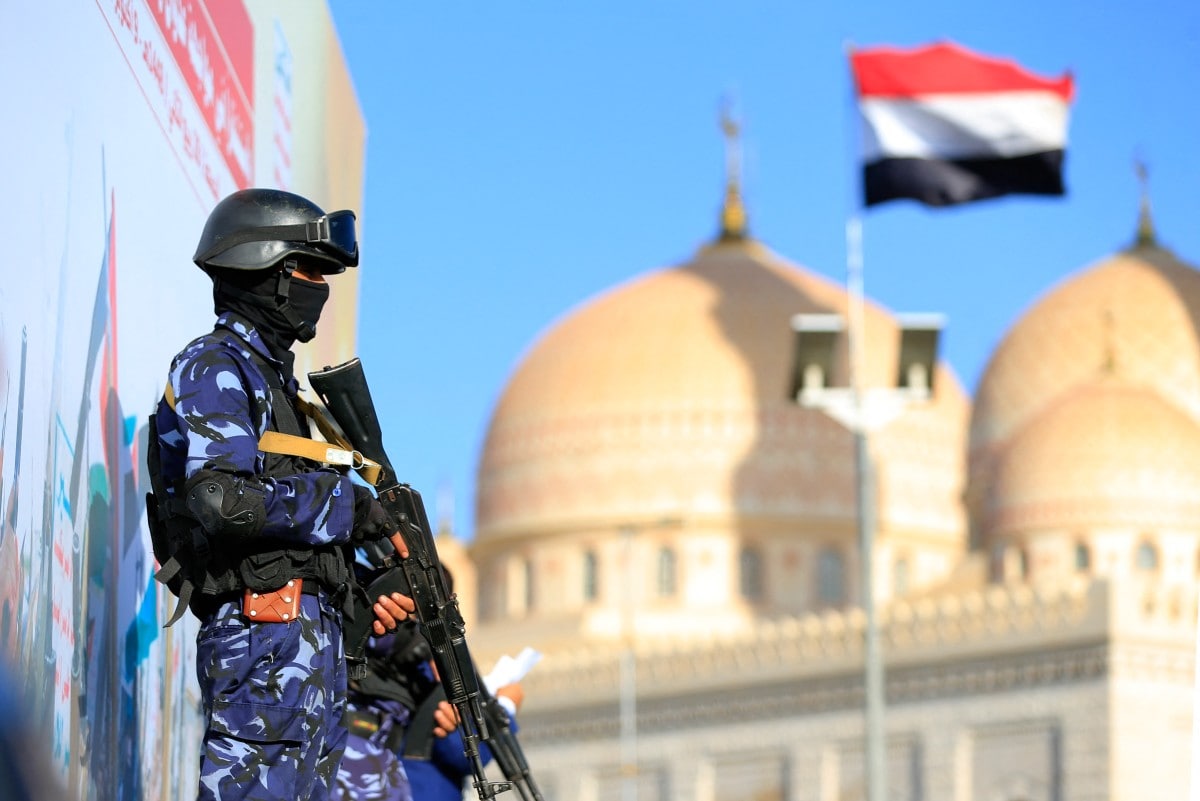
Photo Credit: AFP
How Houthis Penetrate Saudi's Defences
Despite Saudi Arabia pouring billions into its military, Houthi attacks continue to slip through, and experts believe the kingdom's size could have something to do with it.
"Saudi air defences have been able to intercept some Houthi missile and drone attacks, but Saudi Arabia is so large that it's simply impossible for them to consistently defend themselves," Thomas Juneaua, a security analyst at Ottawa University, told news agency AFP.
Experts note that King Khalid International Airport is one of the world's largest by land area, covering an area of 225 square kilometres about 35 kilometres from the city centre.
Andreas Krieg from the London-based MENA Analytica risk firm said that "even a layered system combining Patriot, THAAD, fighter aircraft and other sensors cannot create an impermeable dome over a country the size of Saudi Arabia", which spans around 2.2 million square kilometres.
They have "to defend Riyadh, airports, oil facilities, military bases, the holy cities and a vast amount of critical infrastructure continuously," he added.
The repeated Houthi attacks are also stretching Saudi air defences and likely depleting interceptors, which reports suggest have been in short supply worldwide.
Saudis have been able to intercept attacks across the country, but several strikes, including ones targeting oil facilities and those against Riyadh's airport, have snuck through.
Why Are Houthis Escalating?
Krieg said that while Saudi defences are intercepting many incoming attacks, "the Houthis do not need to penetrate the system every time" to achieve their goals.
All they need is the occasional hit, and the repeated strikes on Riyadh's airport show that they "retain the ability to generate follow-on attacks at strategic range", he added.
The surge in Houthi attacks comes as the long-running Yemeni civil war -- in which a Saudi-led coalition backs the internationally recognised government against the group -- has reignited in recent months.
Juneau pointed out that Houthis want to "rewrite the rules of the game." With Saudi warplanes attacking Sanaa airport, which is under Houthi control, the Iran-backed group wants "to do to Saudi Arabia what Saudi Arabia does to them", he added.
The Houthi movement, also known as Ansar Allah, has tens of thousands of fighters that are well-trained, tenacious and battle-hardened in Yemen's harsh, mountainous terrain. Their missiles and drones have for years posed a threat to oil-rich Gulf neighbours, and have recently reached as far as Israel.
By targeting critical Saudi infrastructure, Houthi's message is "that the price of peace keeps on going up", Juneau said, referring to hopes of finally resolving the Yemen war.
"For Saudi Arabia, this is an absolute disaster because Saudi Arabia has been trying to extricate itself from the war in Yemen for several years," he added.
Why Attacks Worry Saudi
"The airport matters enormously" because it is central to Saudi Vision 2030, led by Crown Prince Mohammed bin Salman, which aims to make Riyadh a major hub for tourists, multinational companies, and international events, Krieg said.
"The Houthis understand that."
Krieg warned that while disrupting Riyadh's airport may not erode Saudi military power, repeated attacks inflict economic and psychological costs that exceed the physical damage.
Saturday's airport attack was the deadliest in the kingdom since a 2015 suicide bombing. It also came on the eve of the country's high-profile convention and entertainment season, with the WPC Energy Congress opening in Riyadh on Sunday.
Authorities previously kept citizens occasionally informed through text-message alerts of impending attacks. But, those warnings have recently stopped, leaving many citizens wary.
On Saturday, worried diplomatic missions complained of not being regularly briefed by Saudi officials. Several embassies advised their citizens to avoid Riyadh airport hours before Saudi authorities issued their first official statement.
KioskNews shows a cleaned-up reading view extracted from the publisher’s page — the original always lives on their site, not ours.