Delayed RTS Link could face early crowd test if it opens near Chinese New Year or Hari Raya, analysts say
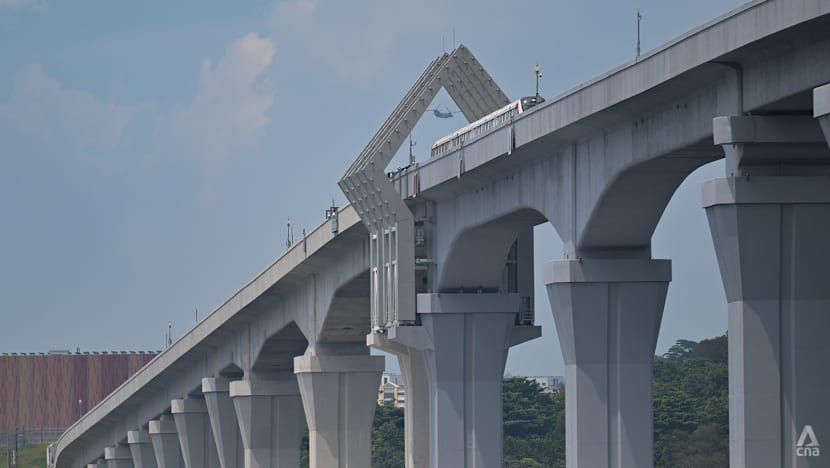
SINGAPORE: Opening the delayed Johor Bahru-Singapore Rapid Transit System (RTS) Link around holiday periods could put its passenger-handling arrangements to an early test, transport experts said on Friday (Oct 2), pointing to possible crowd management issues.
An exact opening date has not been announced, but the experts warned that operations beyond the train systems must be ready to welcome passengers in large numbers.
“If it opens immediately before the holiday, I would want to see the whole passenger journey tested under peak-demand conditions, not just the trains,” said Professor Lee Der-Horng, a fellow of Singapore’s Academy of Engineering.
Because passengers will clear immigration for both countries at their departure station, his concern extends to how quickly people can move through ticketing, clearance and boarding.
“Trains could have available capacity while queues are building up elsewhere in the station,” he said.
His comments come after Singapore and Malaysia authorities announced on Friday that the RTS Link is now expected to begin operations in February next year instead of the end of this year.
They said more time is needed to complete testing, obtain independent safety certification and secure regulatory approvals.
Transport Minister Jeffrey Siow said the service will open before Hari Raya Puasa, which falls on Mar 10. Chinese New Year falls on Feb 6 and 7.
Prof Lee cautioned that safety certification does not guarantee smooth operations during a holiday surge. He said he hoped to see realistic crowd-management rehearsals, sufficient staffing and a jointly rehearsed response to service interruptions.
Ideally, the service should have run for some time before a holiday peak so that staff and passengers are familiar with the arrangements, he added.
“The holiday rush should not be the first serious test of those arrangements,” he said.
Dr David Ng of the Institution of Engineers Singapore agreed that problems are likelier at stations than on the trains.
Capacity can be raised by running trains more often, but authorities are unlikely to try that soon after opening, he said. If they keep to the tried-and-tested peak capacity of up to 10,000 passengers per hour in each direction, any crowd that builds up will fall to station managers.
“Passengers will just have to queue up at the station, which is not a problem for the train,” he said.
But Dr Ng, who is also executive director of One Smart Engineering, said there is no “best time” to open the RTS Link, noting that it is going to be highly utilised at many times of the year.
The launch should instead come when operators are confident the system can run smoothly without breakdowns or disruptions, he said.
Associate Professor Walter Theseira from the Singapore University of Social Sciences said demand for transport to Malaysia generally exceeds supply during holiday periods, so more options are better.
“I’d say it’s better to have the RTS even if it’s just newly opened than not at all,” he said.
POSSIBLE ISSUES
The transport experts cited a range of possible reasons for the delay, from glitches during testing to the lingering effects of the COVID-19 pandemic.
Prof Lee noted that the announcement did not identify a specific technical fault and cautioned against interpreting the delay as a sign that something had gone wrong during tests.
“Issues at the interfaces between trains, signalling and station systems can require adjustments and repeat testing. That is a possible explanation for needing more time, but we should not assume it is what has happened here,” he said.
Testing and certification are known requirements that need to be factored in from the outset, including time for rectification.
More information would be needed to determine the cause, such as whether unexpected issues emerged during testing or earlier work took longer than planned, leaving less time for the final stages, Prof Lee added.
Dr Ng said technical glitches are often found during testing, and fixing them takes time to ensure the system is safe.
He said the revised timeline is understandable because a cross-border train system requires close coordination and is more complicated than a domestic one.
Given the team’s expertise, he does not expect a further delay to the opening.
Assistant Professor of Strategy and Entrepreneurship (Education) Terence Fan from the Singapore Management University pointed to changes to the project over the past 16 years. It was suspended in 2019 at Malaysia’s request for a review, before work resumed in 2020 during the COVID-19 pandemic.
Many construction projects faced delays during the pandemic, and some of those setbacks “could not be completely made up”, he said.
The project also changed when it resumed in 2020. The link would be a standalone light rail transit system instead of leveraging the Thomson-East Coast MRT line as initially planned.
“That might have resulted in some additional workaround and it could very well be that this workaround ultimately led to some delays, and therefore delaying, as a result, the need for certification,” said Asst Prof Fan.
Given the “interruptions” over whether the project would proceed and the later changes to its scope and technical details, he felt the delay was understandable.
“I don’t think the delay is by a huge amount right now, it’s still estimated to be within two months later than the earlier projection of the end of this year.”
A REALISTIC TARGET?
Prof Lee said he would treat February as a “conditional target” rather than a confirmed opening date.
“The important question is whether the remaining work is now sufficiently well understood and whether the revised programme allows for any necessary corrective work and retesting,” he said.
If those steps take longer than expected, further delays could still occur. But public detail is insufficient to conclude whether another delay is likely, he acknowledged.
“I would look for progress against those milestones before expressing greater confidence in the opening date,” he said.
Asst Prof Fan said the February target appeared realistic and he did not expect further delays at this point. Unforeseen issues could still emerge, however, given that the construction works are near the Causeway, where land meets the sea.
These could include early signs of corrosion or cracks caused by soil shifting around the area, though such problems would not typically be expected in Singapore, he said.
What mattered was ensuring the link was safe to operate, he stressed.
“I would definitely want this project to be safe, rather than having it launched and then later on having to interrupt the service for rectification work, for example.”
KioskNews shows a cleaned-up reading view extracted from the publisher’s page — the original always lives on their site, not ours.