Vietnam's youngest female Doctor of Science leaves lasting legacy following lifelong pursuit of mathematics

Achieving several milestones from a young age, Professor Le Hong Van dedicated her life to mathematics, continuing to publish research, teach and pursue new work in geometry, machine learning, and artificial intelligence until her death at 65.
Van, Vietnam's youngest female Doctor of Science to date, died on Sept. 2 in Prague, Czech Republic. Her sudden death left a deep sense of loss among scientists who had worked alongside her, witnessed her career and valued her talent.
"Deeply saddened by the passing of Le Hong Van, a rare female mathematician in Vietnam," Professor Ngo Viet Trung, former director of the Institute of Mathematics, wrote on Facebook two days after her death.
Born in 1961, Van was the second daughter of Le Van Giang, a former deputy minister of higher education and professional secondary education. She showed an early aptitude for mathematics and was admitted to the mathematics-specialized program at Hanoi General University, now the High School for Gifted Students under Vietnam National University, Hanoi.
 |
|
Professor Le Hong Van in her youth. Photo courtesy of her family |
In 1977, at the age of 16, she was the only female student selected for Vietnam's team for the International Mathematical Olympiad (IMO). However, the entire team missed the international competition due to a lack of funding.
Van was later sent by the government to study mathematics at Moscow State University (MGU). Because of her outstanding academic performance, she was admitted to a doctoral program under the supervision of Professor A.T. Fomenko, who solved the absolute Plateau problem in higher dimensions at the age of 26.
Dr. Tran Nam Dung, a lecturer at the University of Science under Vietnam National University Ho Chi Minh City, remembers his senior colleague at MGU as "serious but always with a very bright smile" at meetings of the youth union or her academic unit.
"She was humble and composed. She did not speak much, but when she did, her comments were focused and well-founded," Dung recalled.
In 1987, Van earned her doctorate with a dissertation titled "Minimal Surfaces in Homogeneous Spaces" and was encouraged to pursue a Doctor of Science degree. Two years later, at the age of 28, she defended her work "Effective Norms in Minimal Surface Theory," becoming the youngest Vietnamese woman to earn a Doctor of Science degree.
Dung said the Plateau problem and minimal surfaces are well-known problems that have attracted widespread interest. The question posed by physicist Joseph Plateau of whether a surface with the smallest possible area, or a minimal surface, could be bounded by a closed curve on a soap film opened up deeper problems in geometry, partial differential equations and optimization.
The problem contributed to the development of modern mathematics and has applications in architecture, materials science, biology, theoretical physics and computer graphics.
For her work on minimal surfaces, Van became the first foreign recipient of the Moscow Mathematical Society Prize in 1990. The annual award recognized a mathematician under 30 working in Moscow, then a mathematical center of the Soviet Union.
A year later, she received the Majorana Prize for young scientists from developing countries from the International Center for Theoretical Physics in Italy. She was also the first woman to receive the award nearly 10 years after it was established.
"Professor Van was truly an outstanding mathematician of her time. Professors at MGU considered her among the best of their generation," said Professor Nguyen Tien Dung of the University of Toulouse, France, who was her classmate and brother-in-law.
She later received a Heisenberg Fellowship to conduct research at the Max Planck Institute in Bonn and the Leipzig Institute of Mathematics, two leading mathematical institutions in Germany. She married a German scientist and had two children.
Trung said he suggested several times that she return to Vietnam to work, but she chose to remain in Europe to stay close to her family.
 |
|
Professor Le Hong Van (left, back row) with several veteran Vietnamese mathematicians at the Conference on Singularity Theory at the International Center for Theoretical Physics, Italy, in 1991. Photo courtesy of Professor Ngo Viet Trung |
In 2005, she began working at the Institute of Mathematics of the Czech Academy of Sciences (CAS). Starting with research in differential geometry, Van expanded into other areas of mathematics, including symplectic topology, geometric analysis, representation theory, geometric statistics and machine learning theory.
She went on to lead three government-funded research projects in the Czech Republic and publish nearly 70 papers. Her research, conducted largely away from the public spotlight, was highly regarded by specialists and had practical applications.
"Van worked in a slow, composed but persistent manner. If you followed her work, you would see that she continued publishing regularly. Her most recent paper was published in the Vietnam Journal of Mathematics in June," Dung said.
The book "Information Geometry," co-authored by Van, was published by Springer Nature, an international academic publisher, in 2017. The publisher described it as a standard reference in the field and said it introduced a new mathematical approach to parametric statistical models.
Three years later, Van, her brother-in-law and several colleagues became one of the first research groups in the world to apply wavelet theory to describe the epidemiology of Covid, explaining multicenter models.
Unlike earlier widely used models, it predicted that Covid would come in multiple waves rather than a single wave and could warn of an approaching new wave, according to Dung.
Van remained active in academia, writing books, attending conferences and serving as a visiting lecturer. More recently, she spoke at specialized conferences in South Korea, Italy and France and lectured at Kyoto University in Japan, the University of Cambridge in the U.K. and the Institute for Advanced Study in Mathematics in Vietnam.
"Van was small in stature but had a very strong personality and was always cheerful. She lived a healthy lifestyle, took care of her health, swam several times a week, ate in moderation, studied nutrition to ensure a balanced diet and planned to live past 100," Dung said with regret.
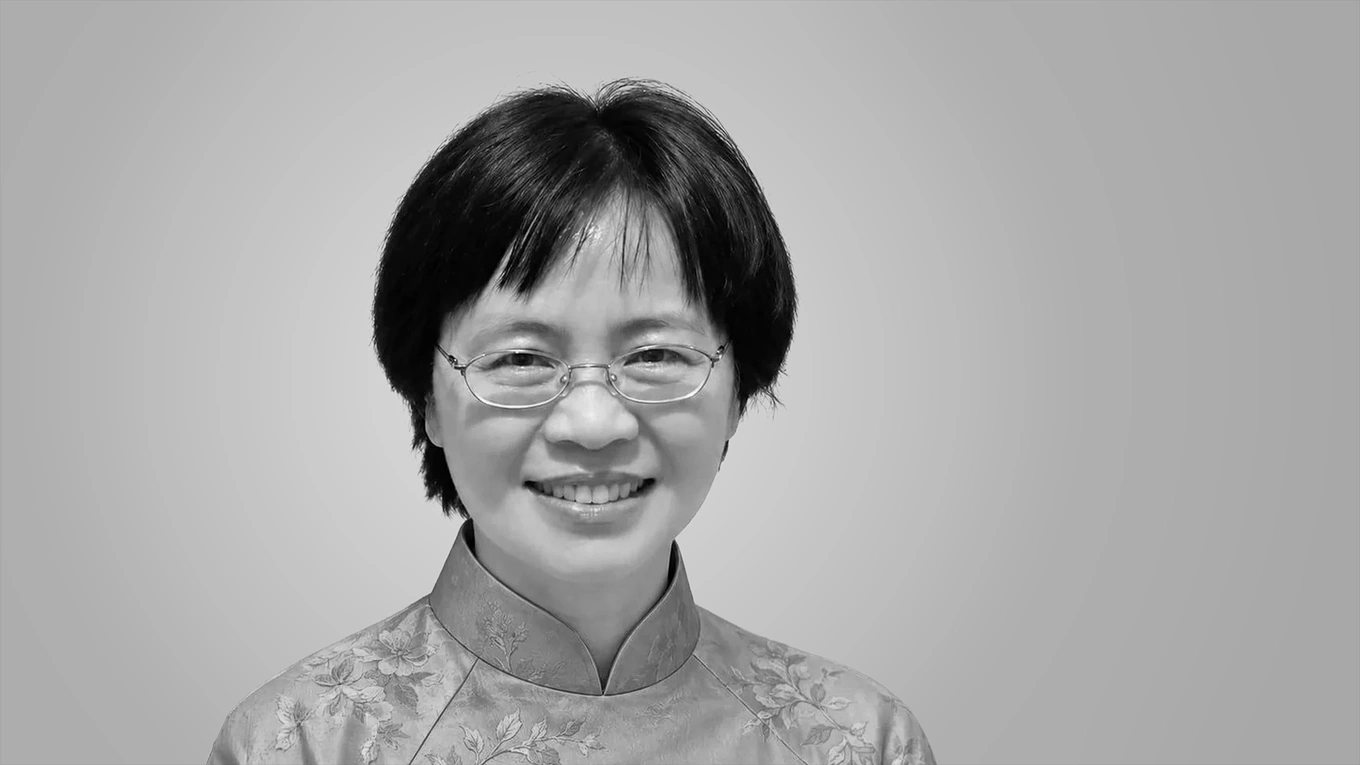 |
|
A potrait of Professor Le Hong Van in a obituary published by the Max Planck Institute. |
In recent years, she researched applications of differential and hyperbolic geometry in machine learning and artificial intelligence.
Dung said she still had several works nearing completion, including a more than 600-page book on the mathematical foundations of artificial intelligence and about 200 pages of drafts for several papers on modern geometry.
Her final paper was published on the arXiv database on Aug. 10 in memory of Professor Le Dung Trang, a renowned mathematician who contributed to integrating Vietnamese mathematics with the international community.
"We will miss her greatly. We hope that her memory will always be cherished," CAS said in a statement.
KioskNews shows a cleaned-up reading view extracted from the publisher’s page — the original always lives on their site, not ours.